
"Lanark Silver Bell" Horse Racing Prize Won By 'Cat O' Nine Tails at Lanark Races 1932
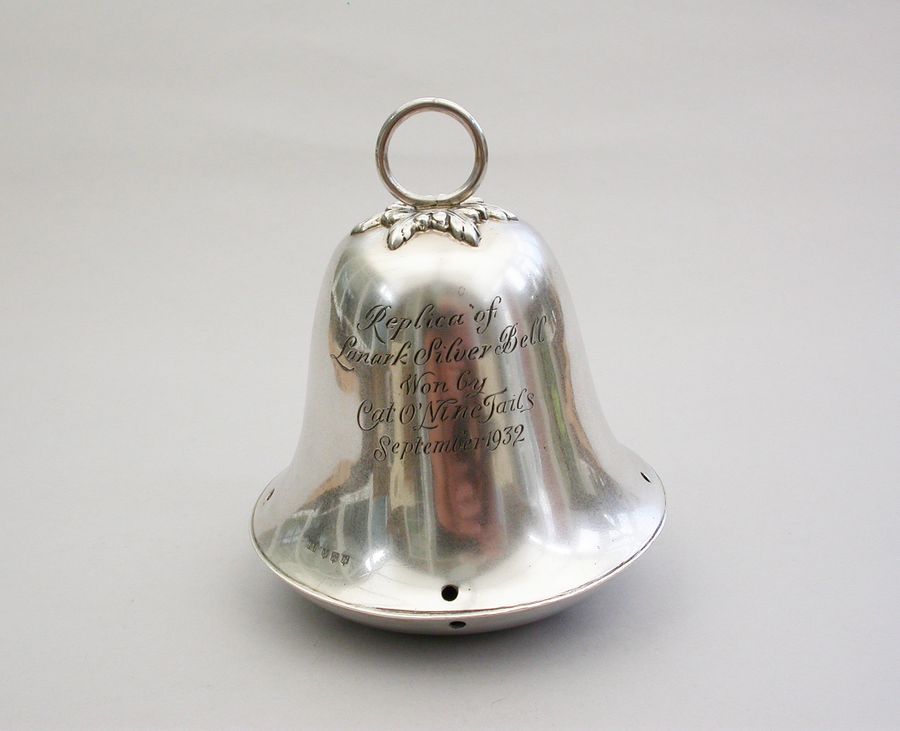
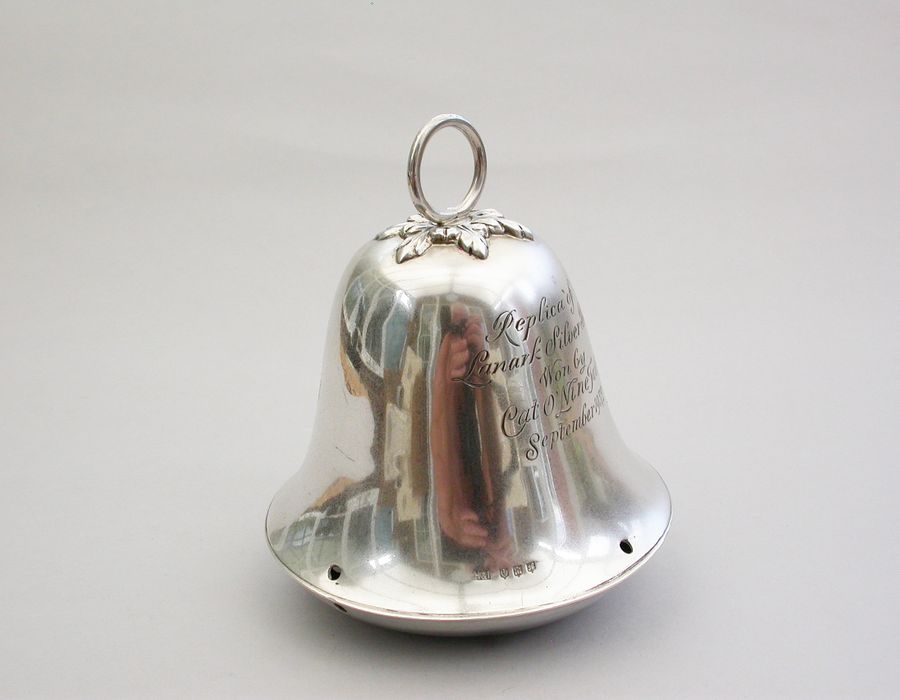
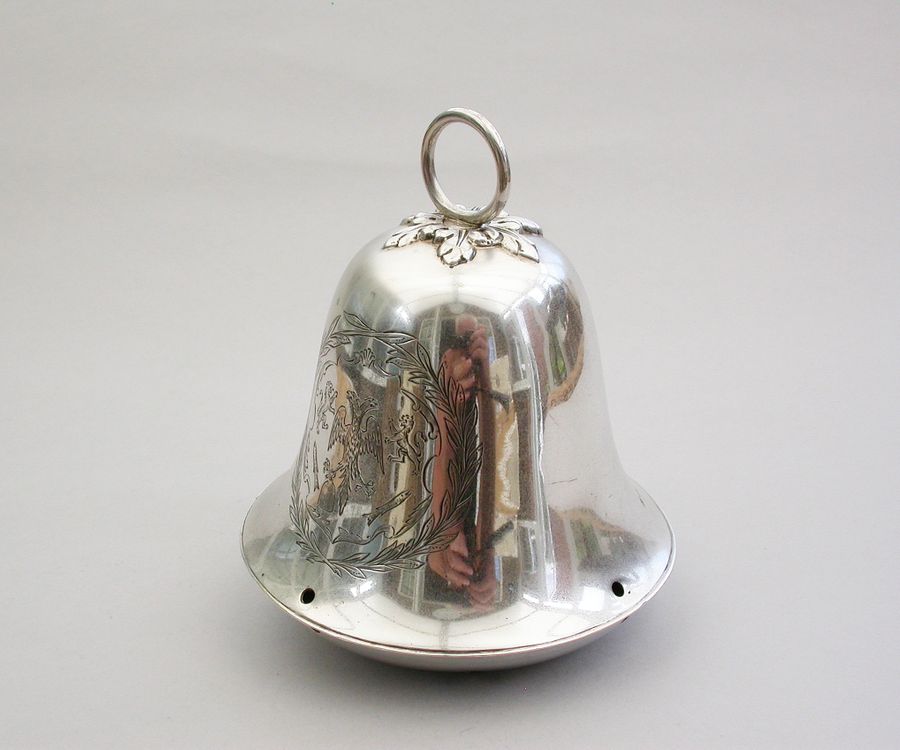
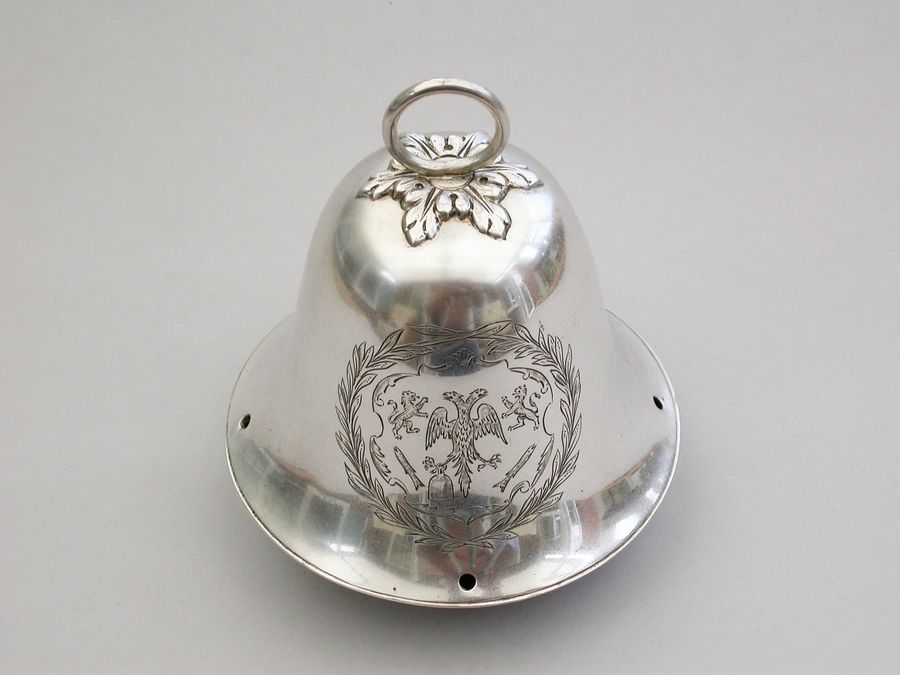
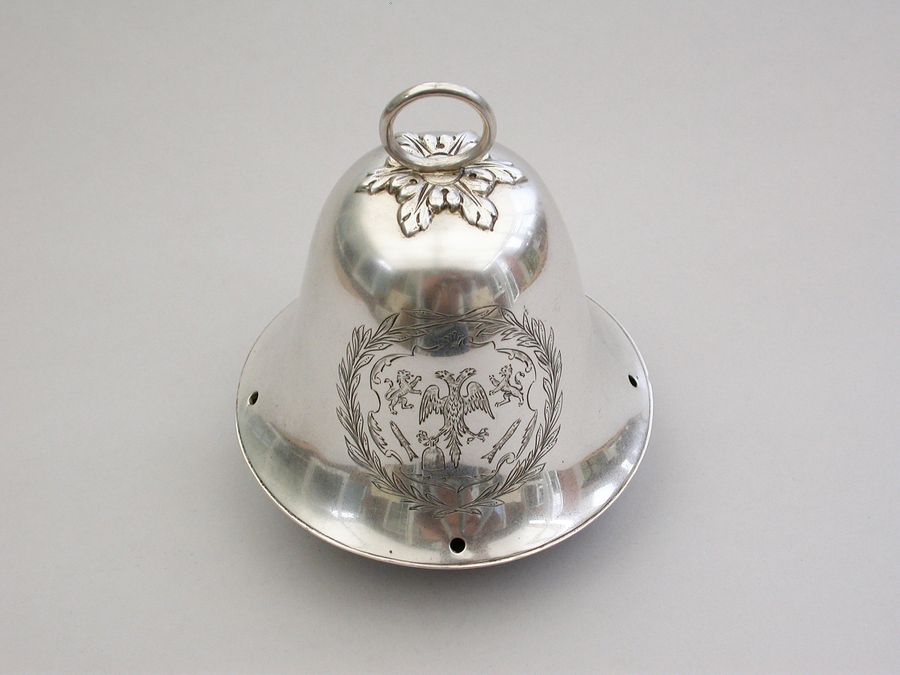
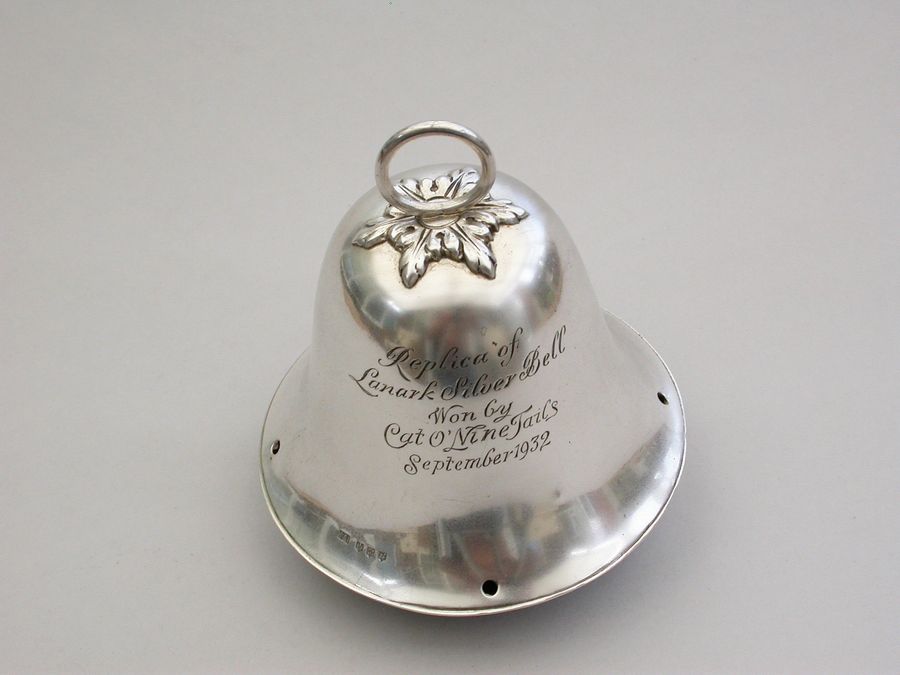
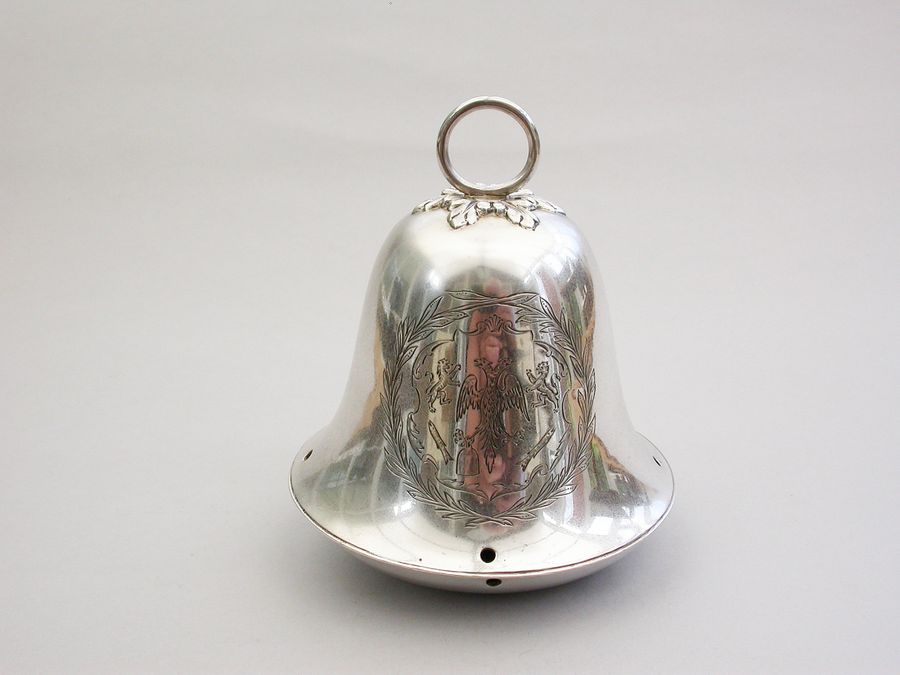
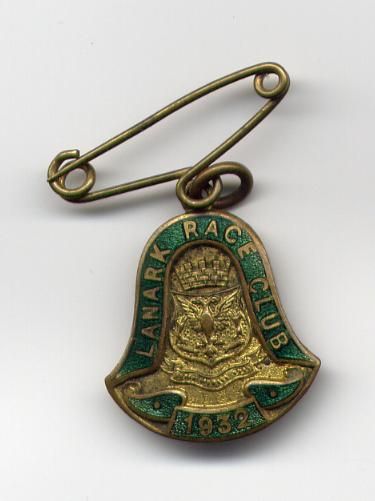
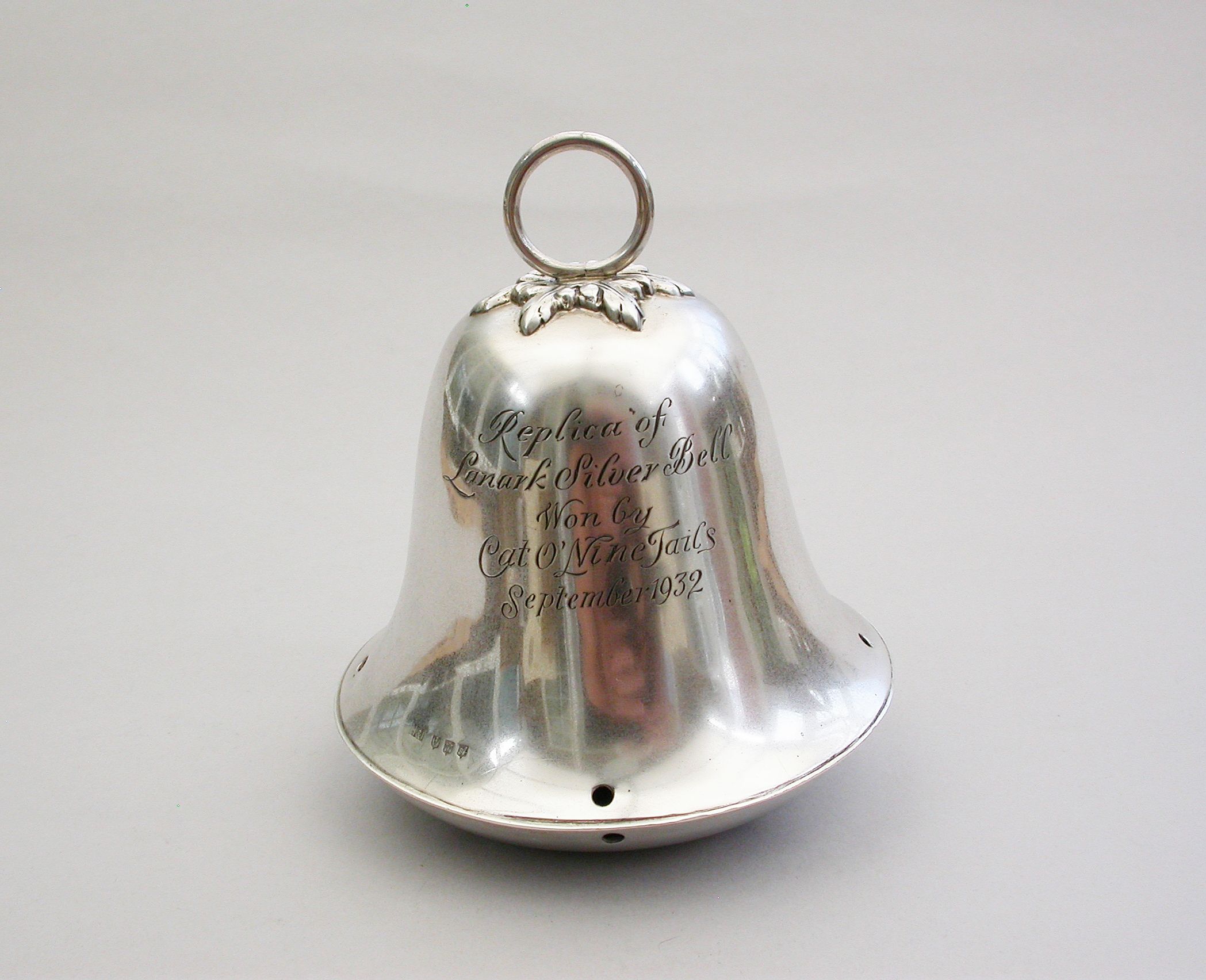
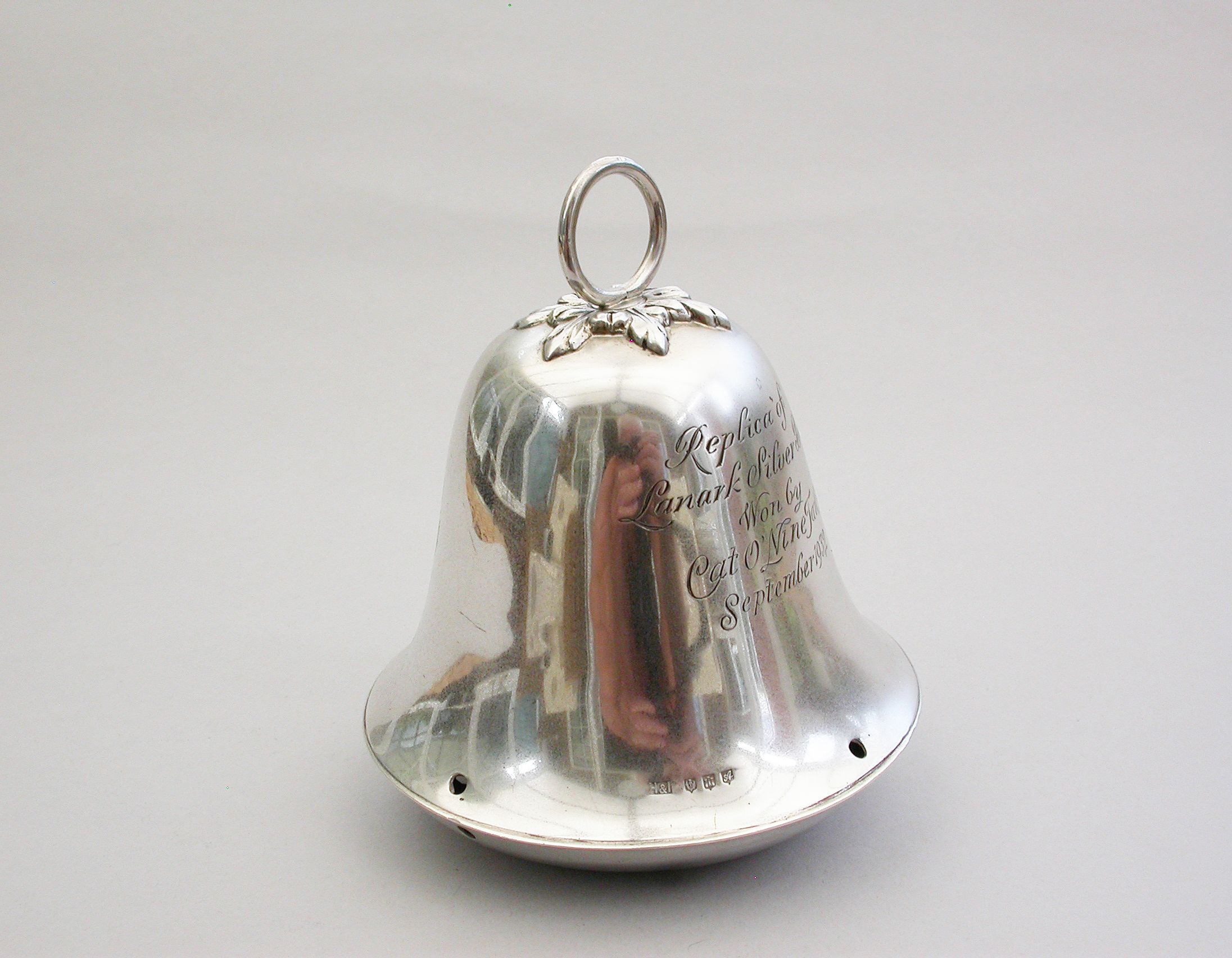
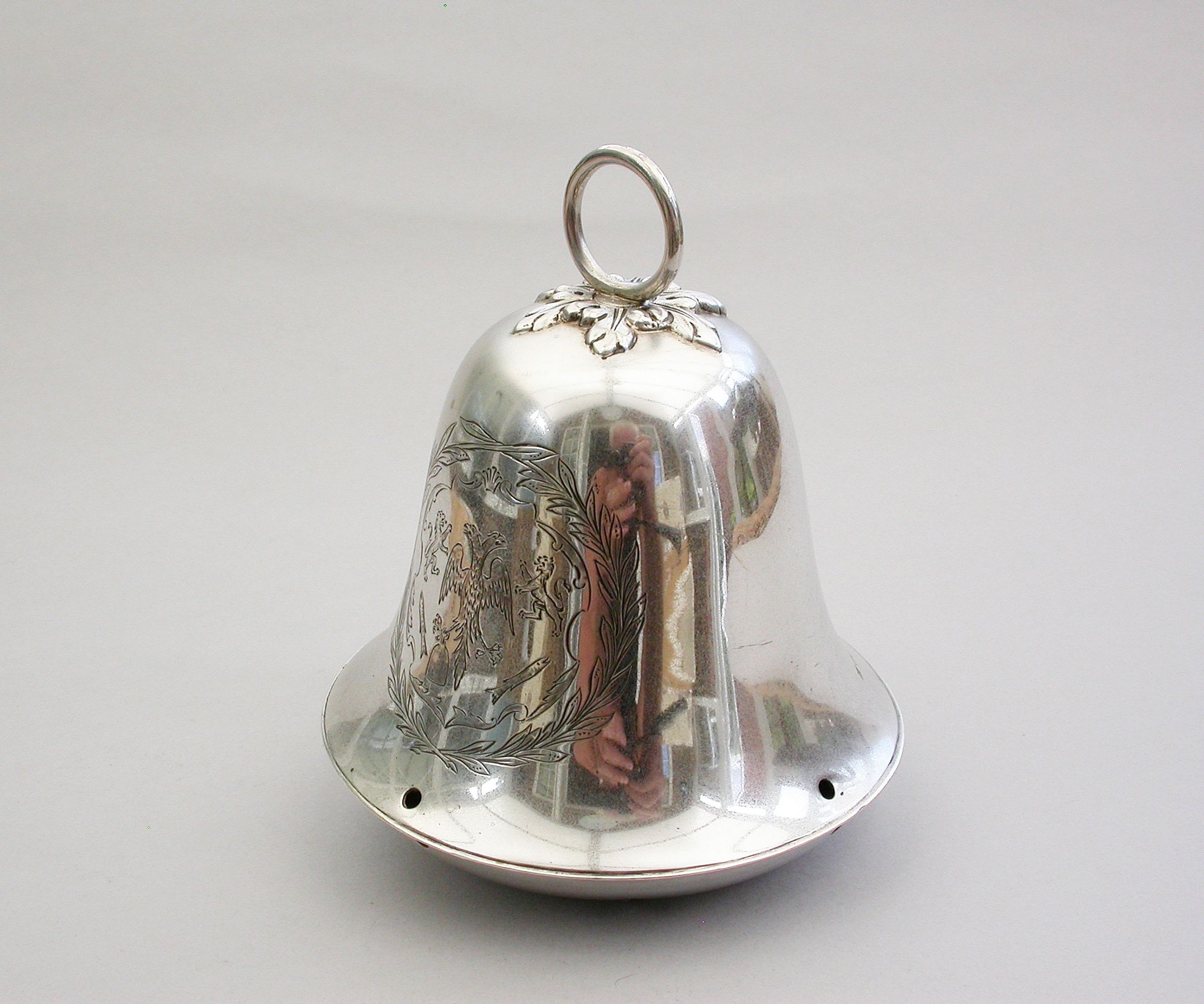
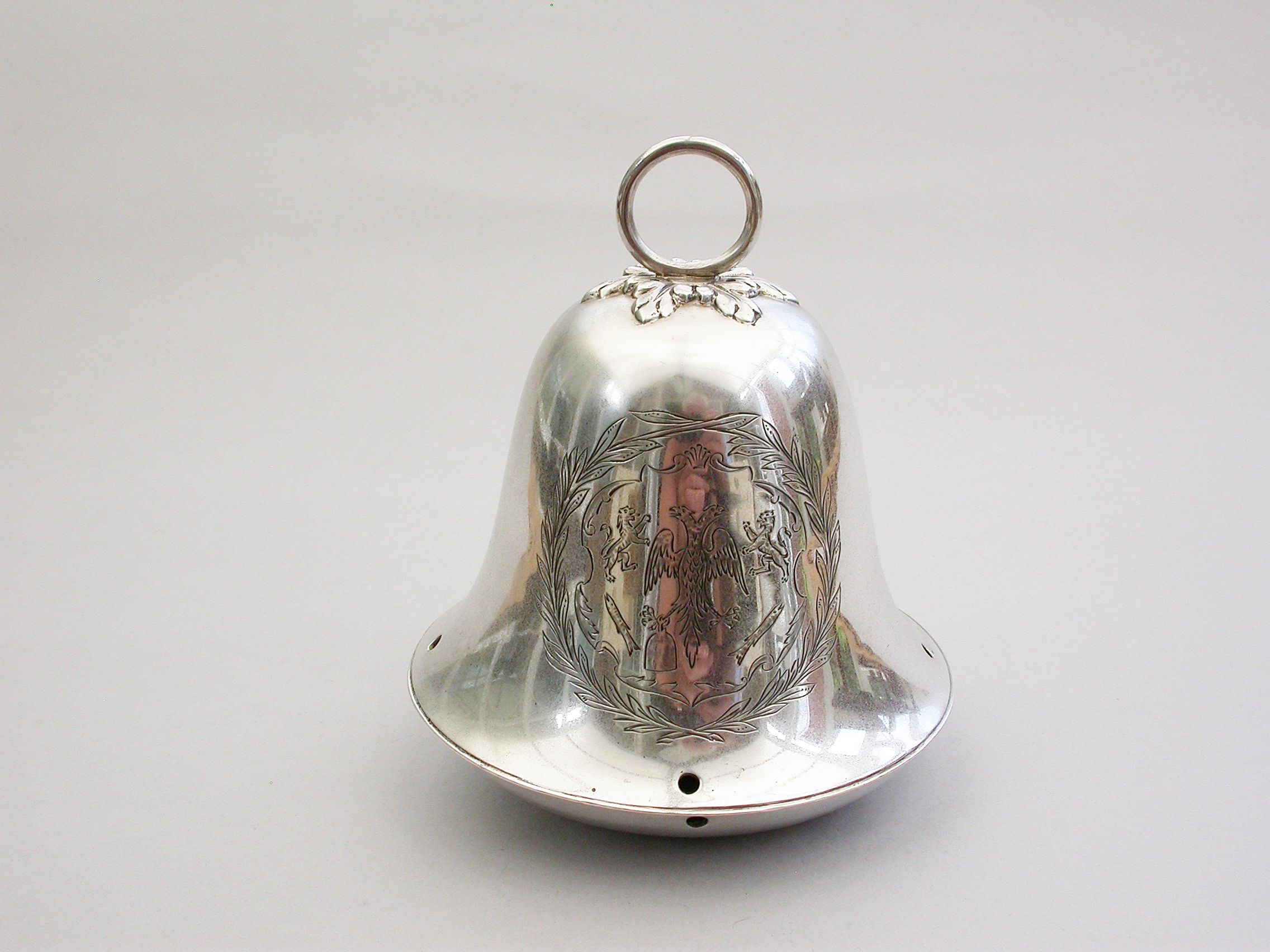
A ‘Lanark Silver Bell’ horse racing prize won by Cat O’ Nine Tails at the Lanark Races of 1932.
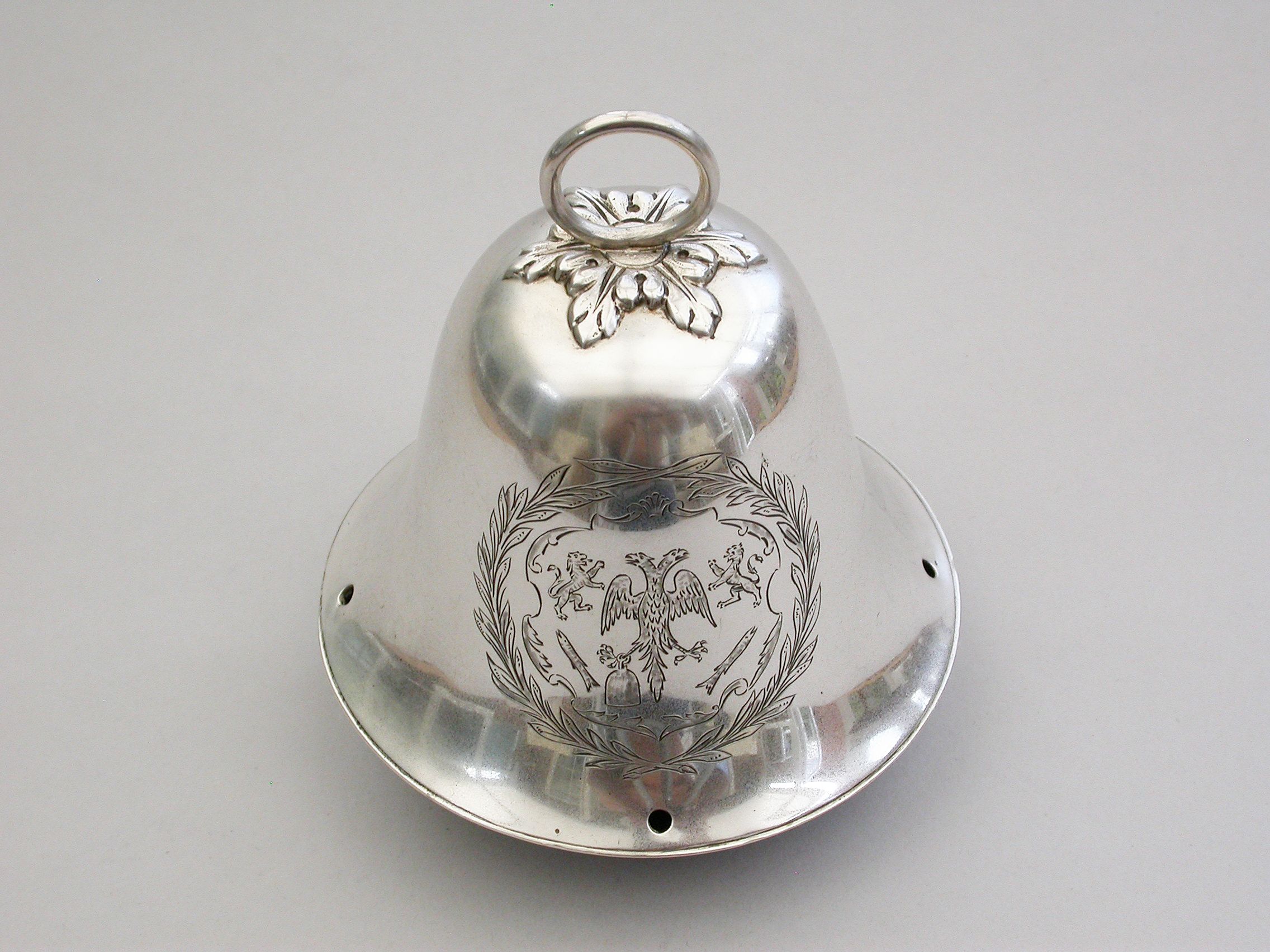
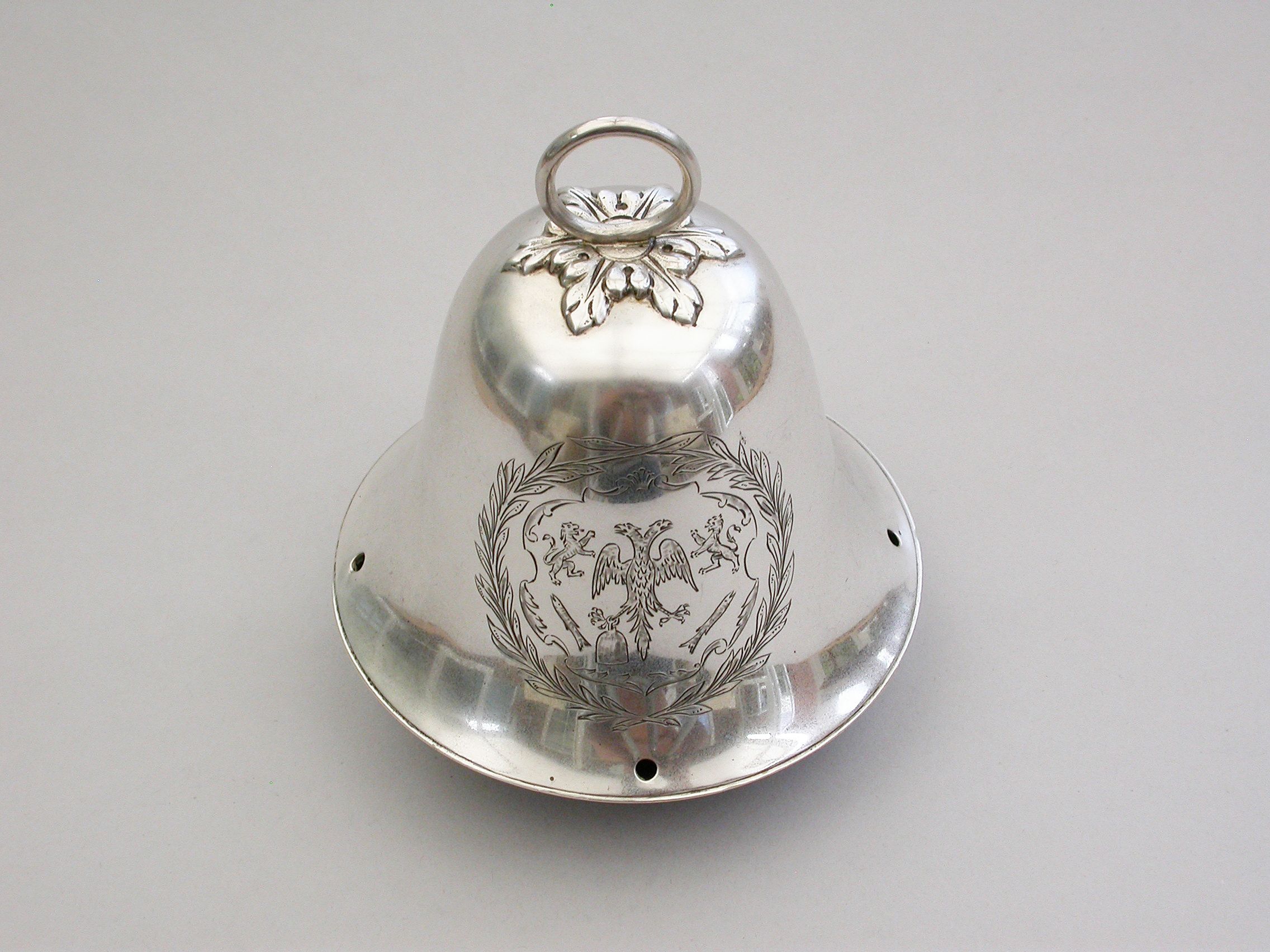
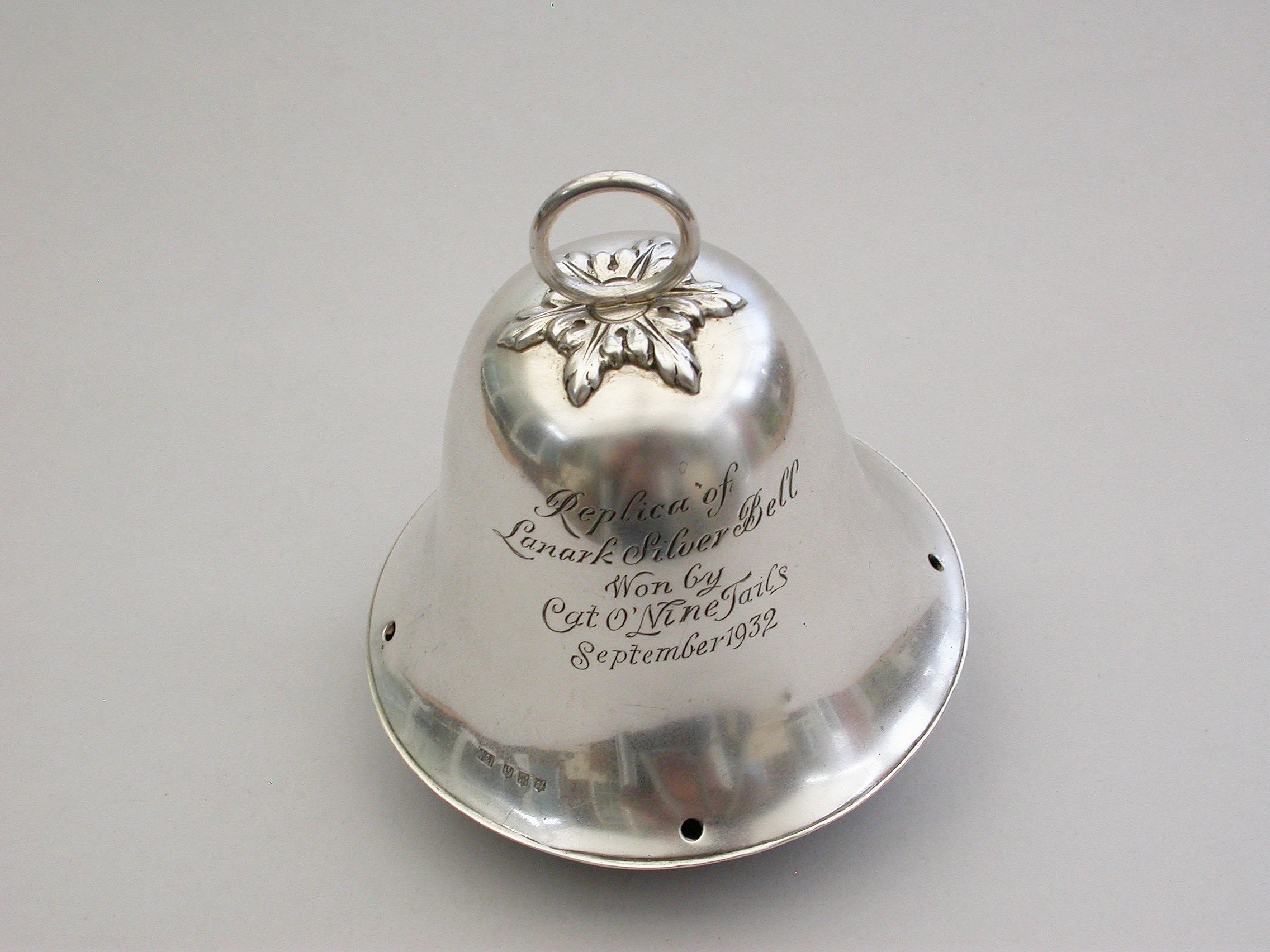
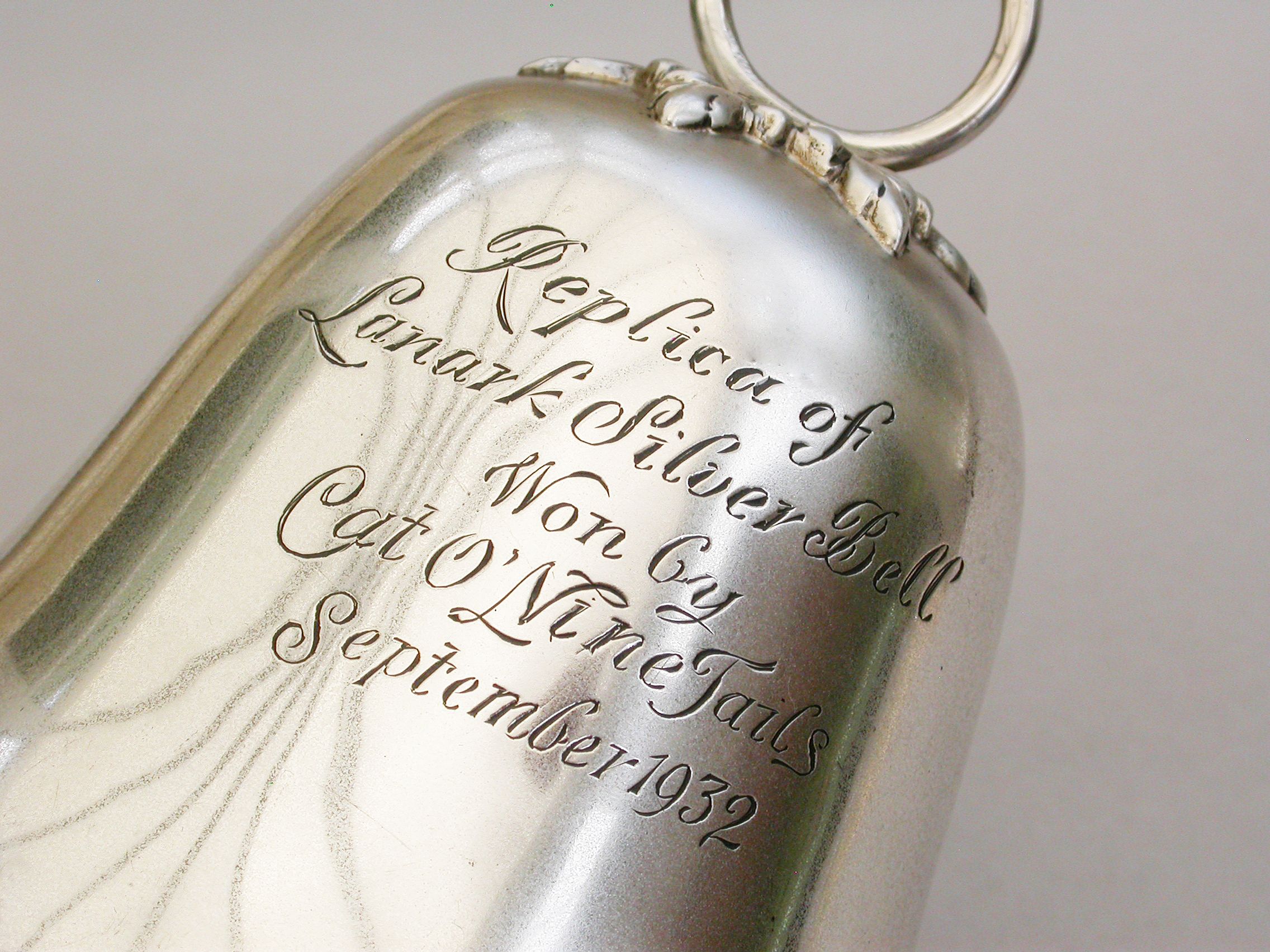
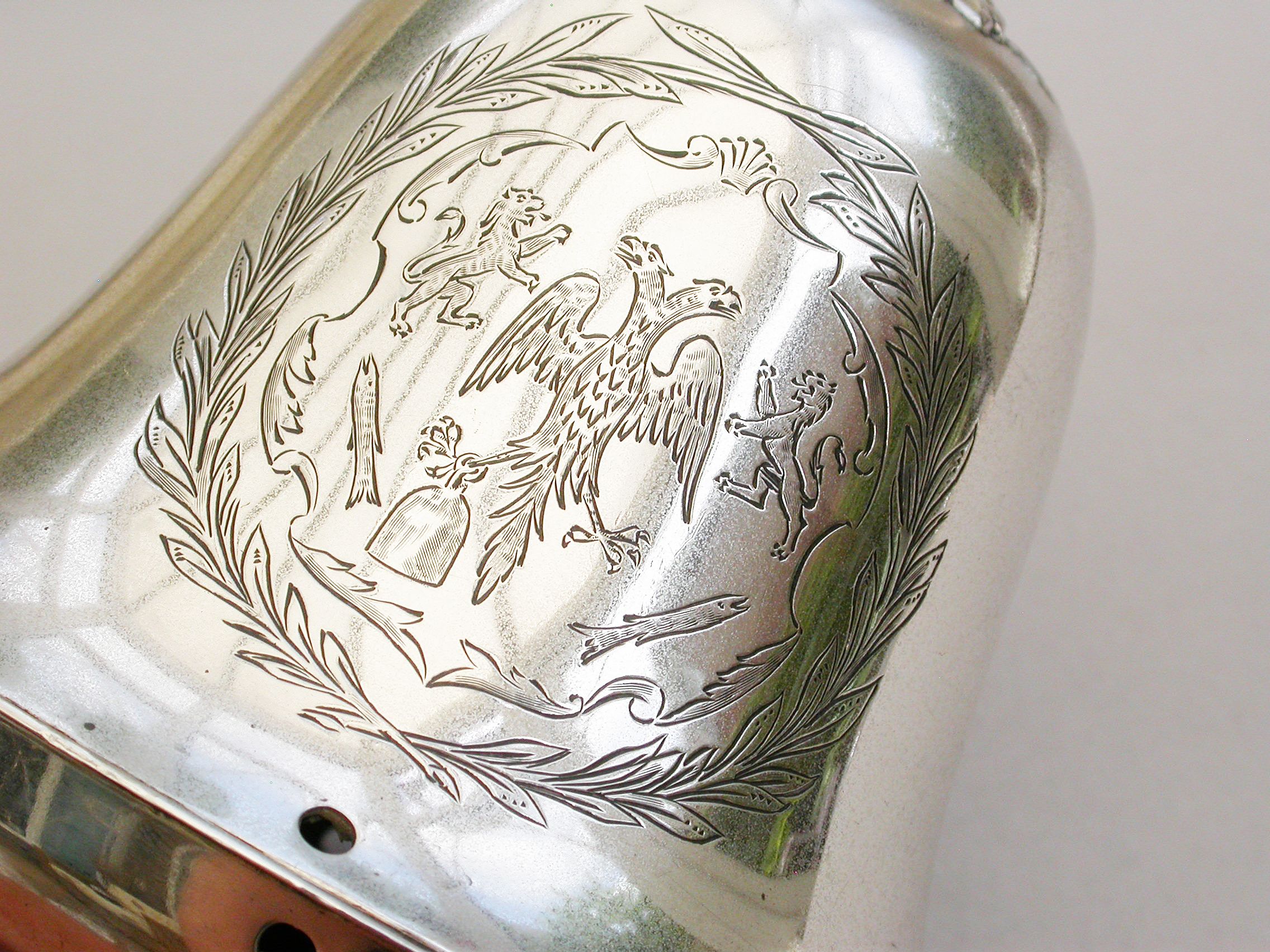
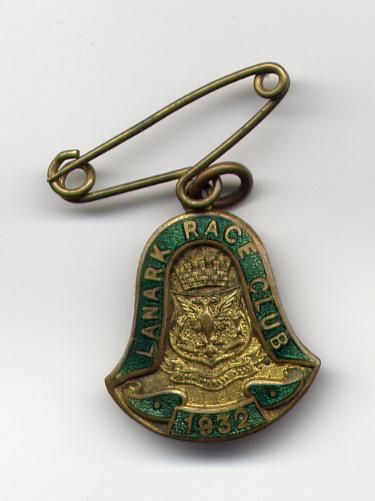
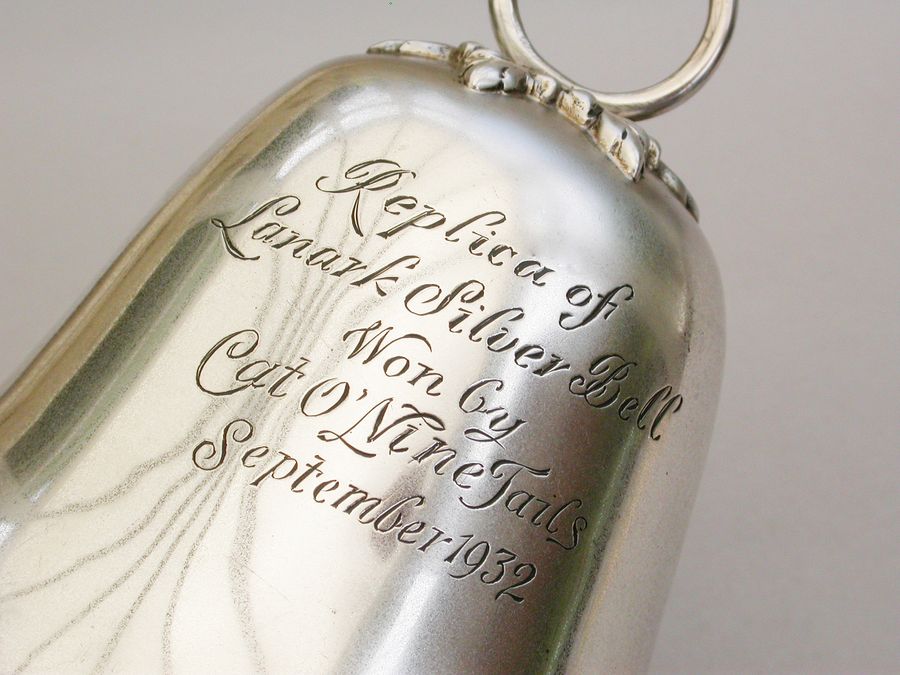
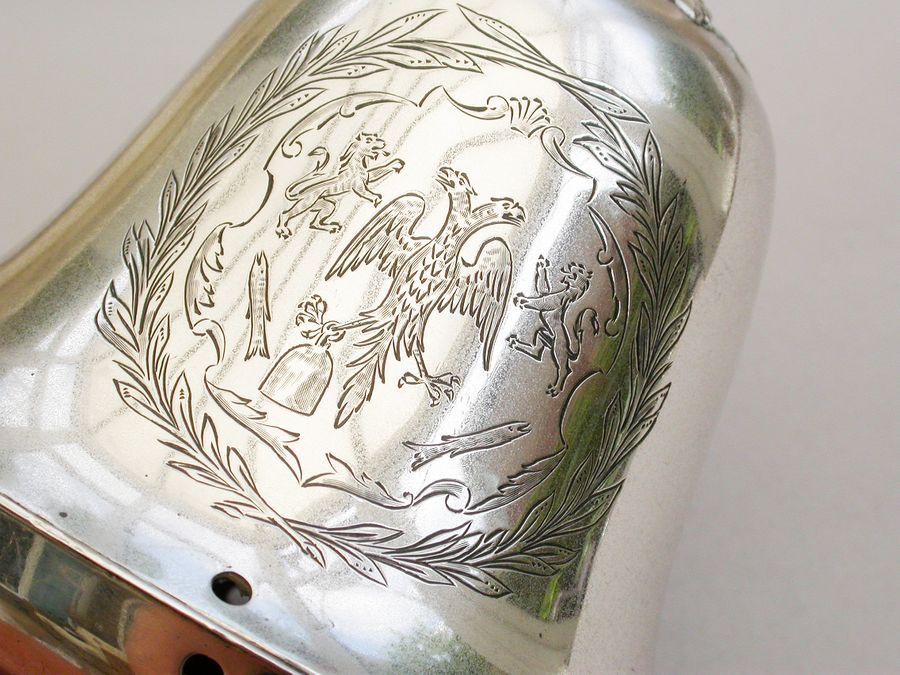
The crotal bell is of conventional circular bell-shaped form containing a pellet and is surmounted by foliate mount supporting a plain circular suspension ring: it is engraved with the arms of the Royal Borough of Lanark, together with the legend 'Won by Cat O' Nine Tails - September 1932’.
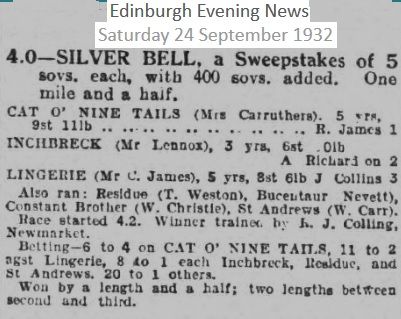
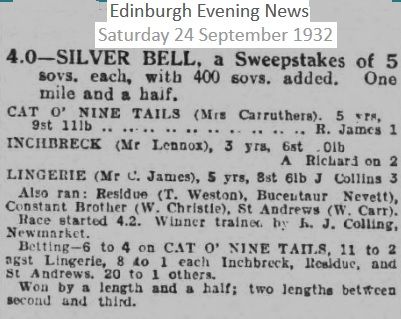
The present bell was the trophy awarded to the winner of the Lanark Silver Bell Handicap, a race run over a distance of a mile and a half, on Saturday, 24th September, 1932: the winner, Cat O’ Nine Tails, was owned by Mrs J. Carruther, trained by R.J. Colling of Newmarket and ridden by R. James in a race in which seven ran and was held at the now-closed Lanark Racecourse. Cat O’Nine Tails won the race by a length and a half.
As was customary after 1903, the race prize took the form of a replica of the original ‘Lanark Silver Bell’ and these trophies were always supplied by the Scottish crown jewellers, Hamilton & Inches: this until 1977, when the last race was run at that racecourse.
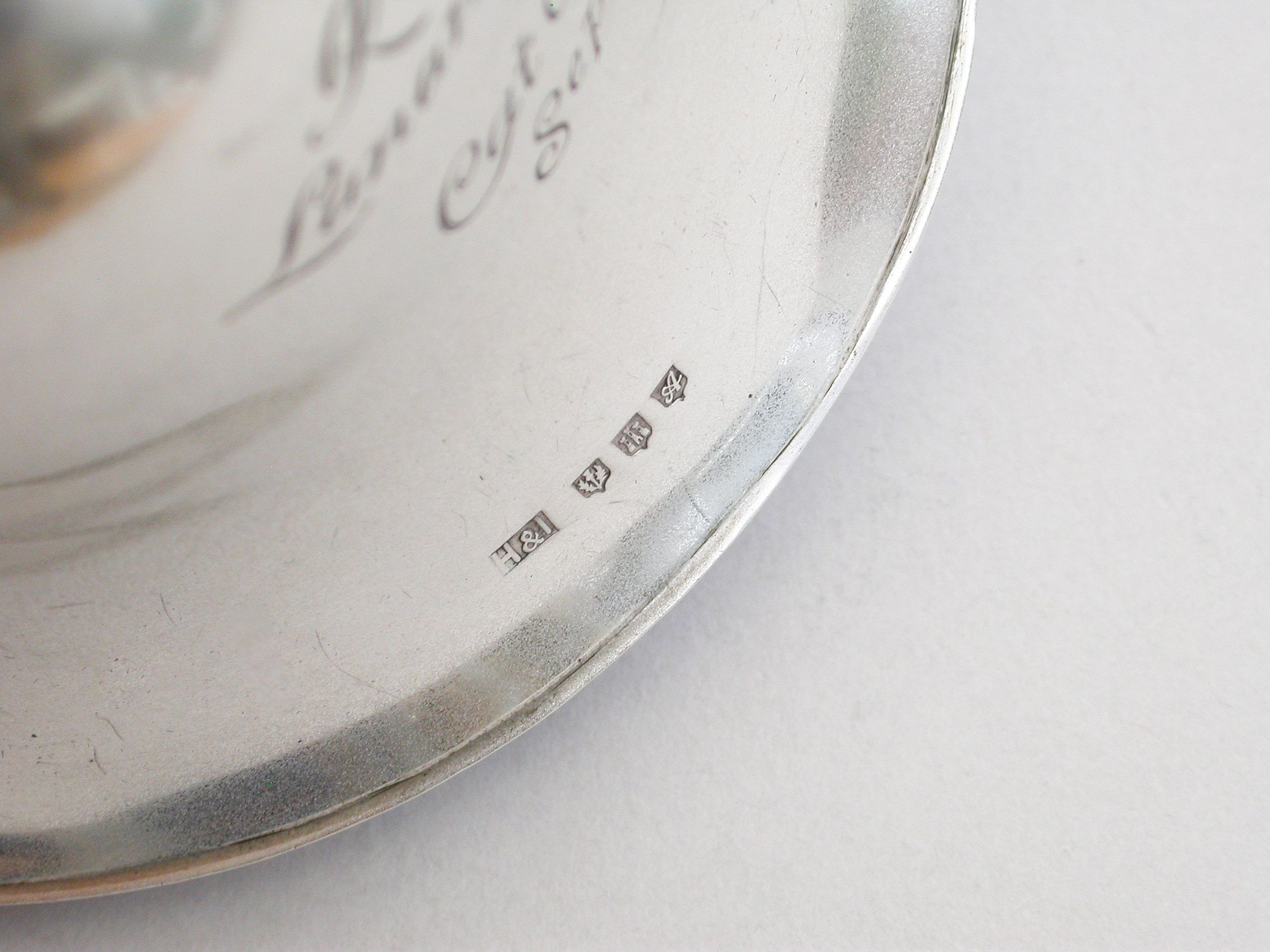
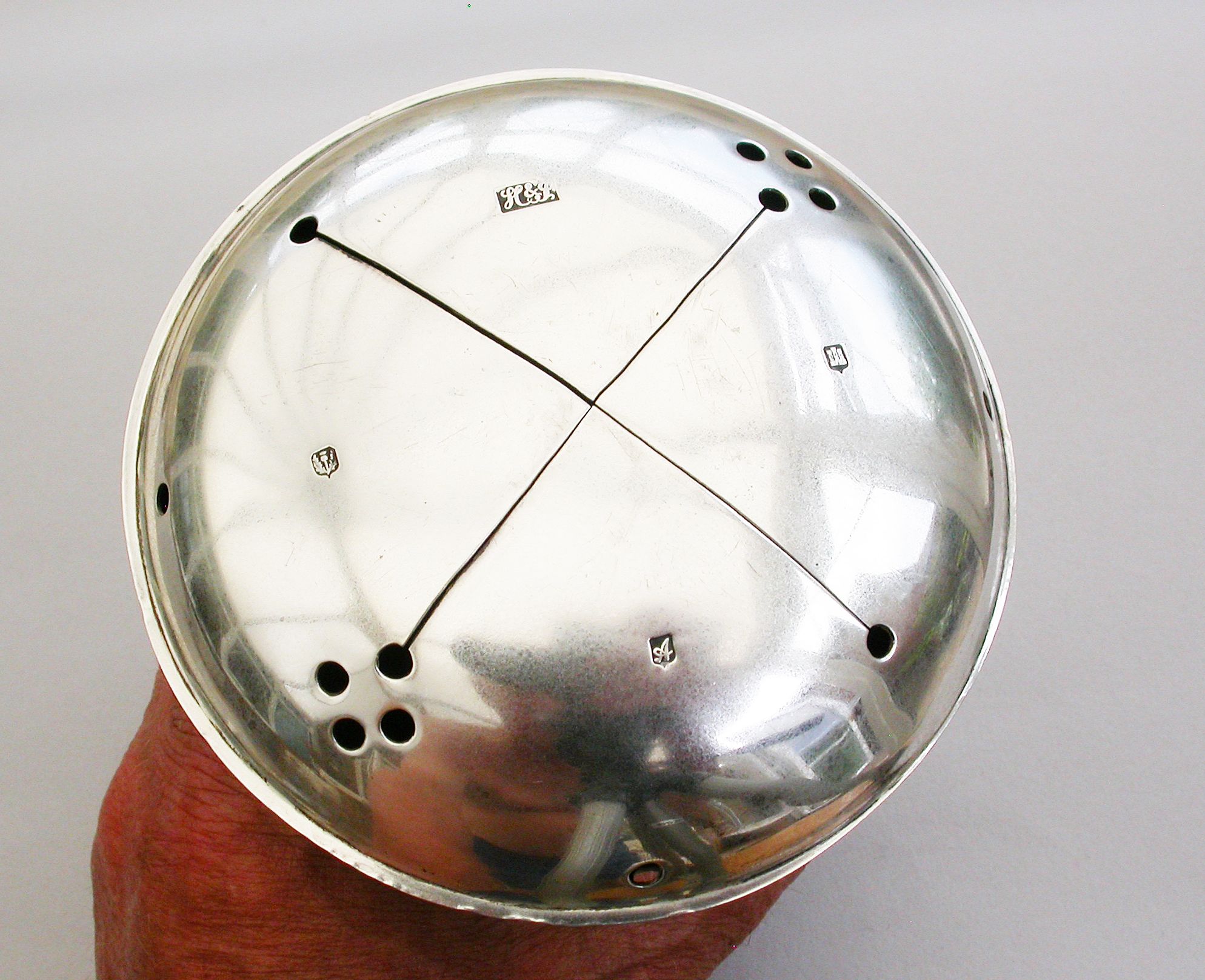
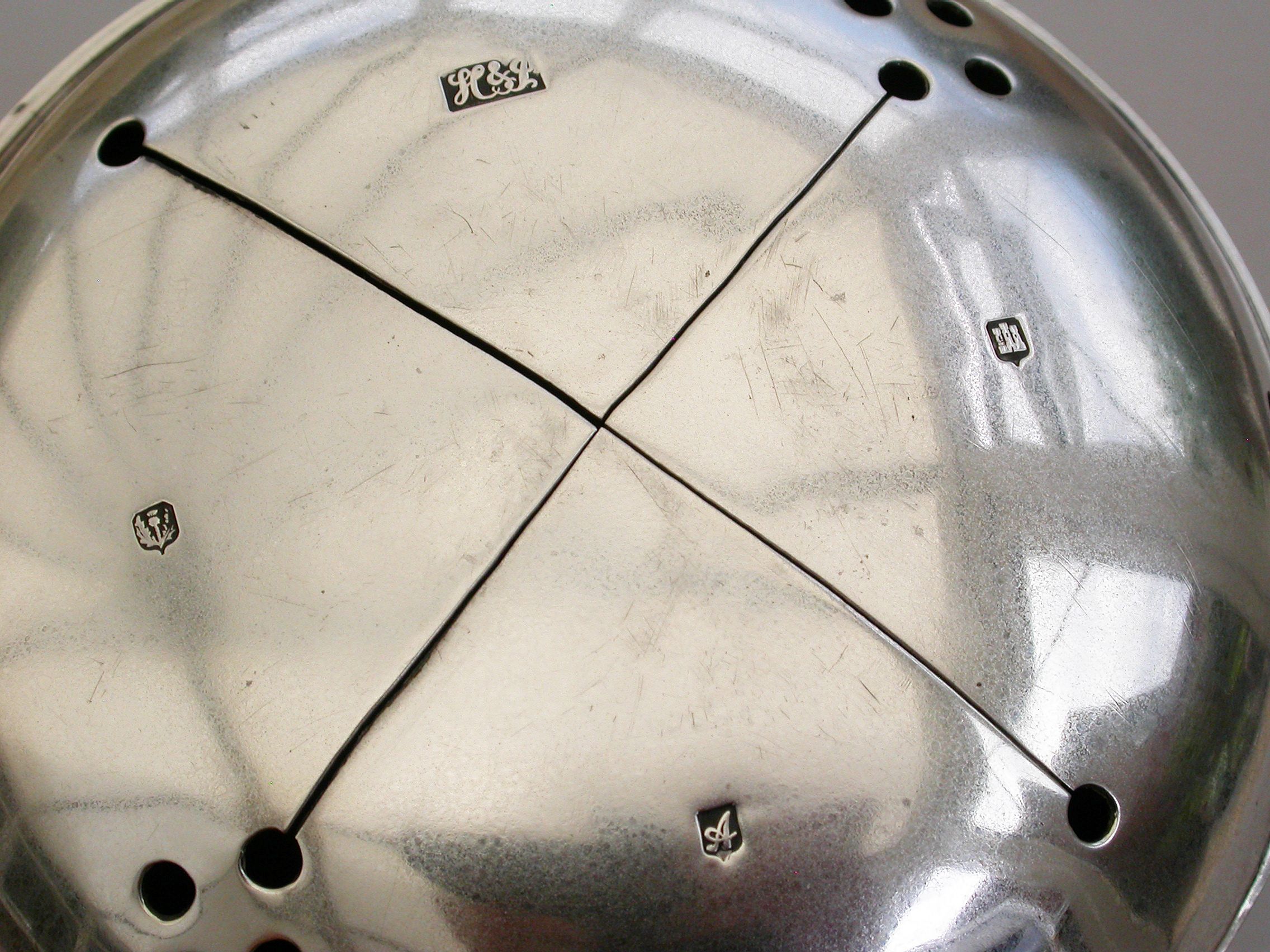
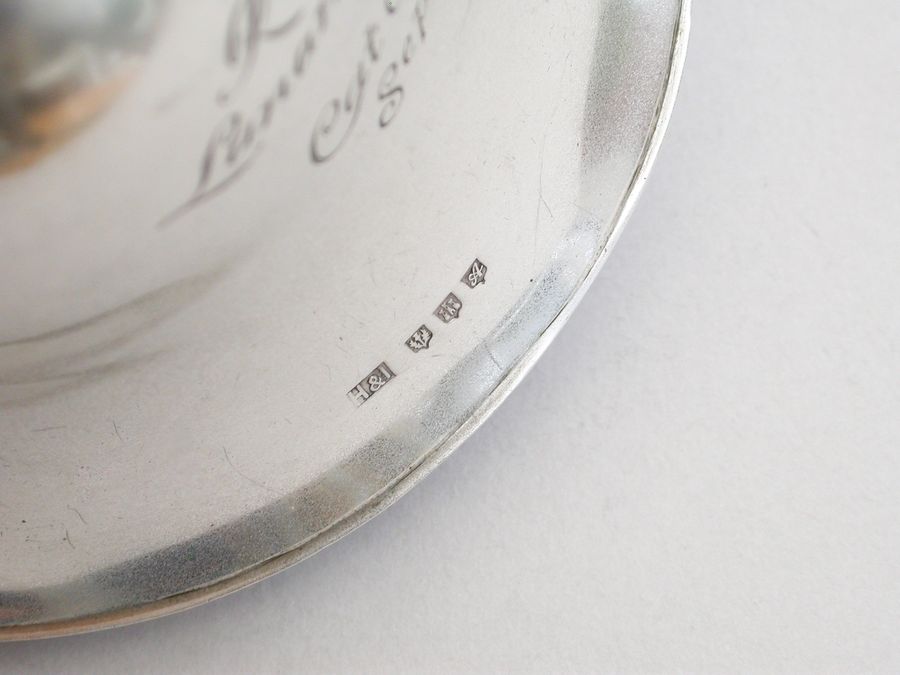
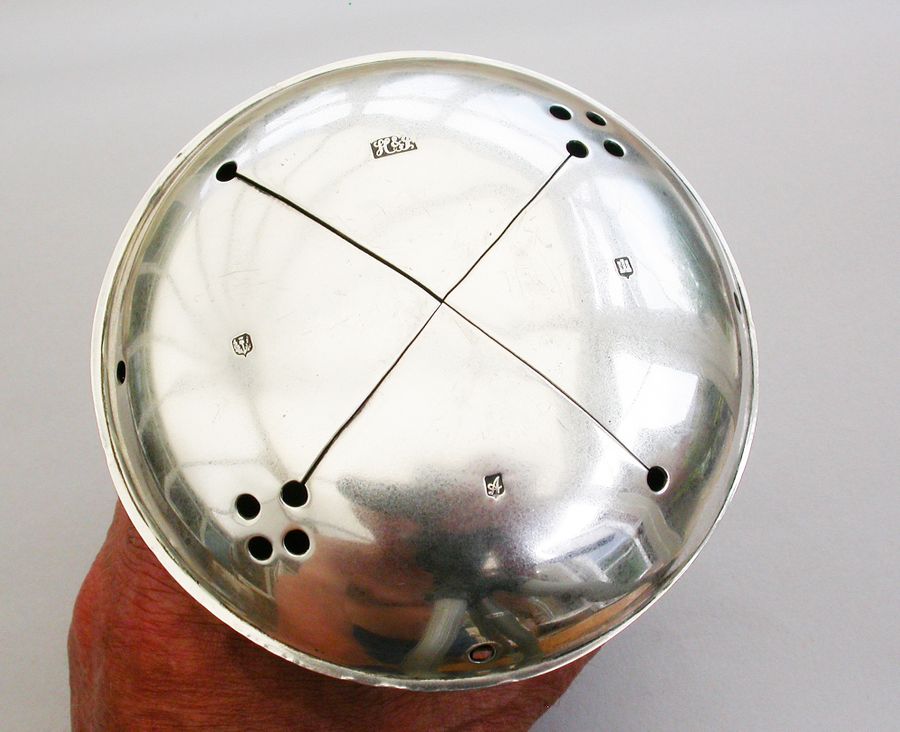
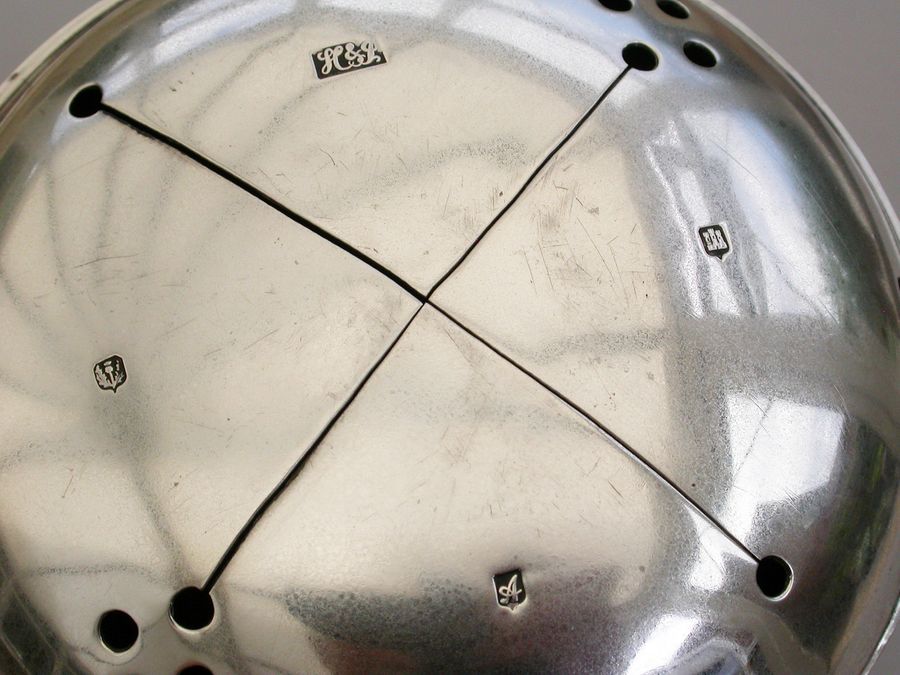
The bell bears the maker’s mark of Hamilton & Inches and is struck with hallmarks for Edinburgh 1931.
______________________________________________________________________________________________________________________________________
In 1608 The Town Council have Henry Lindsay, Goldsmith, Edinburgh make a horse racing trophy for them. Later - known as the Lanark Silver Bell. The bell stands 4 inches high and has a circumference of 4 inches. Each winner had their details engraved on a small silver shield which was then attached to the Bell. After 1903 the winner no longer receives the trophy to keep for the year but was presented with a replica. Their name engraved on a shield was still attached to the trophy. The stand the bell rests upon was a Victorian addition to house the increasing number of shields. The earliest shield is inscribed 'Won by me, Sir John Hamilton of Trabroun, 1628'. After Lanark closed the Silver Bell, which is owned by Lanarkshire Council, was moved to their Low Water museum in Hamilton. It dates back to at least 1608, and it is still in the vaults.
Earliest meeting: Thursday 4th June 1719
Final meeting: Tuesday 18th October 1977
There is every indication that a race meeting of some kind took place in Lanark as early as 1170, and with it a prize of a Silver Bell instituted by King William the Lion of Scotland. Records from 1661 imply that the Silver Bell was contested on the third Tuesday in May. There is no indication that the race was still taking place in 1661, indeed the earliest record of a Silver Bell actually being contested was on Thursday 4th June 1719, although it is uncertain whether it actually took place in Lanark. The first occasion results are provided in a racing Calendar was from the two day meeting on Thursday 15th and Friday 16th September 1785. The meeting opened with a 50 Guineas Purse which saw the Duke of Hamilton’s Milfield walk over, while the next day a similar Purse was won by the Duke’s Disguise beating Mr Thompson’s Sobersides. Meetings continued at irregular intervals throughout the 19th century, although the management was not as tight and effective as at other Scottish courses. In 1870 the racing authorities introduced a rule stating no races were to be run for a prize of less than £50, but at the two day meeting held on Thursday 25th and Friday 26th September 1873, whilst the Silver Bell Handicap was worth £60 to the winner, the Lee castle Stakes was only worth £35, the Jerviswoode Cup £28 and the Douglas Stakes £30. The first recorded meeting on the New course, about a mile and a half from Lanark, with Edinburgh to the North and Ayr to the South, was in 1909. That course was described as an oval of some 1 mile 140 yards with a gradual rise to the finish, but when it rained it became treacherous. It was possible to start the 5 furlong races on the straight course, while 6 furlong races had to be started on the round course. Racing ceased between 1914 and 1919 owing to the War, and ceased again in 1939 before returning for a popular meeting on Monday 24th and Tuesday 25th September 1945. In 1967, feeling confident about the future, a new stable block was built, but in the end this proved to be part of its undoing. Crowds decreased and the financial burden of paying for the stable block became too much. The final meeting took place on Tuesday 18th October 1977, after which the Levy Board decline to support the course with any further money.
This racecourse is covered in Volume 3 of Racecourses Here Today and Gone Tomorrow.
£460.00