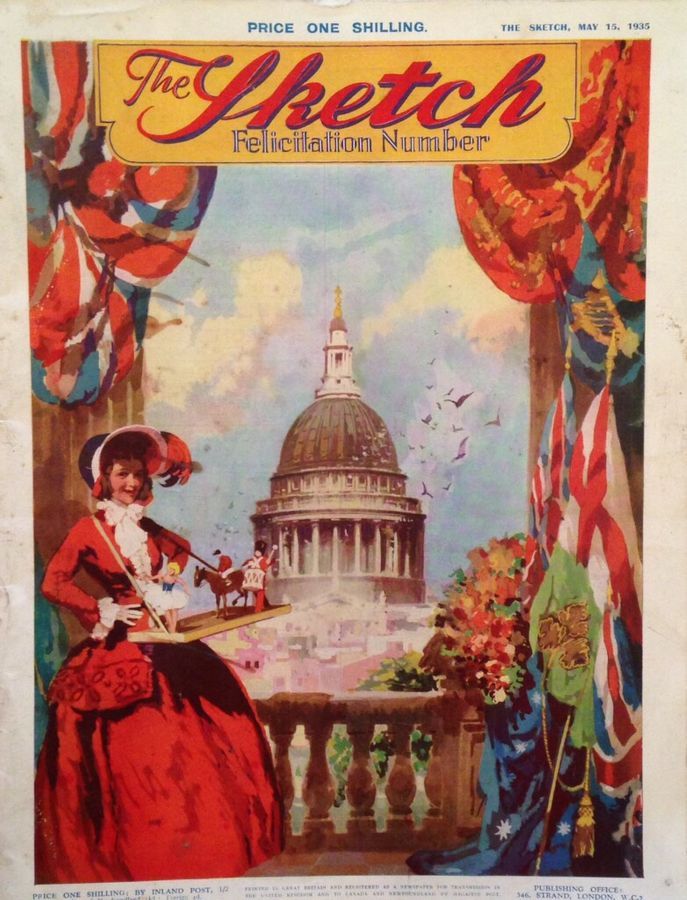

Rare George V Figural Silver "Miss Sketch" Table Bell - The Sketch Magazine
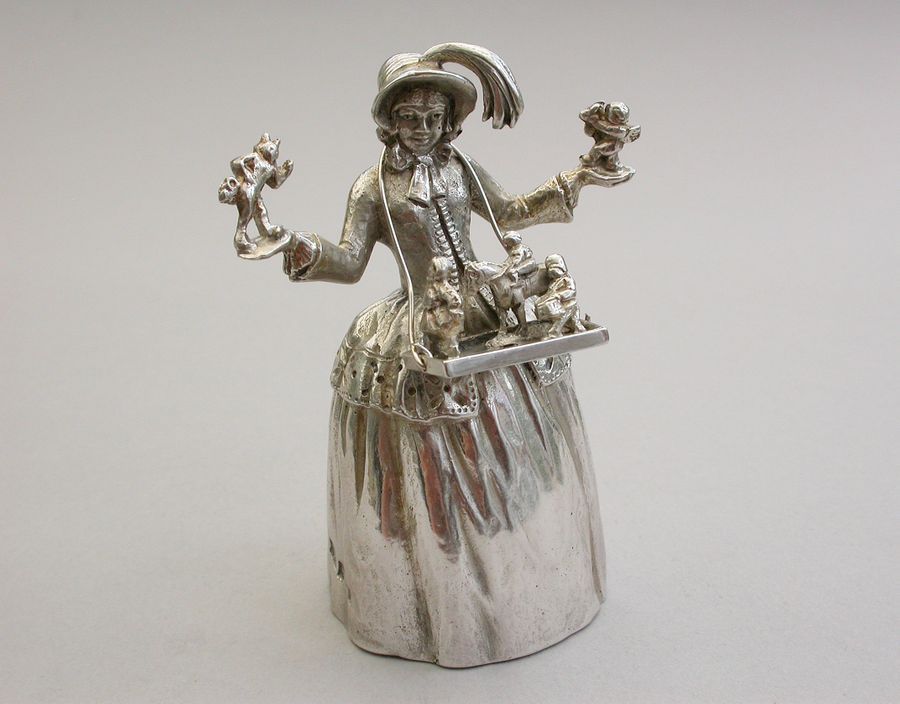
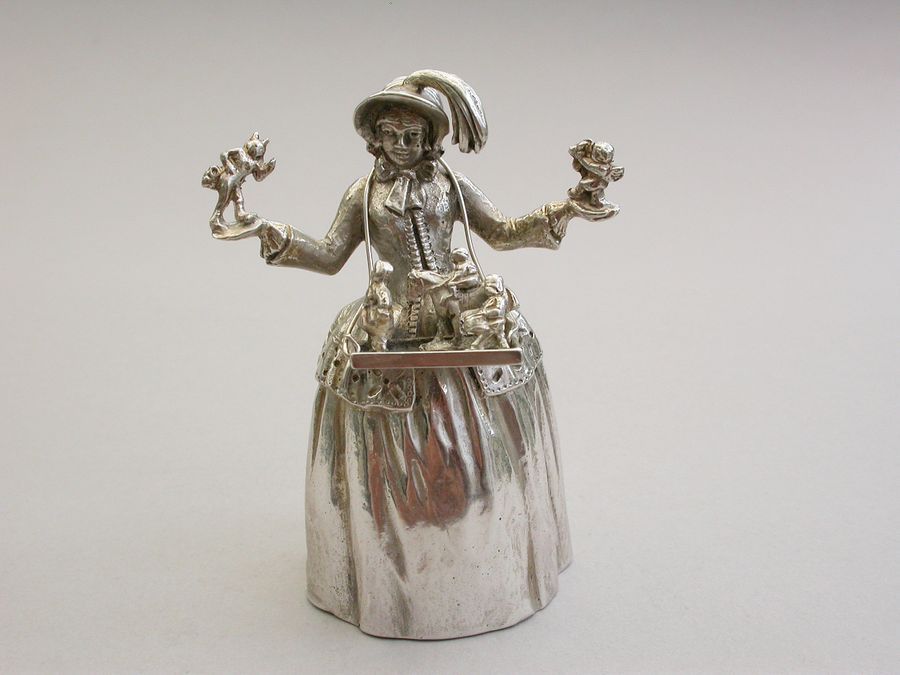
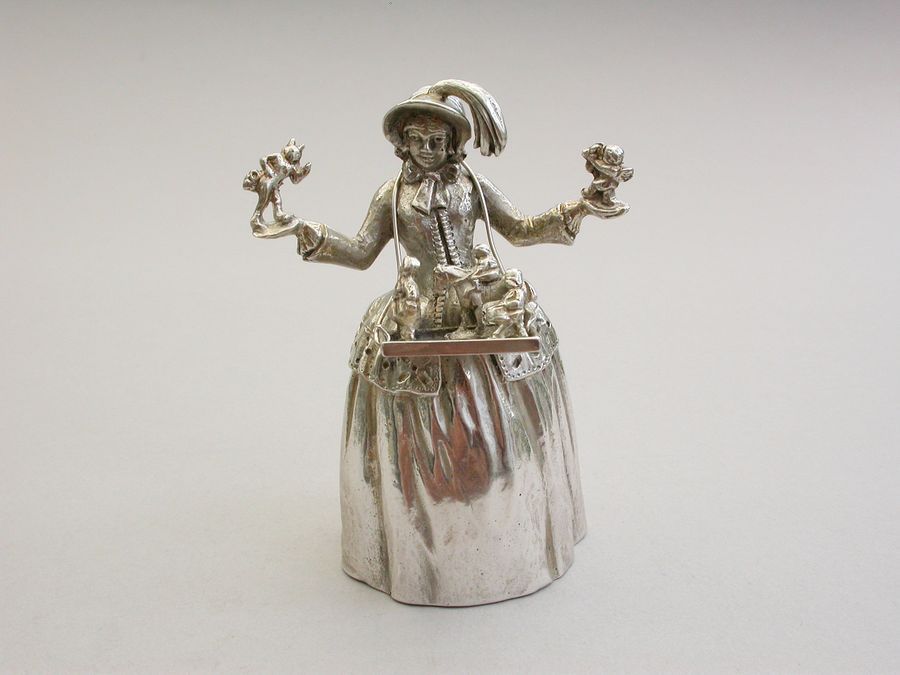
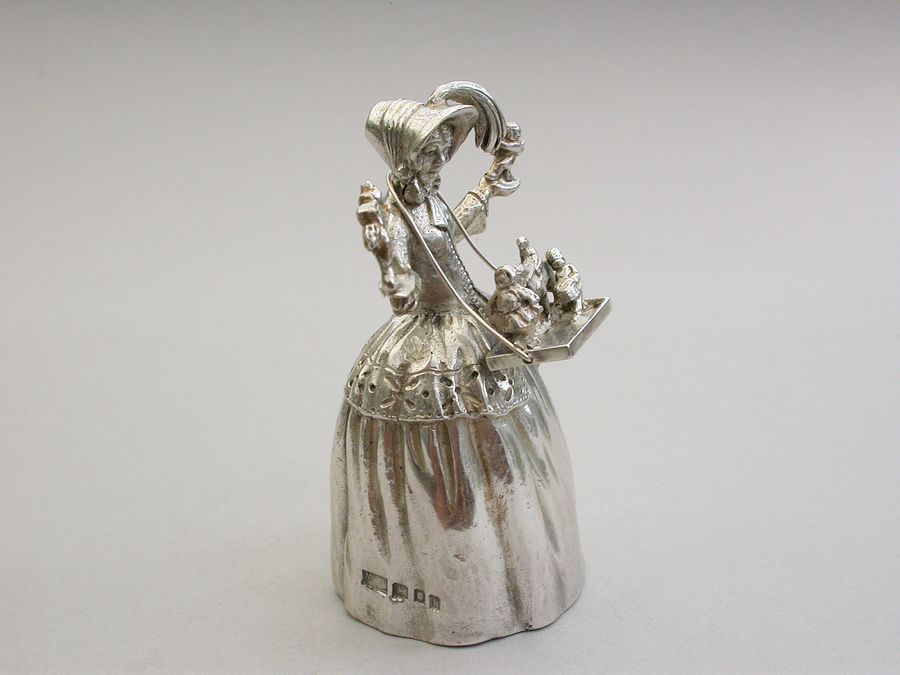
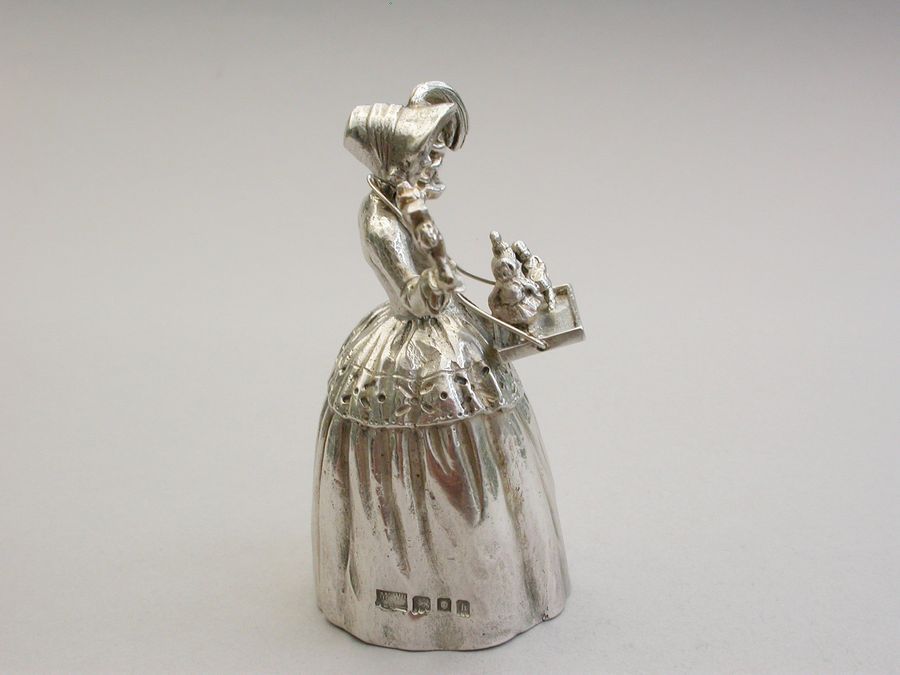
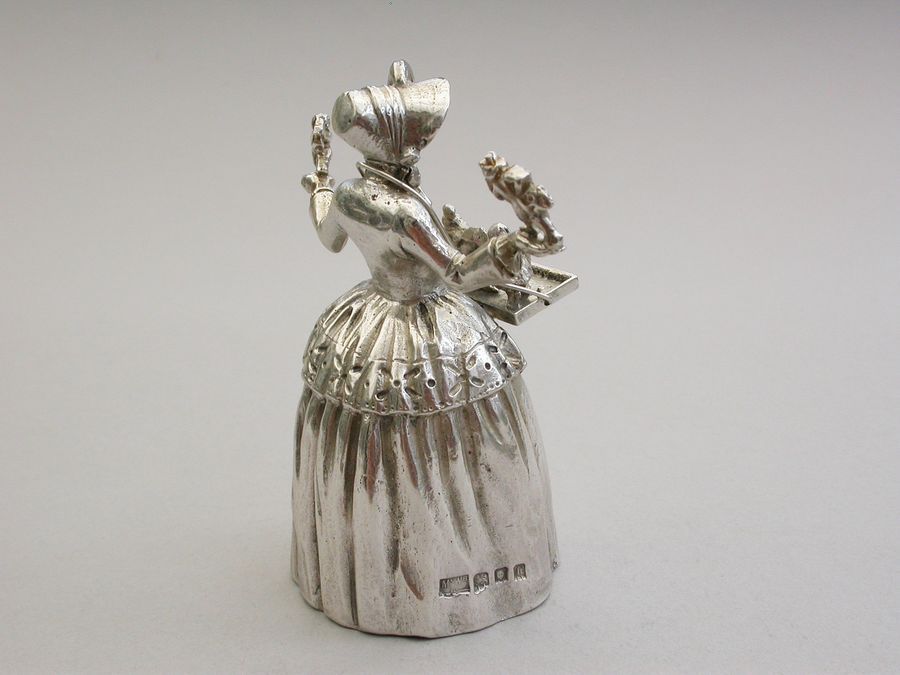
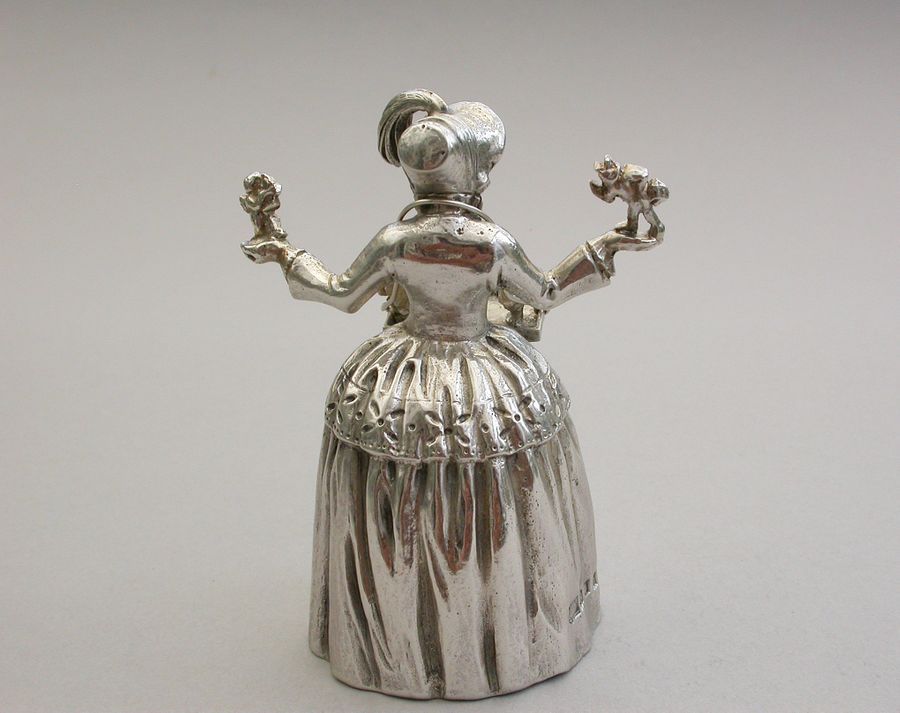
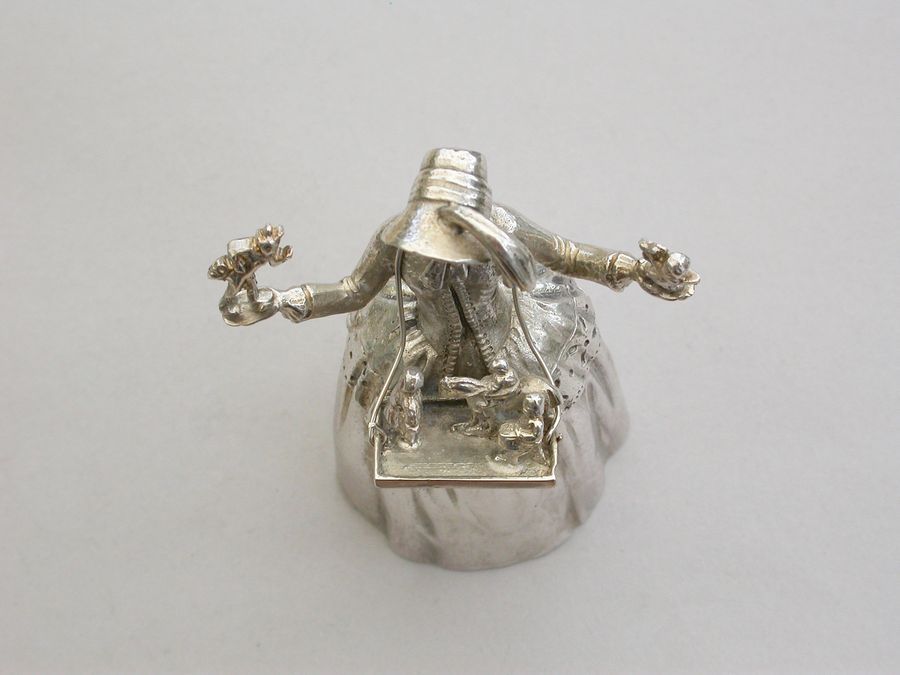
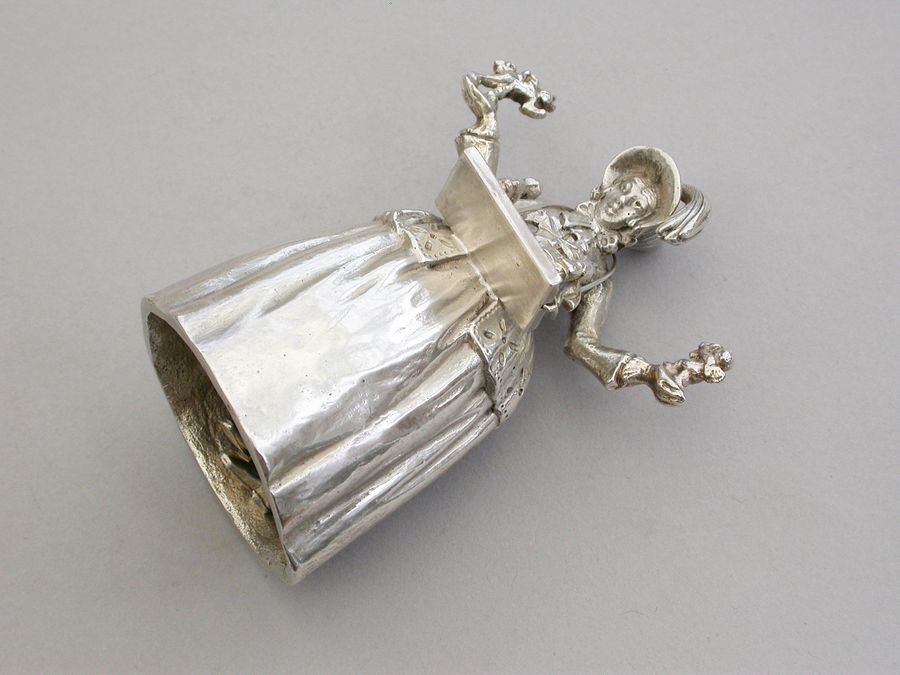
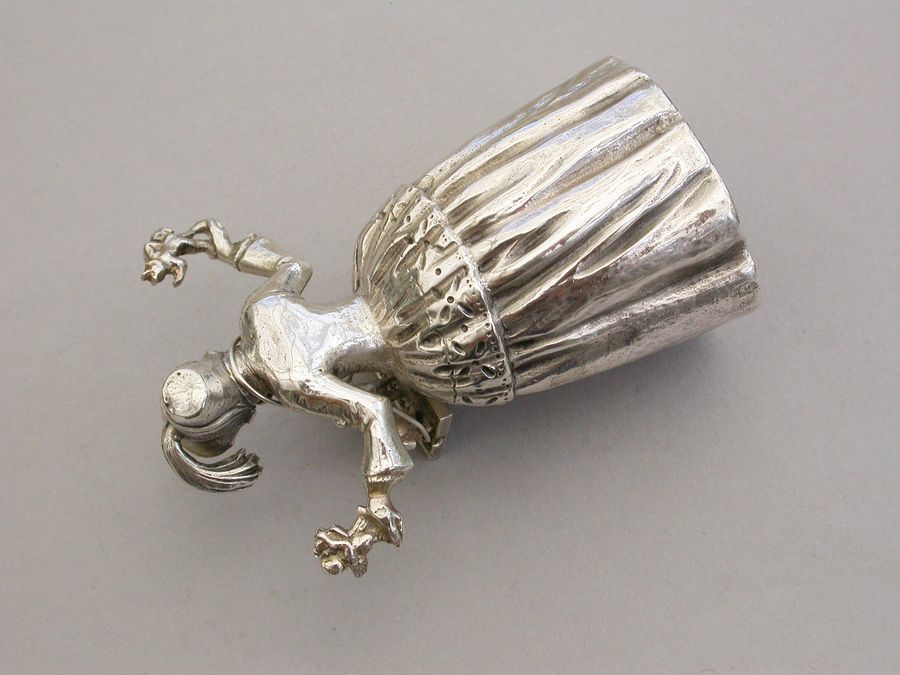
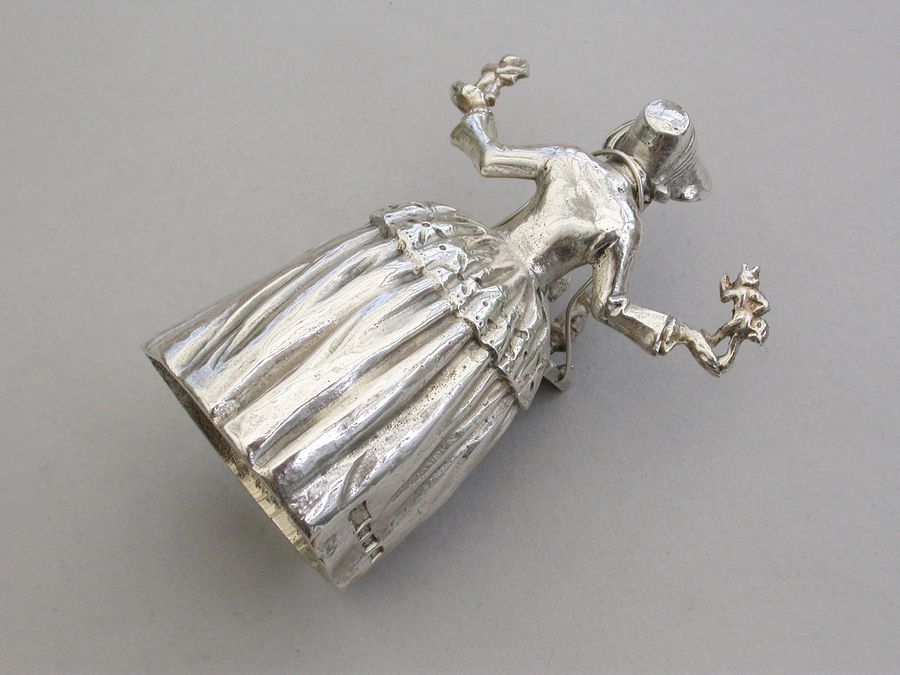
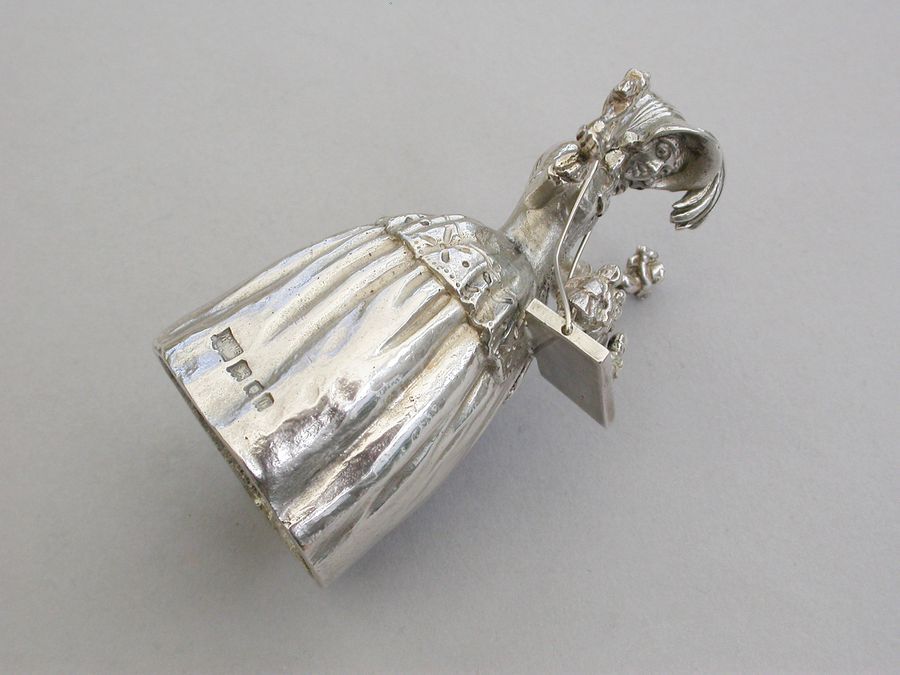
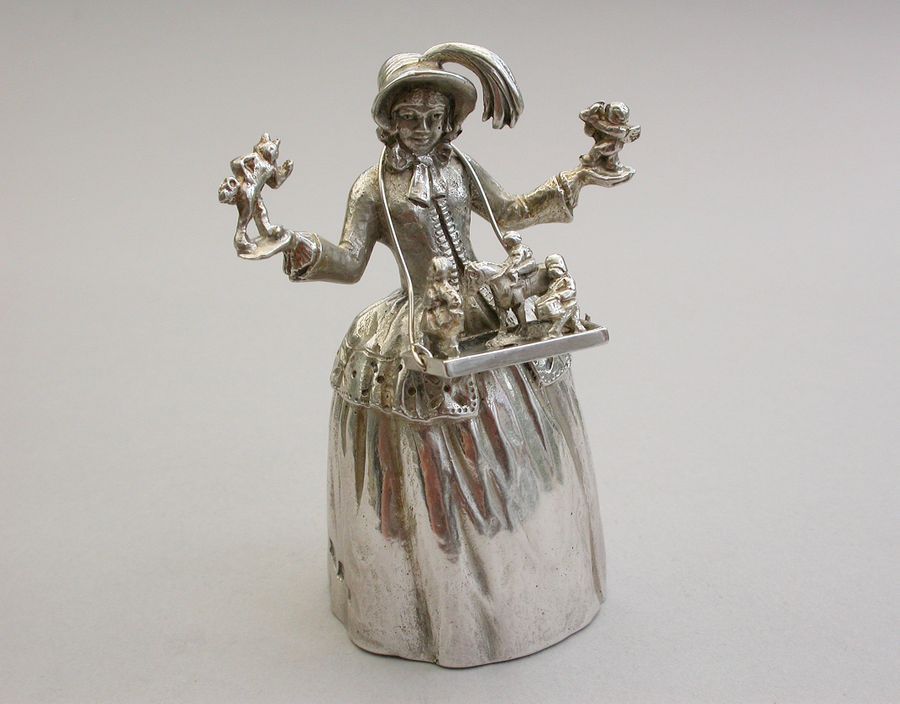
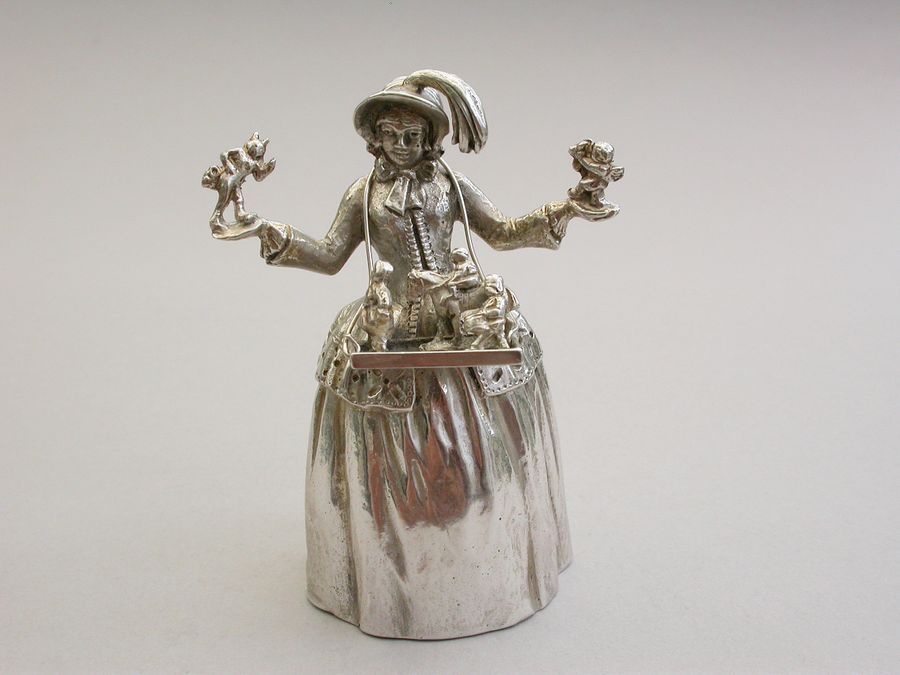
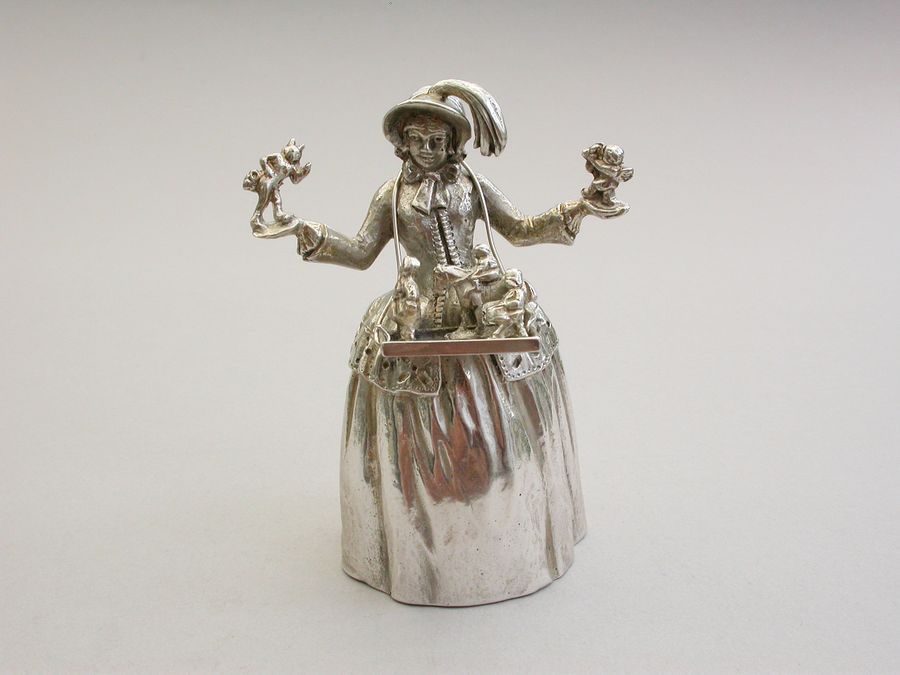
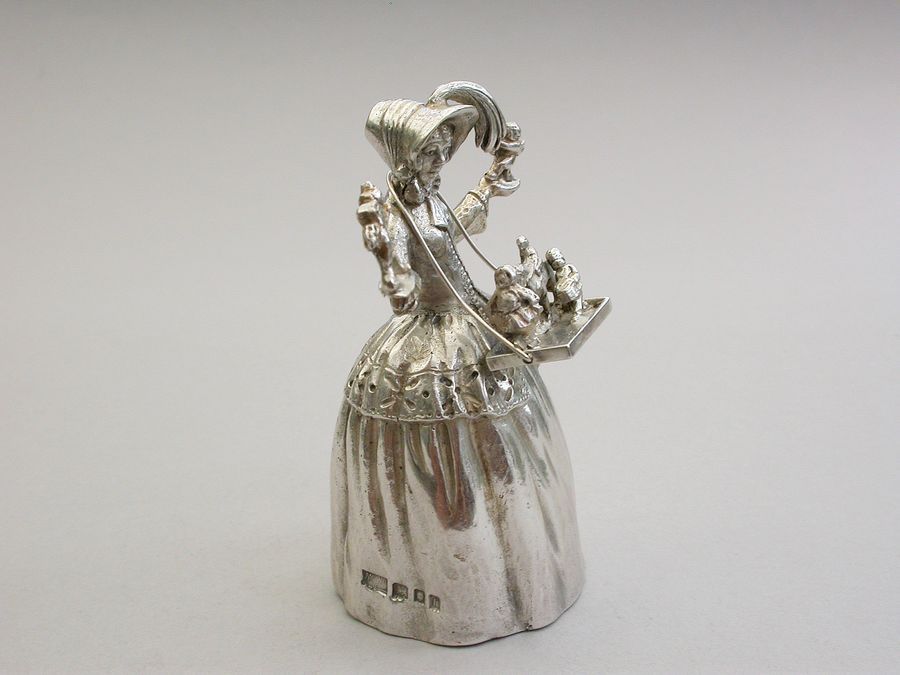
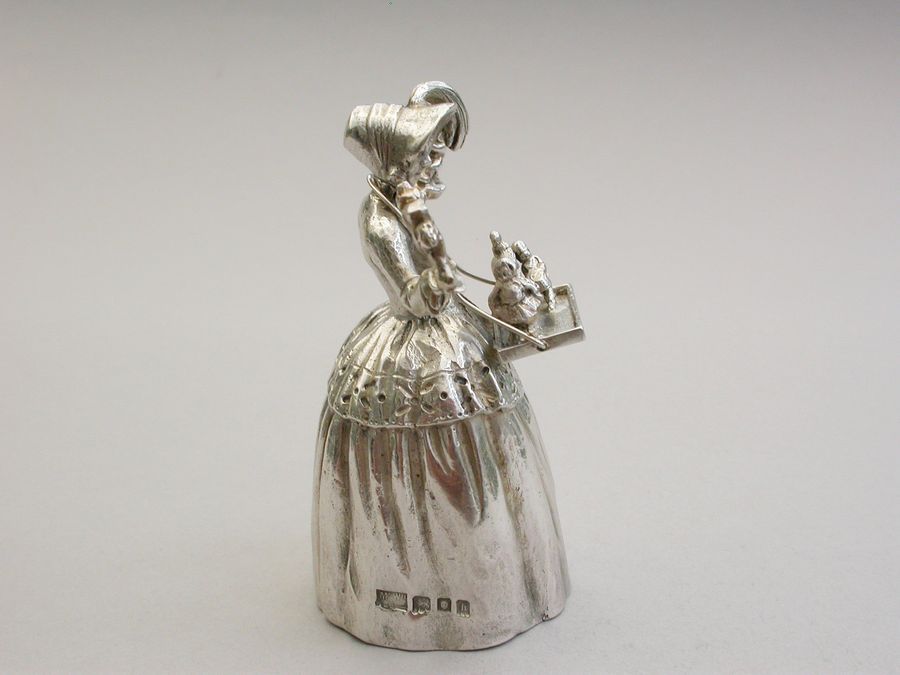
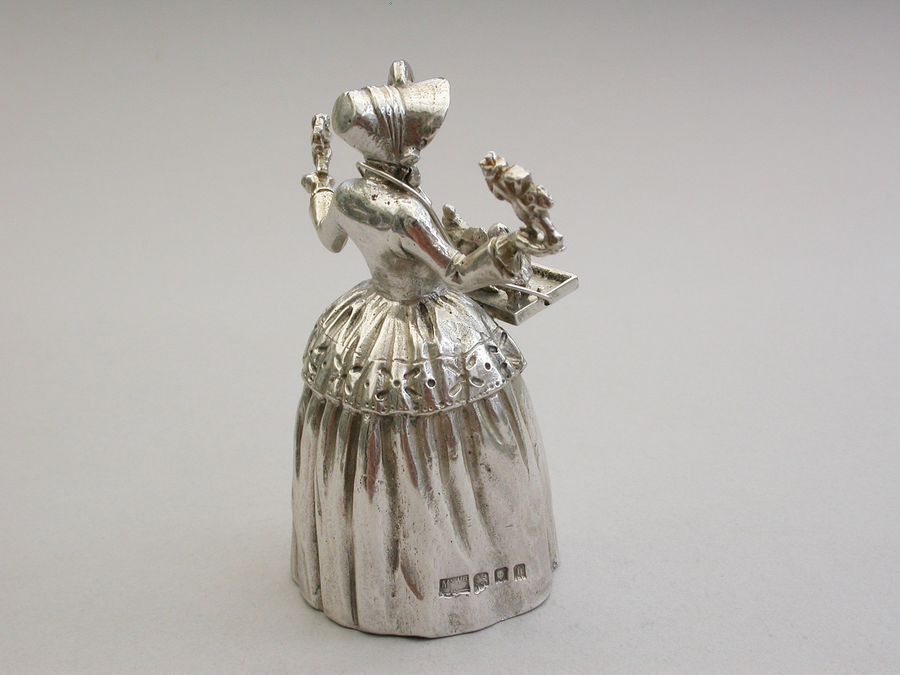
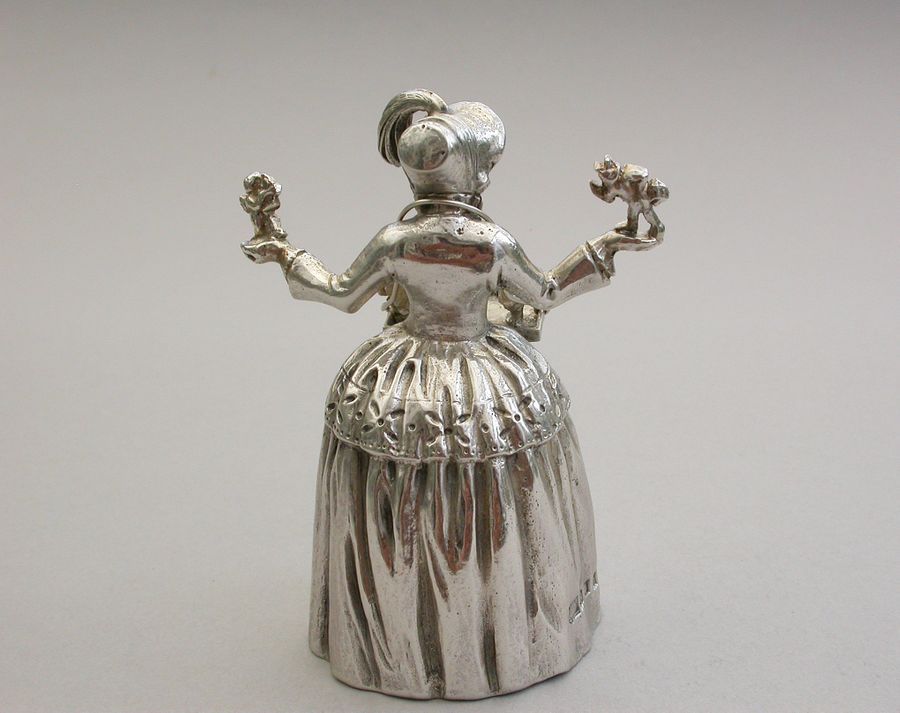
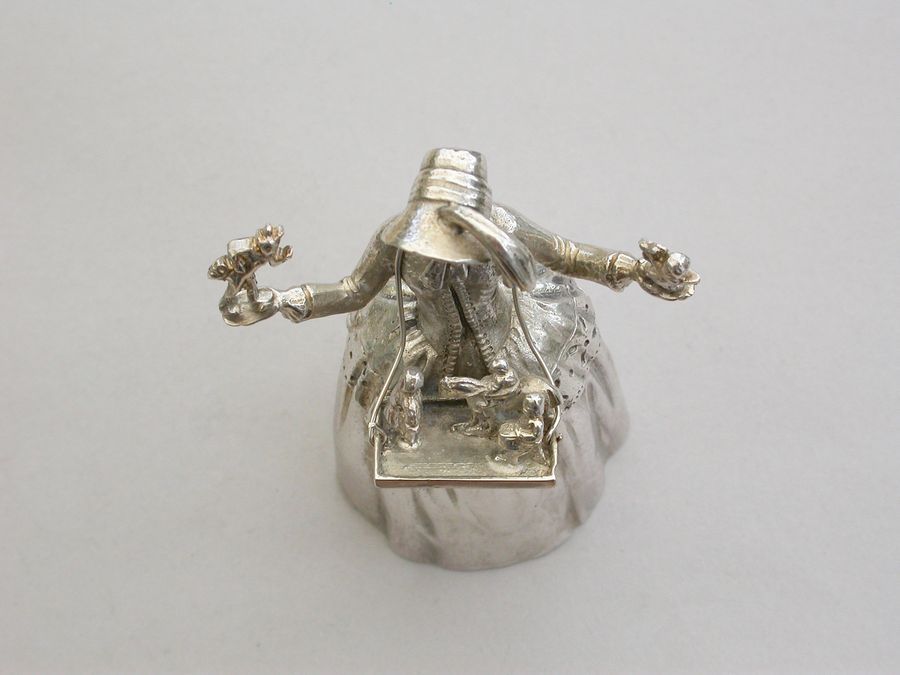
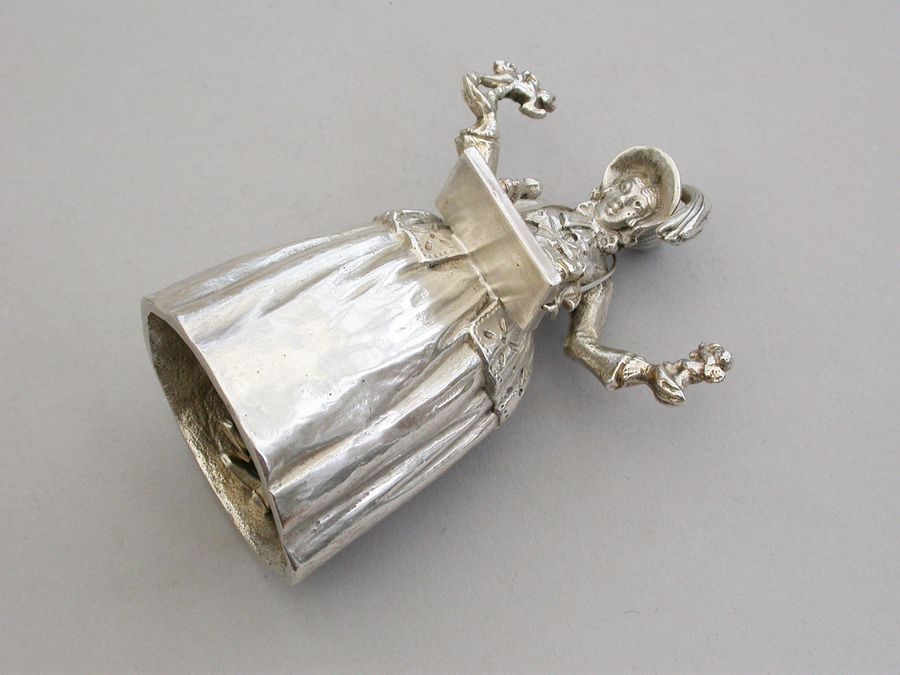
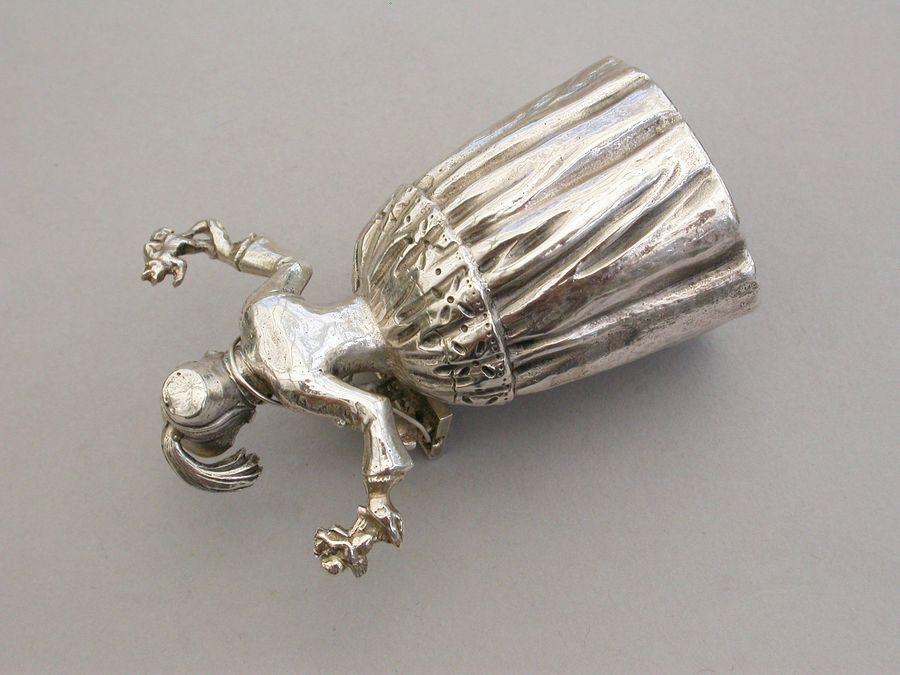
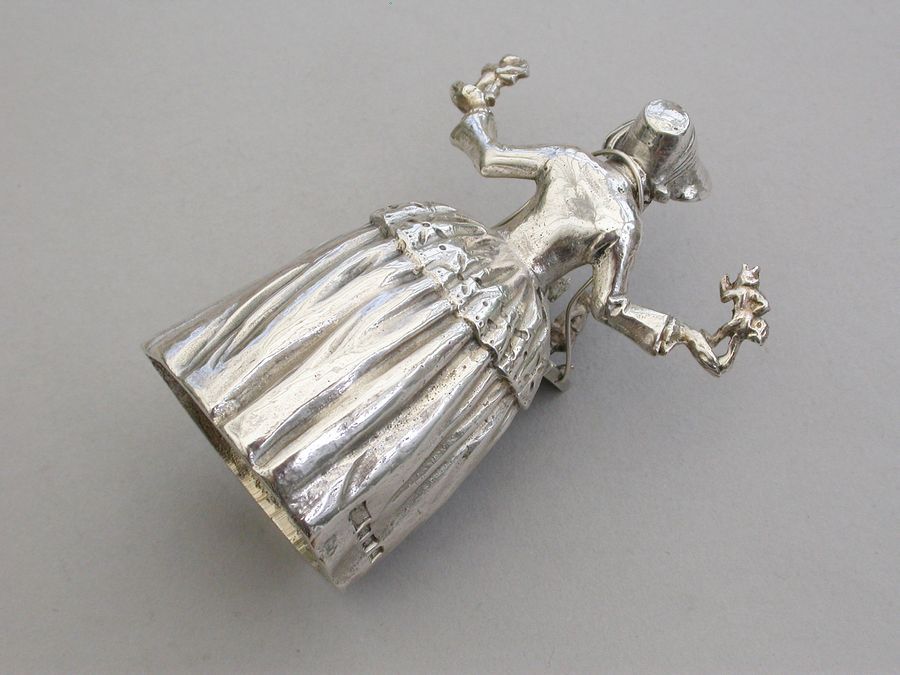
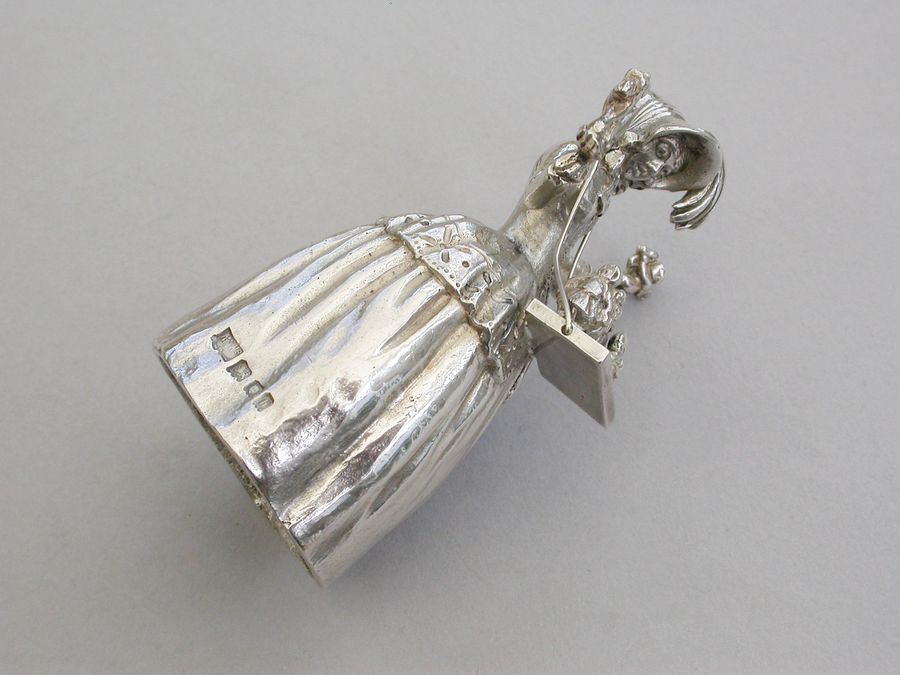
The cast silver bell is naturalistically modelled in the form of a young female street vendor wearing a crinoline skirt and sporting a feathered bonnet, she carries before her a tray displaying her wares two examples of which she also holds aloft in both hands. The figure is depicted wearing early Victorian dress: the fitted jacket, with a deep peplum displaying an embroidered border and lawn engageantes at her wrists, worn over a crinoline skirt. The woman is using a poke bonnet of the type in fashion at this period, adorned with a large plume of feathers and secured by a wide ribbon tied in a bow under the chin. The young woman depicted is an ‘image peddler’, a variety of street vendor well known in England in the late Eighteenth and Early-to-Mid-Nineteenth Centuries. Such vendors would wander cities and smaller towns carrying trays of white and painted plaster figures, some of classical inspiration and others purely decorative or even comic, which they would offer for sale to the general public. This female ‘image peddler’ is shown carrying her tray, on which she has three figures, she offers a further two in her hands.
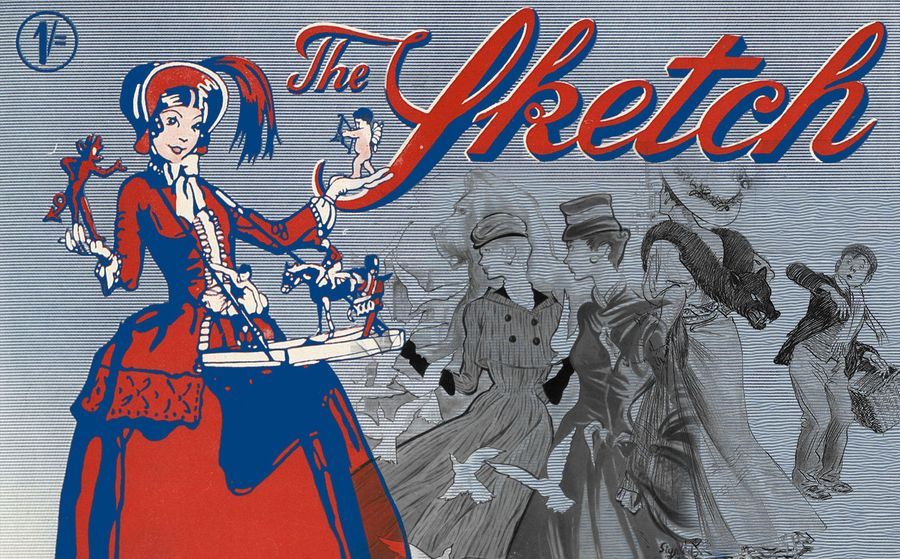
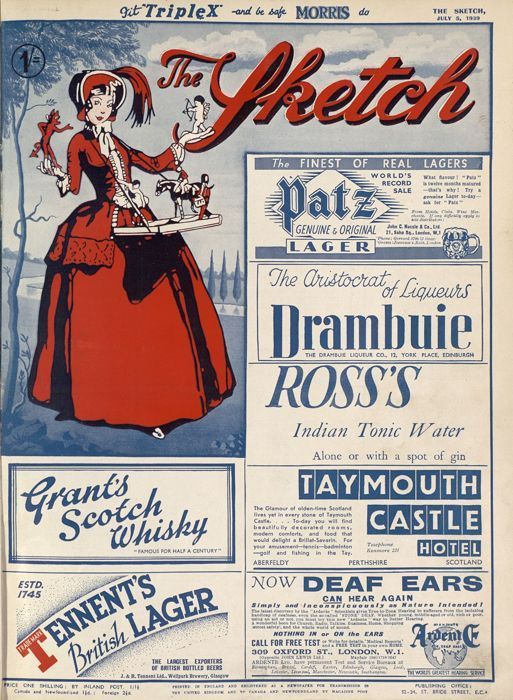
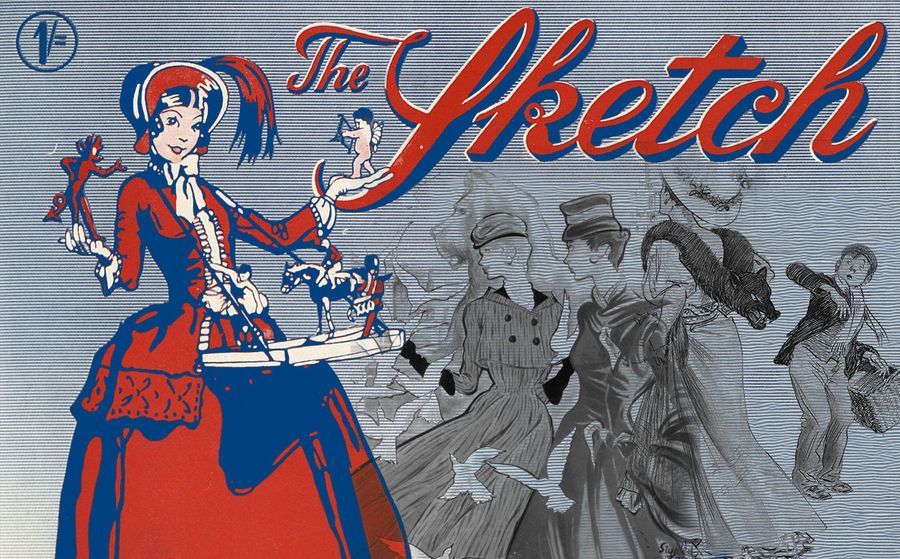
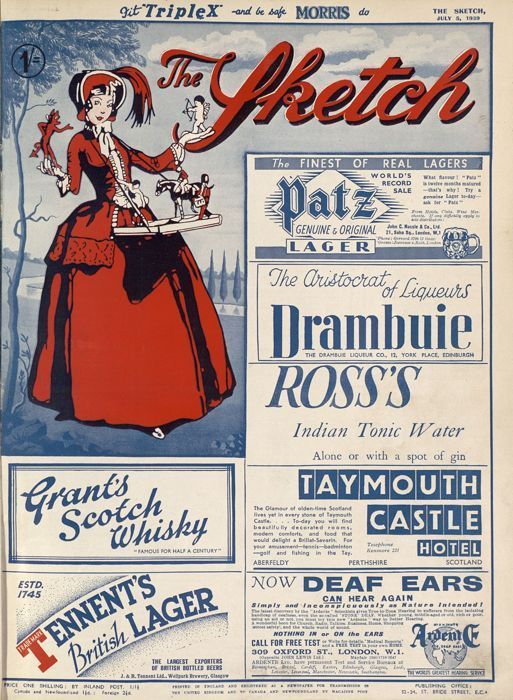
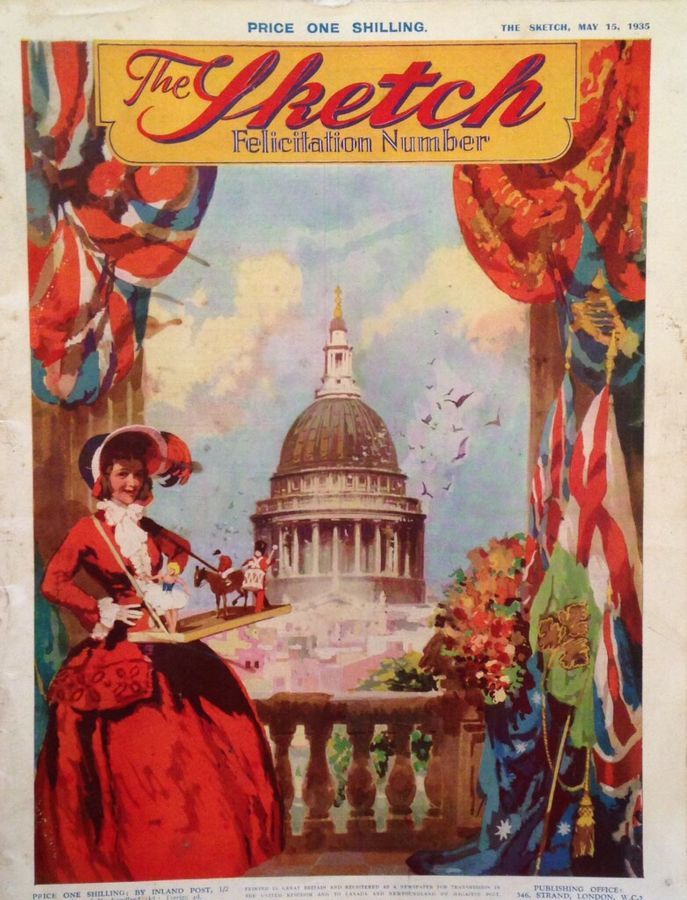
This figural table bell is a representation of ‘Miss Sketch’ a eponymous fictional character used as an advertising mascot by The Sketch magazine and the images that she offers for sale represent the most popular subjects that were covered by the publication: a ballerina for the theatre, a jockey for sport (The Sketch covered the English point-to-point calendar), a cupid for love stories, a soldier beating a drum for current affairs and a devil who represents devilish satire.
The majority of the ‘Miss Sketch’ silver bells that appear on the market have lost one or more of these images, in fact the present example is the only complete example that has been offered for sale over the last few years.
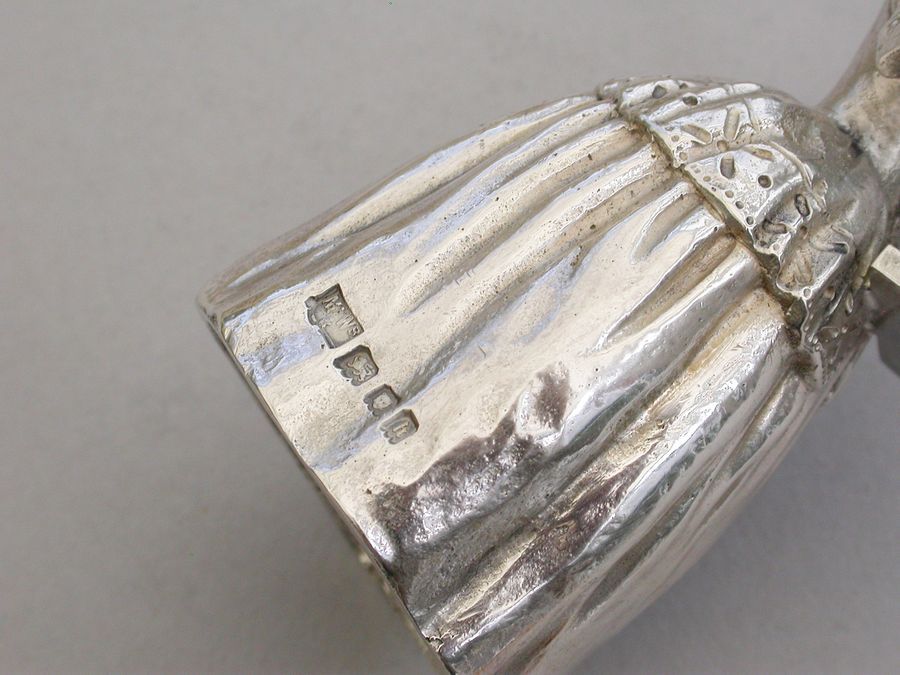
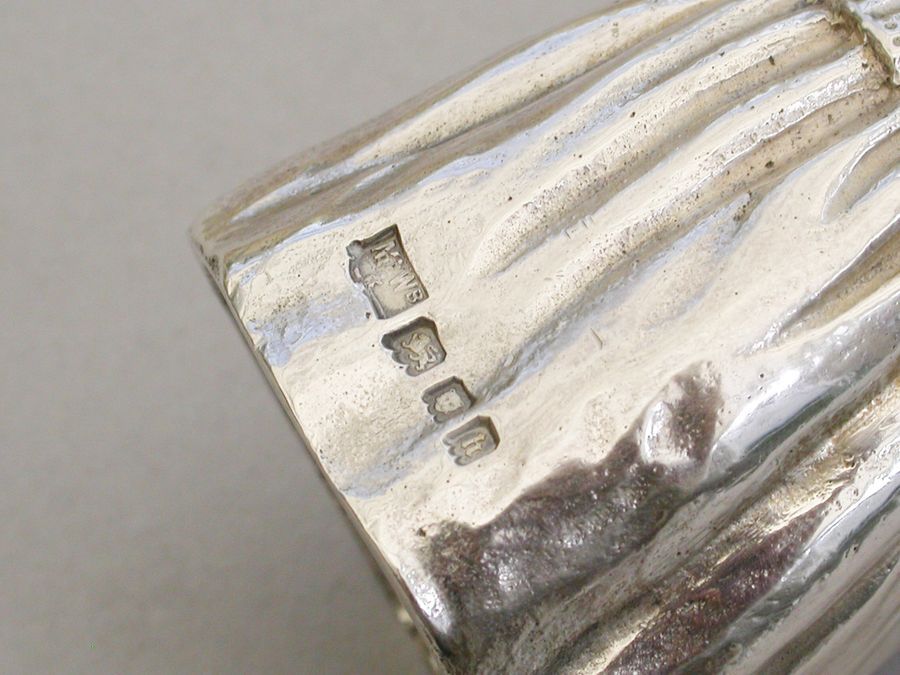
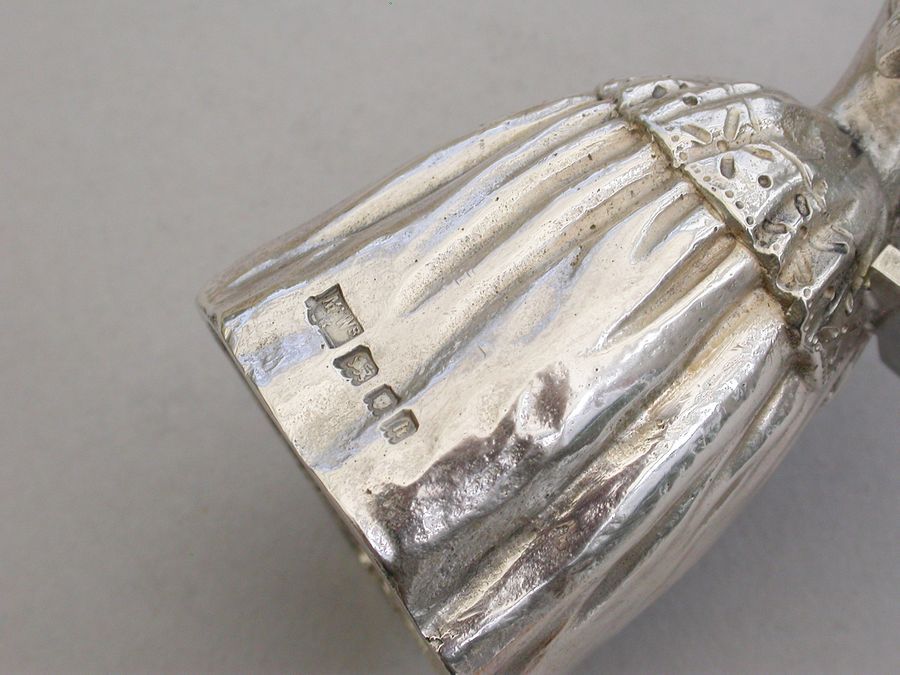
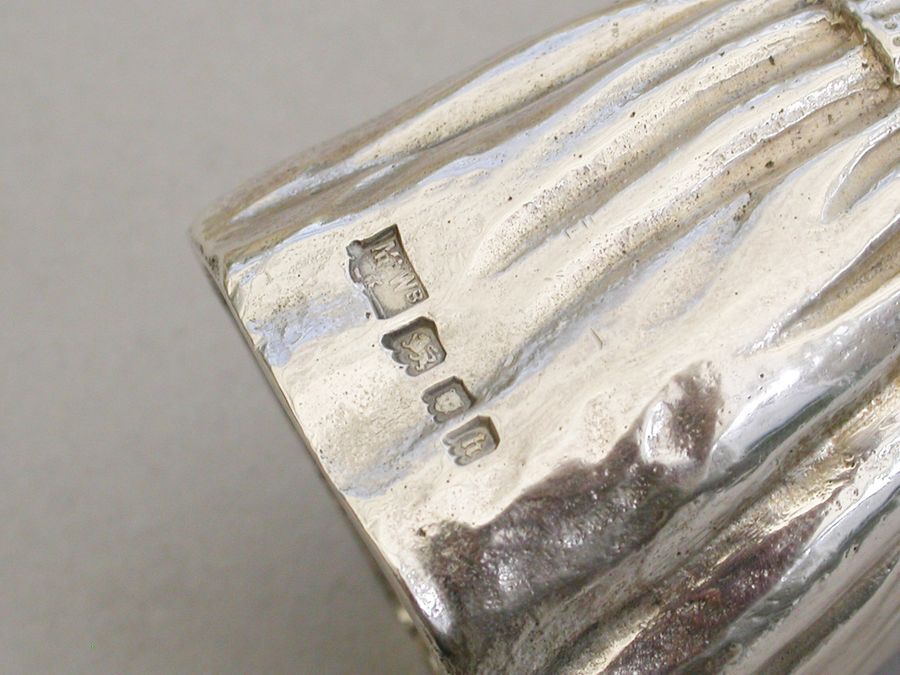
By Mappin & Webb, London, 1922.
The Sketch magazine was a British illustrated weekly journal. It ran for 2,989 issues between 1st February, 1893, and 17th June, 1959. It was published by the Illustrated London News Company and was primarily a society magazine with regular features on royalty, aristocracy and high society, as well as theatre, cinema and the arts. It had a high photographic content with many studies of society ladies and their children as well as regular layouts of point to point racing meetings and similar events.
Clement Shorter and William Ingram started The Sketch in 1893. Shorter was the first editor, from 1893 to 1900, succeeded by John Latey (until his death in 1902) and then Keble Howard. Bruce Ingram was editor from 1905 to 1946. The magazine is remembered for first publishing the illustrations of Bonzo the dog by George E. Studdy (from 1921). It featured series of short stories within its pages, one per issue, with authors such as Walter de la Mare and Algernon Blackwood. Under the editorship of Bruce Ingram, it was also the first magazine to publish short stories by Agatha Christie, starting with 'The Affair at the Victory Ball' in issue 1571 on 7th March, 1923. Altogether, Christie wrote 49 stories for The Sketch between 1923 and 1924 (just under a third of her total output of short stories) which were later collected into some or all of the contents of the volumes Poirot Investigates (1924), The Big Four (1927), Partners in Crime (1929), Poirot's Early Cases (1974), and While the Light Lasts and Other Stories (1997). Christie dedicated the 1953 novel A Pocket Full of Rye to Ingram. The Sketch printed photographs by Howard Coster, and illustrations by H.M. Bateman, Max Beerbohm, Edmund Blampied, Percy Venner Bradshaw (1877–1965), Thomas Arthur Browne, Hilda Cowham, Annie Fish, John Hargrave, John Hassall, Phil May, Bernard Partridge, Melton Prior, W. Heath Robinson, Josep Segrelles, Sidney Sime, Olive Snell, Bert Thomas, and Thomas Downey. Writers included Carleton Allen, Lucie Armstrong, Nora Hopper, William Robertson Nicoll and John Courtenay Trewin. Keble Howard, editor until 1905, continued to contribute a column titled Motley Notes until two-weeks prior to his death, his final piece appearing on 14th March, 1928. The British Library holds a complete run of The Sketch.
‘Image peddlers’ were street vendors who sold small plaster sculptural reproductions from door to door during the early and mid nineteenth century. In the Penny Magazine of the Society for the Diffusion of Useful Knowledge of 1833, the figure of the itinerant ‘image seller’ became a compelling subject for nineteenth-century painters and writers. These young Italians who sold cheap plaster reproductions were aligned in the popular press with hawkers and street entertainers, although the Penny Magazine conceded that ‘those among them who are vendors of images, by selling for a few pence the plaster busts of great men and casts from ancient works of art, may pretend to the dignity of traders, and even have the merit of improving and propagating a taste for the fine arts’, although others argued that there was nothing to be learnt from these cheap reductions made from worn moulds with inferior materials that completely misrepresented the source object.
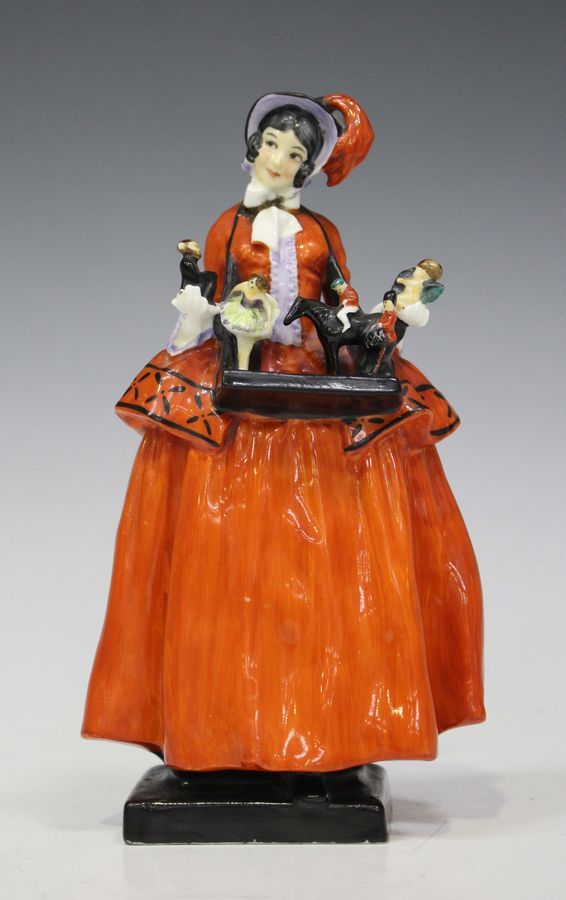
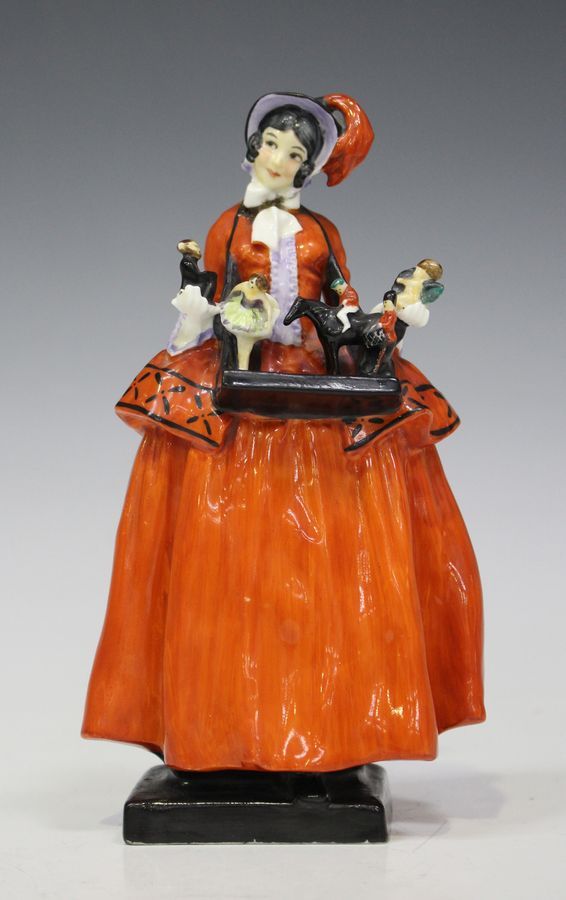
The same character exists in bone china, made by Royal Doulton for The Sketch magazine as promotional and business gifts. They are comparatively rare as they were not made for sale on the open mark (see image).
Sold - £1,400.00