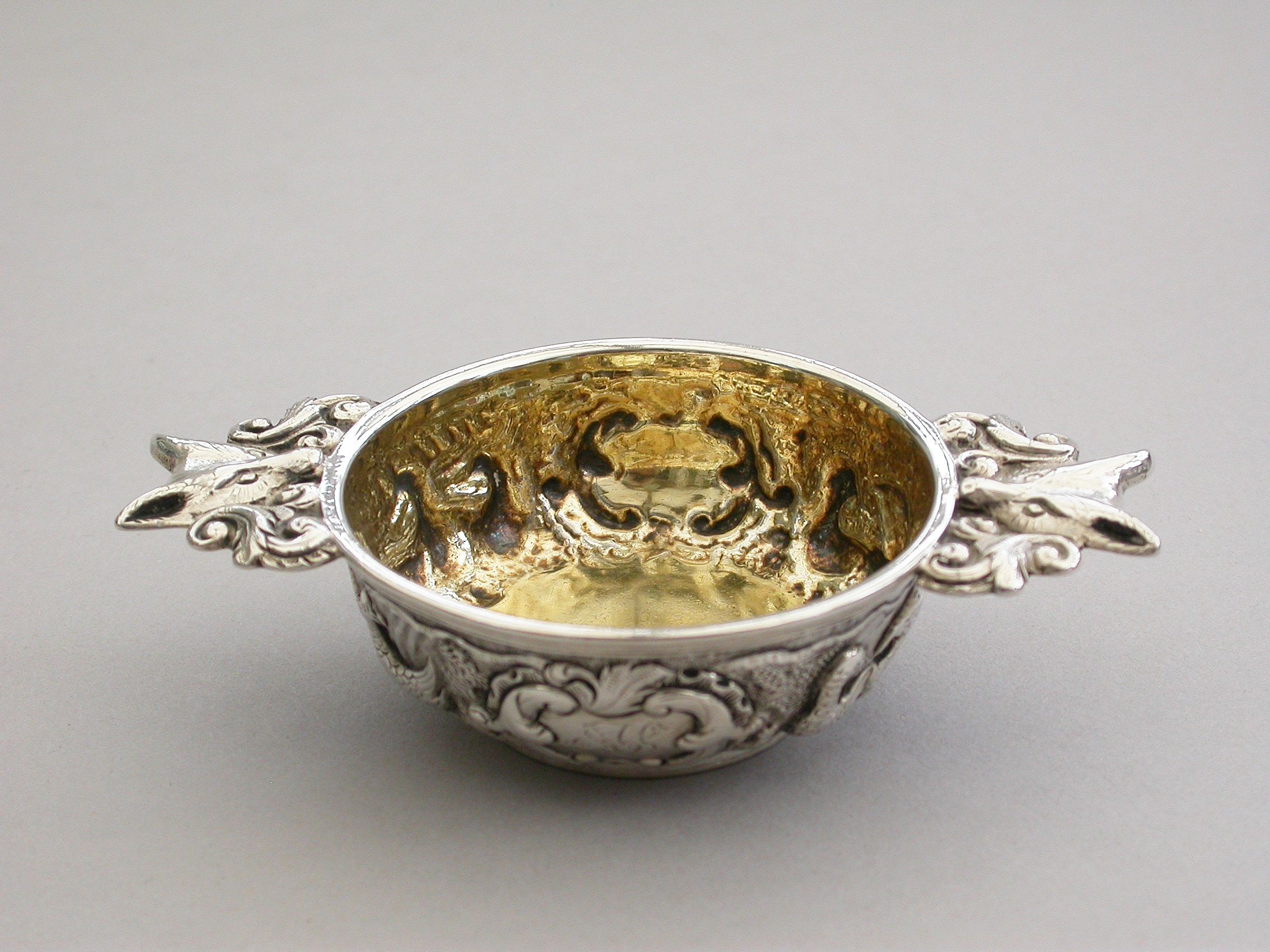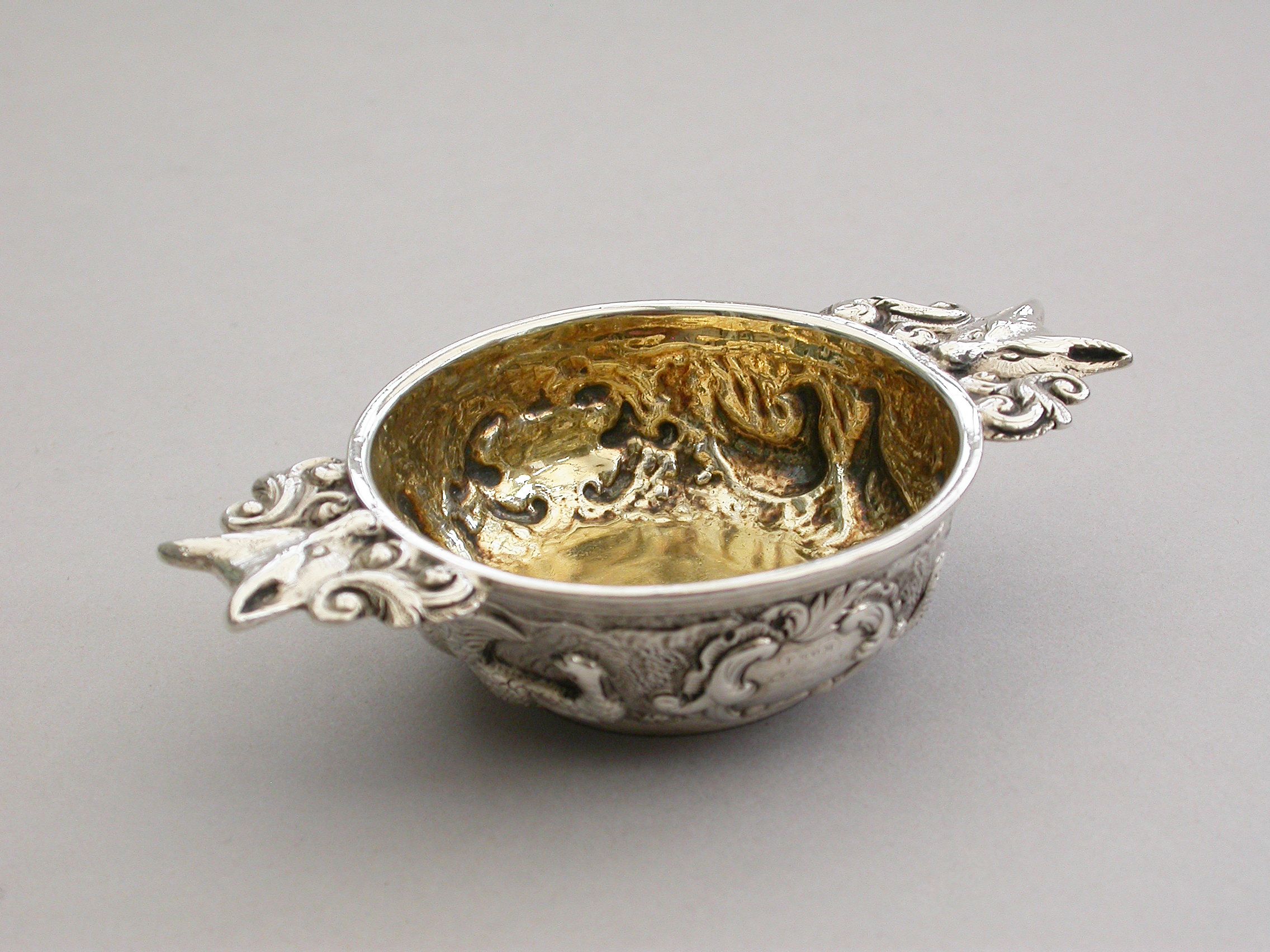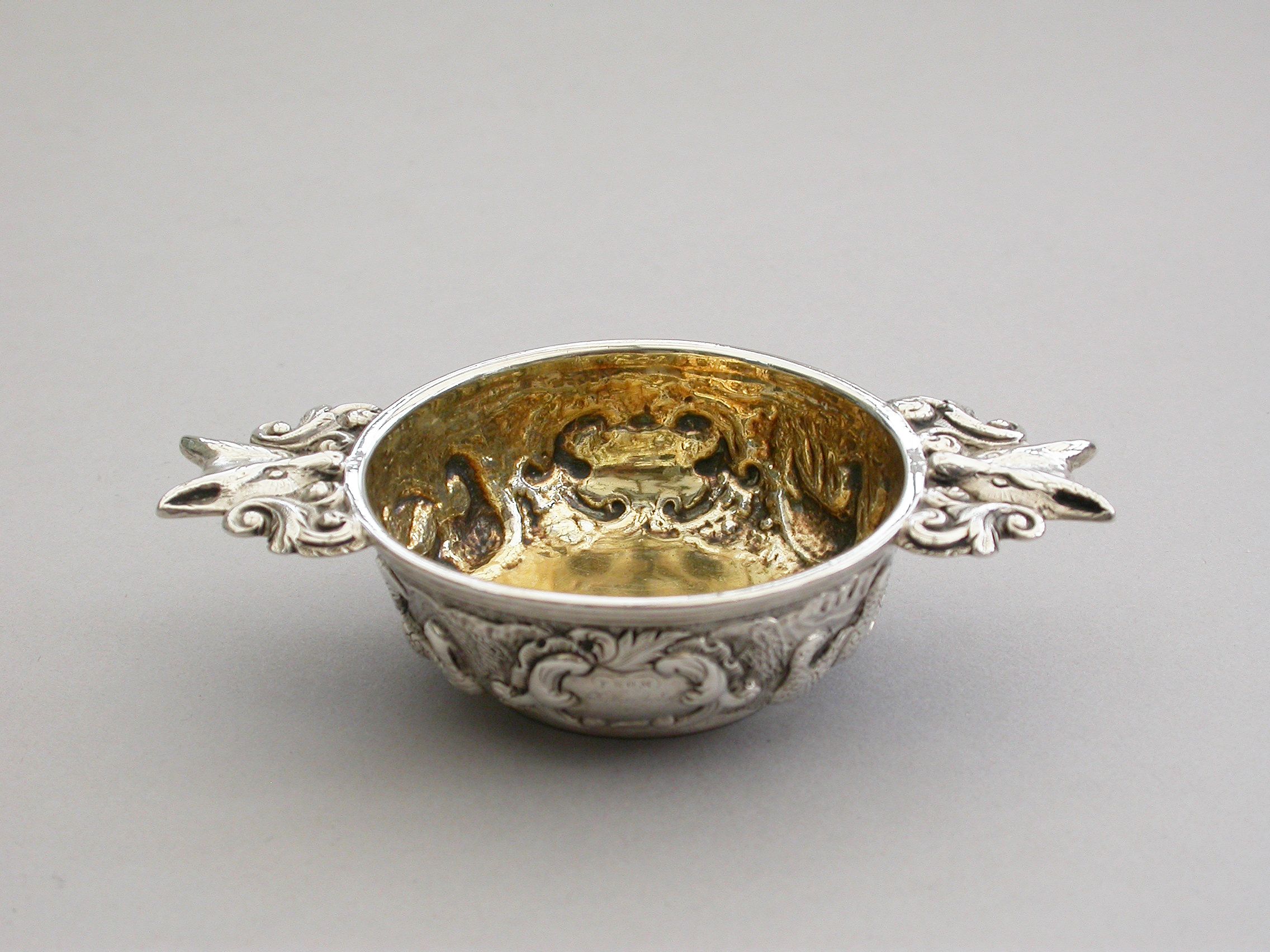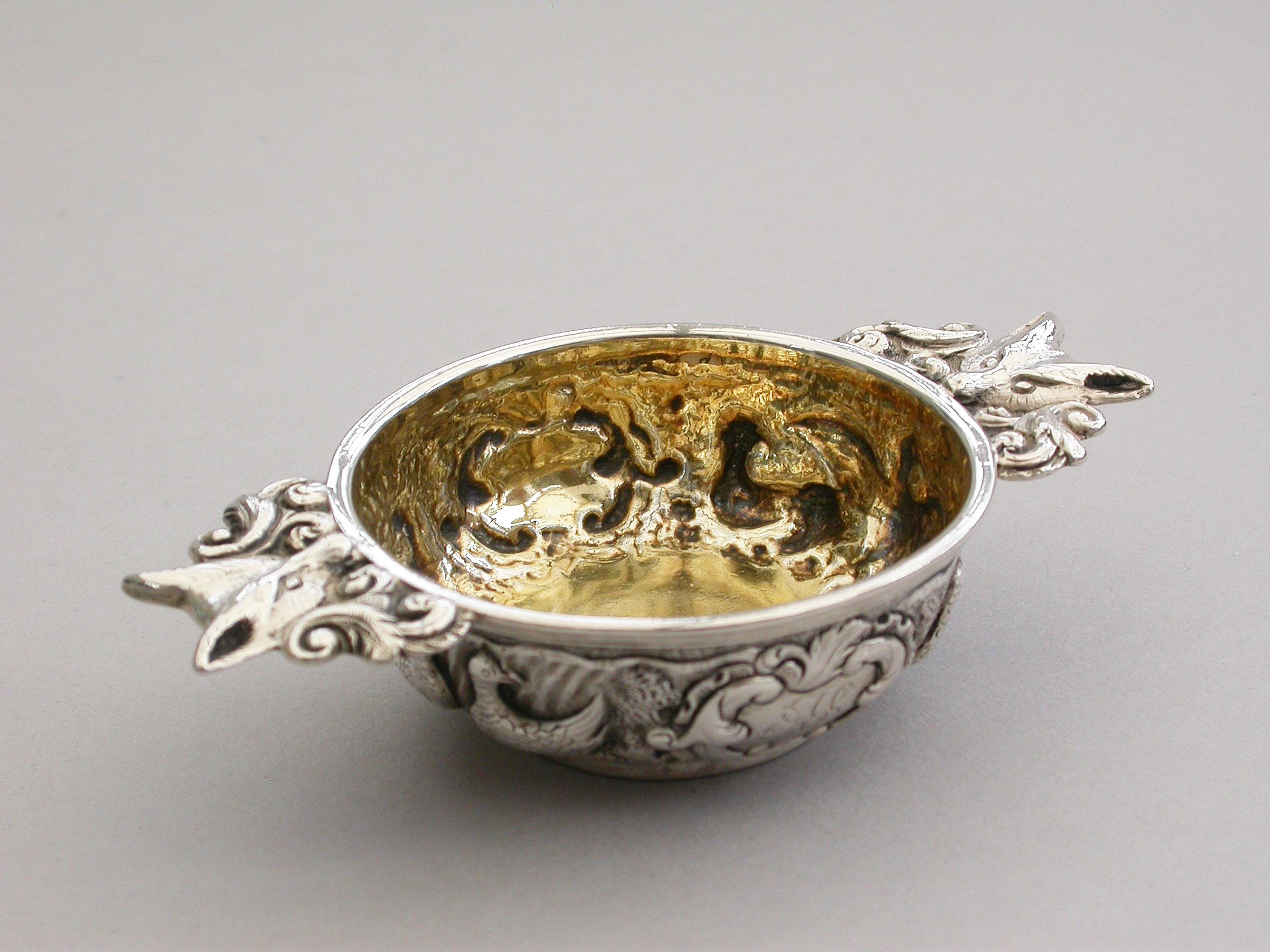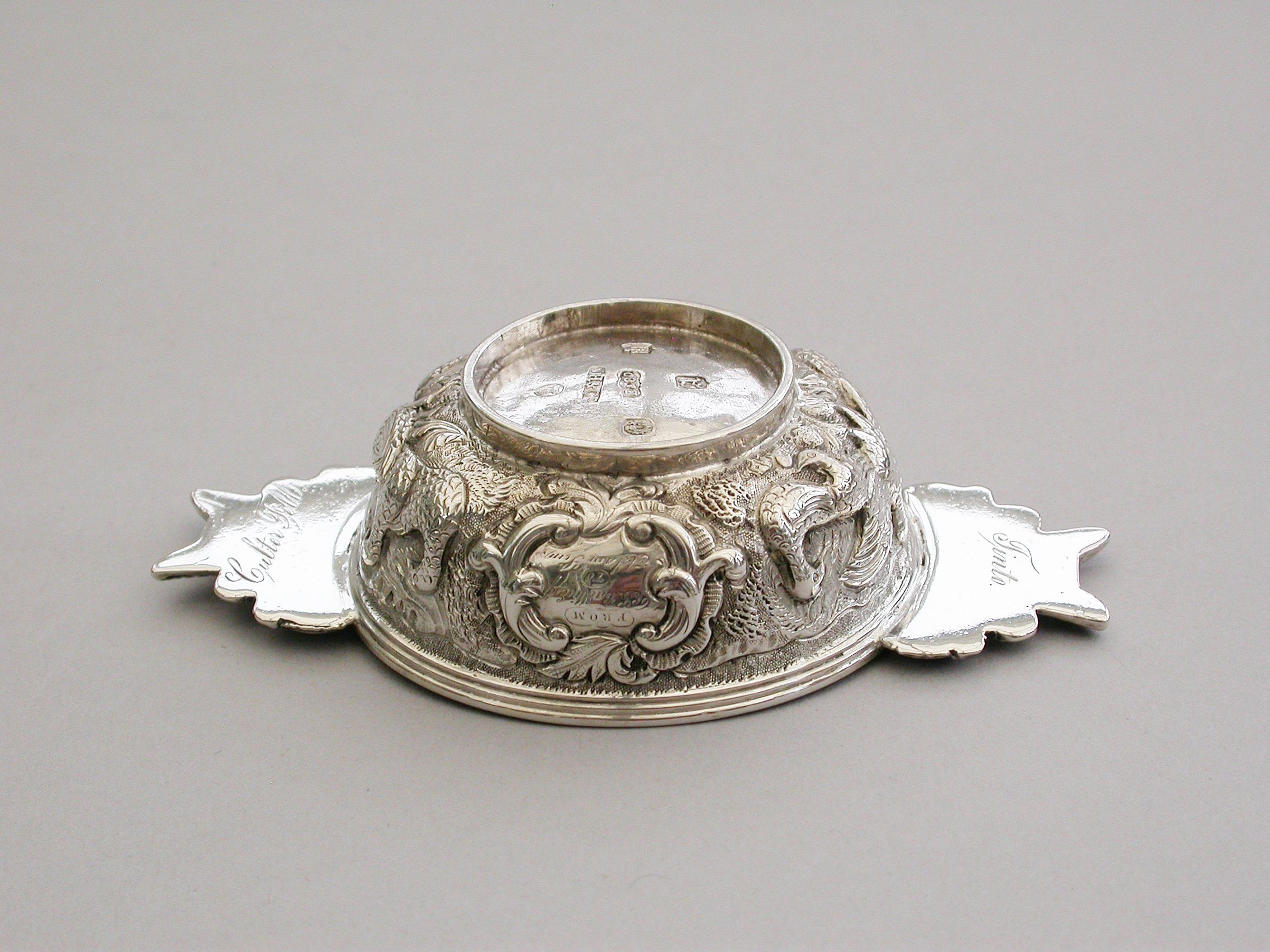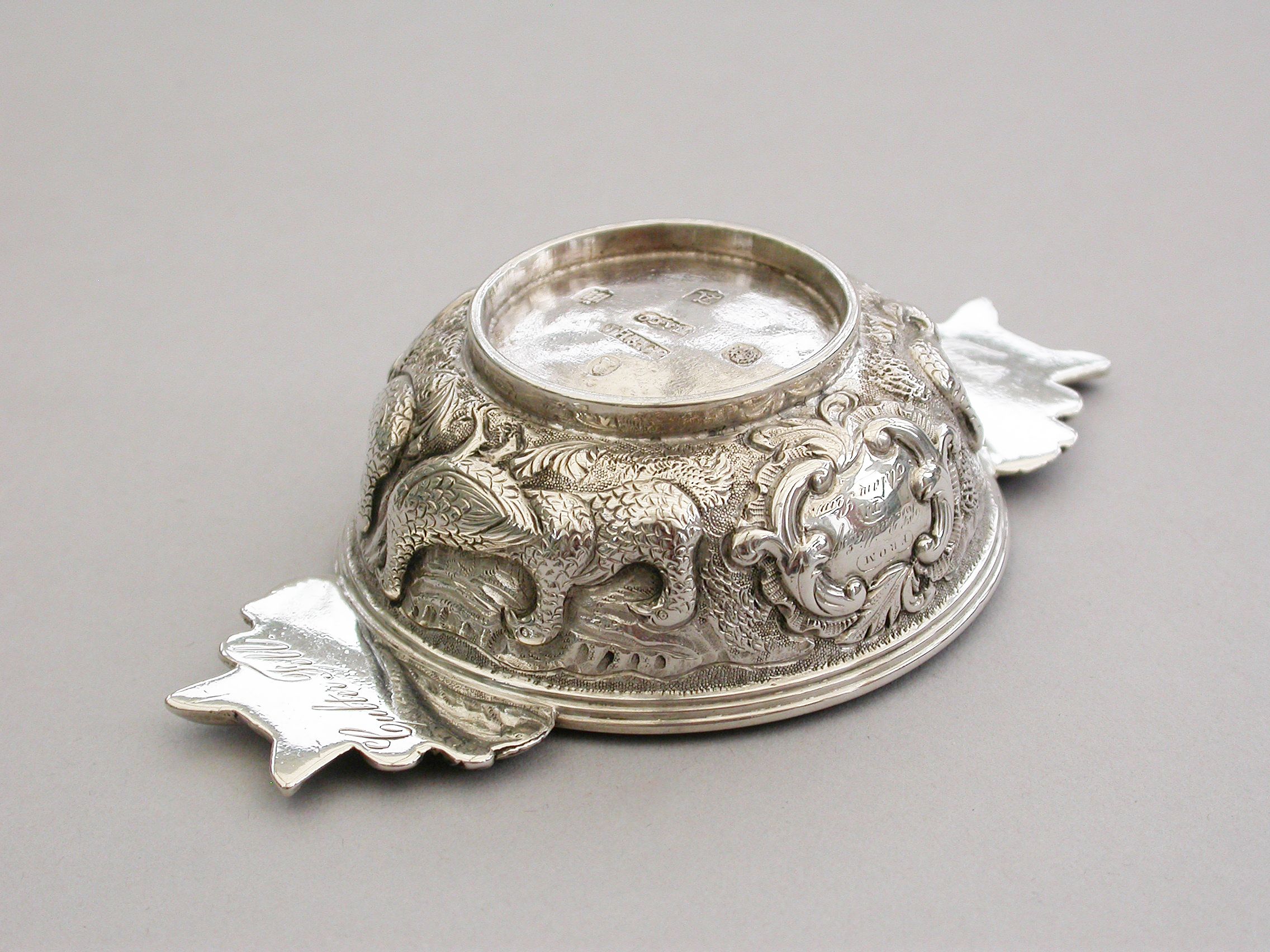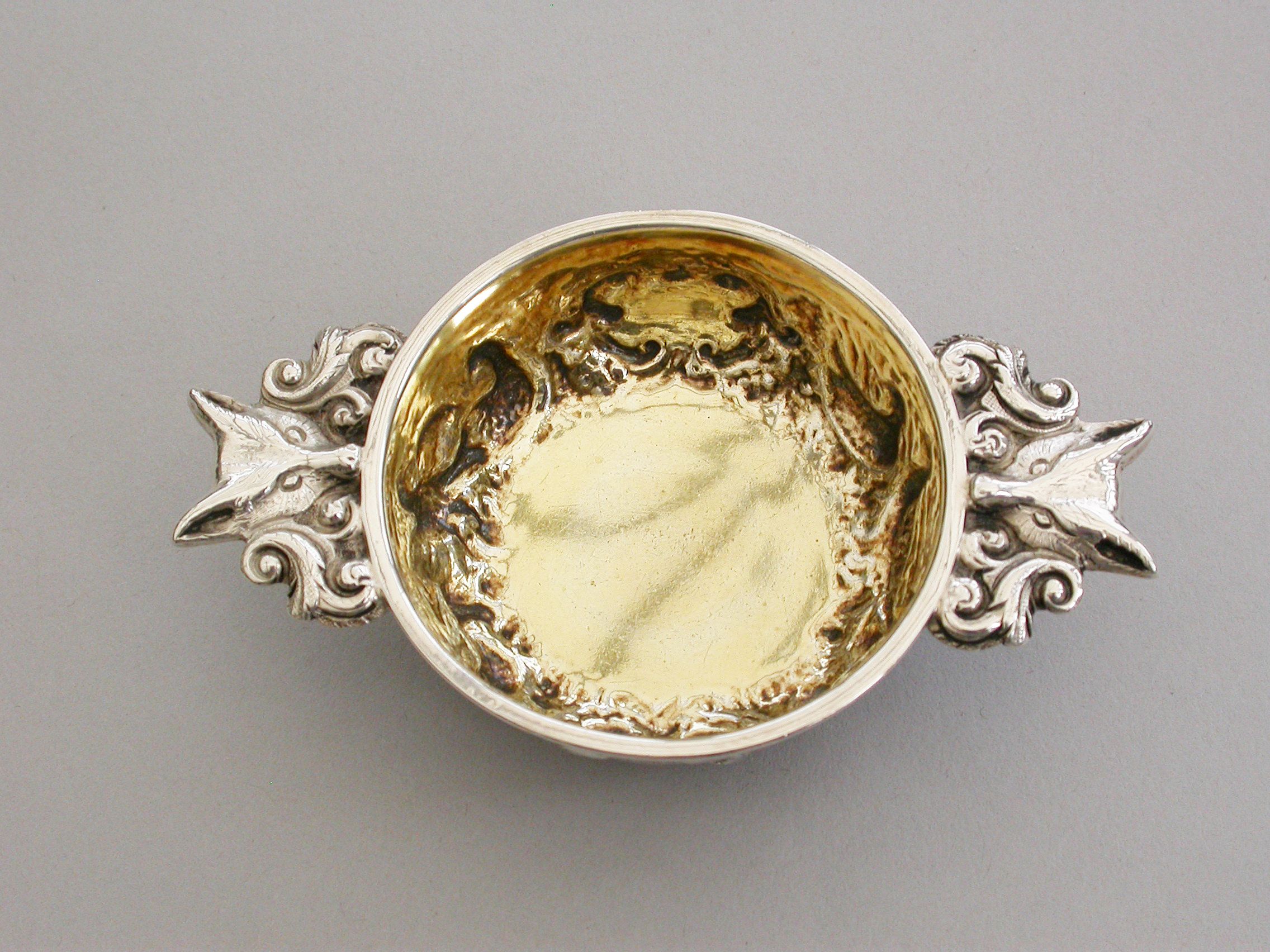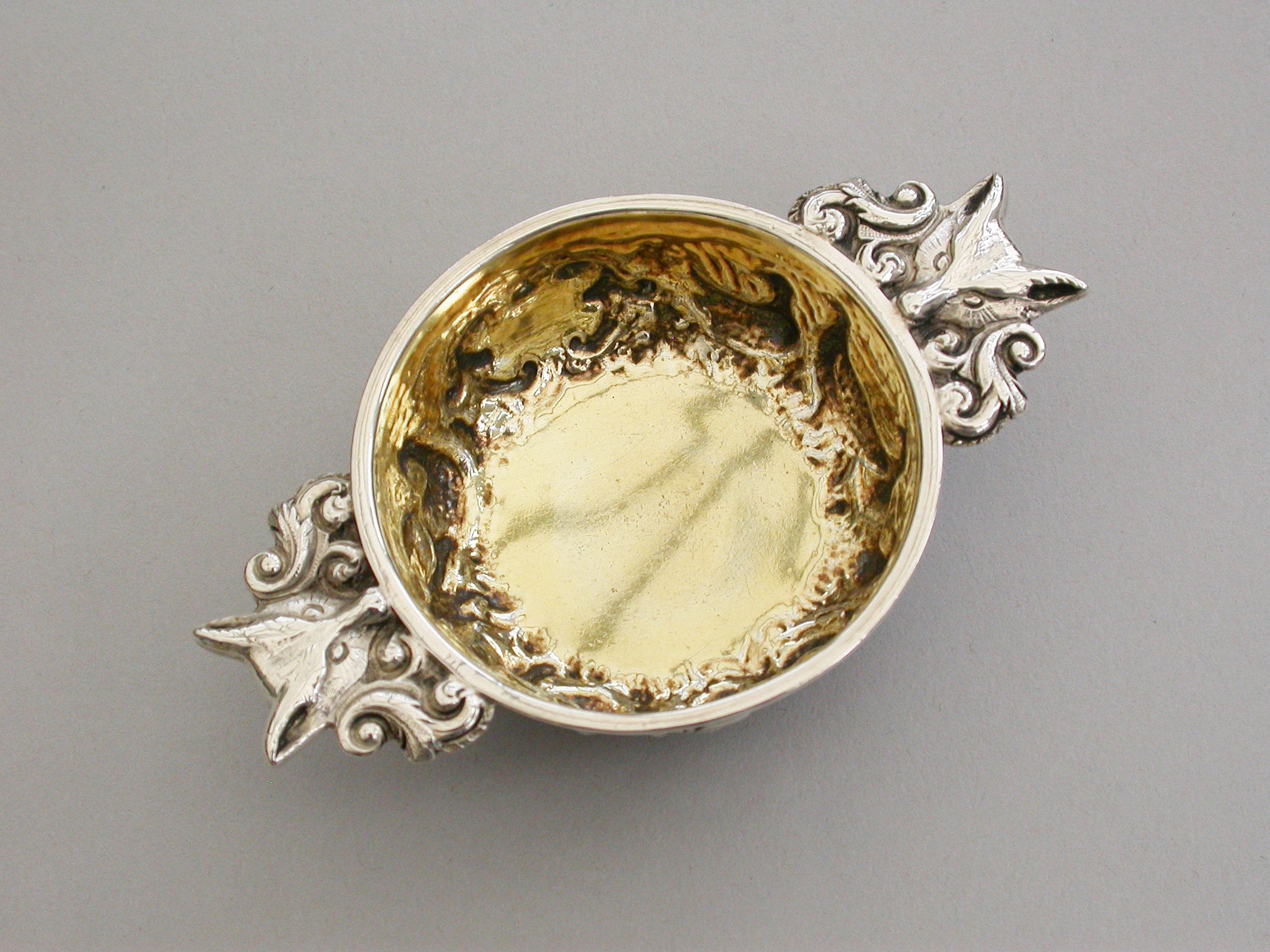

William IV Scottish Silver Documentary Quaich with Fox Heads & Grouse
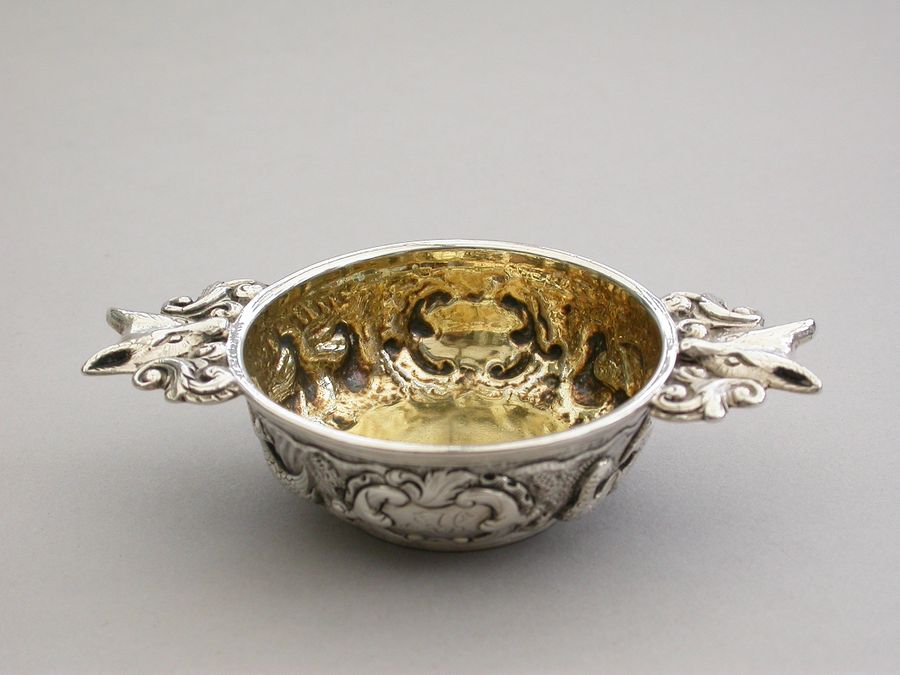
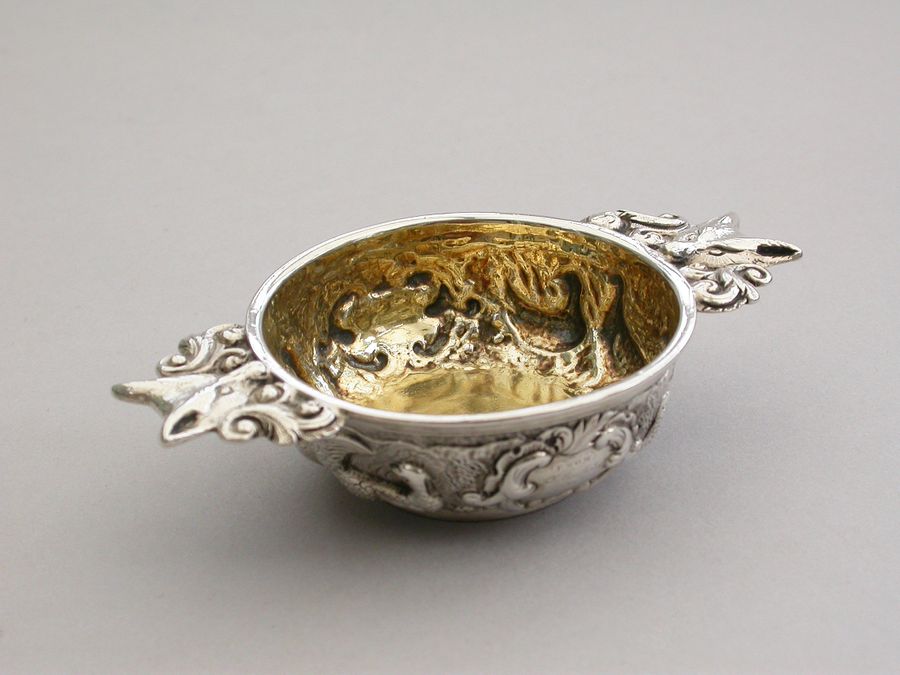
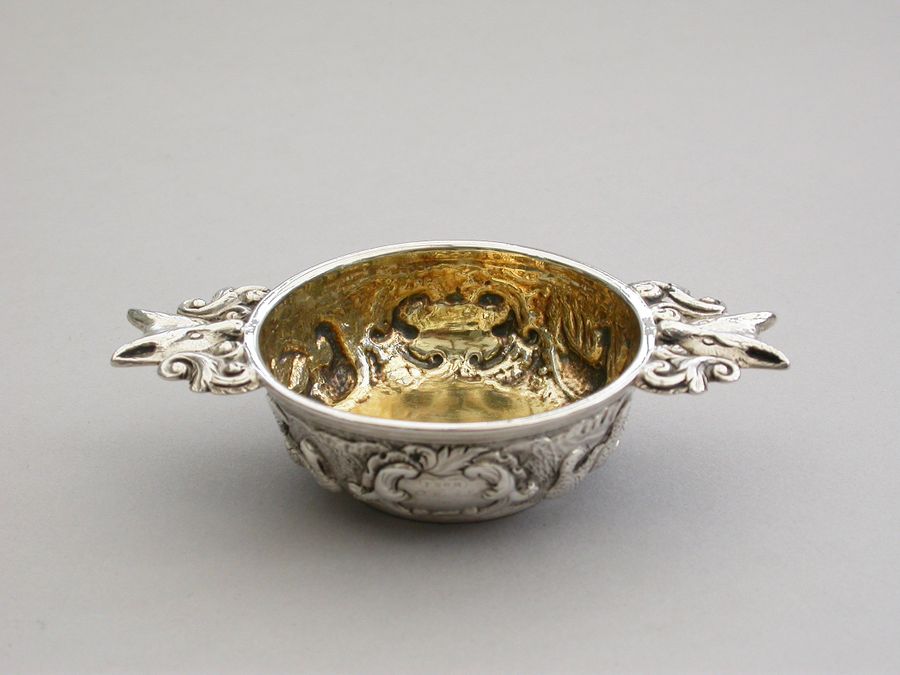
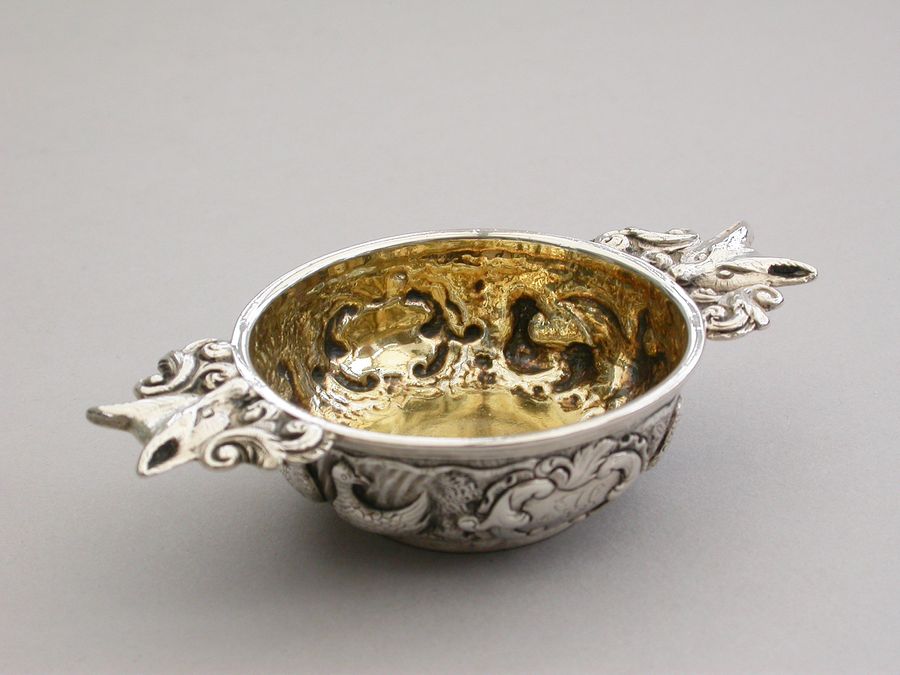
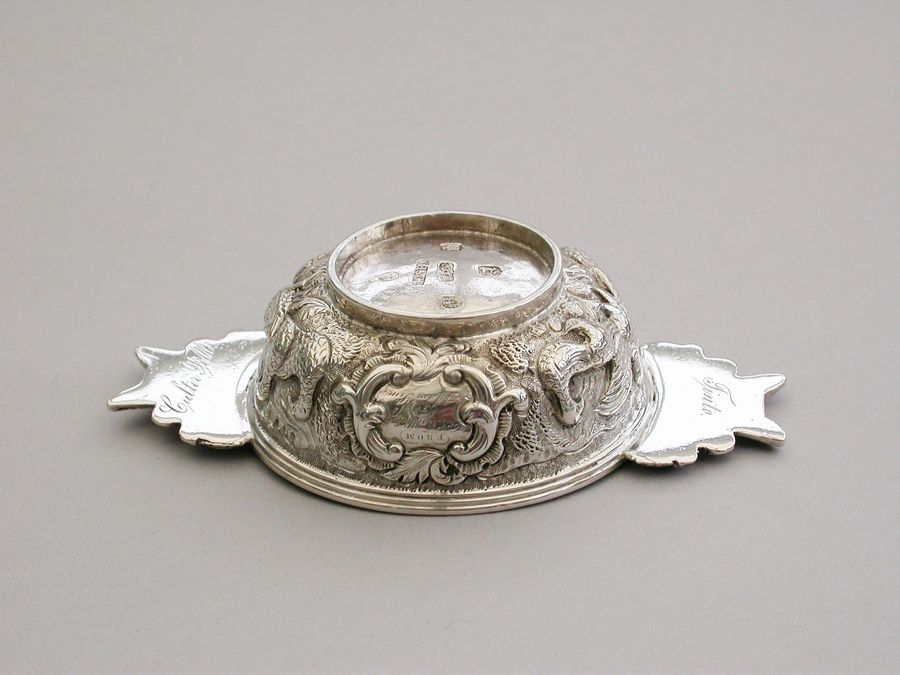
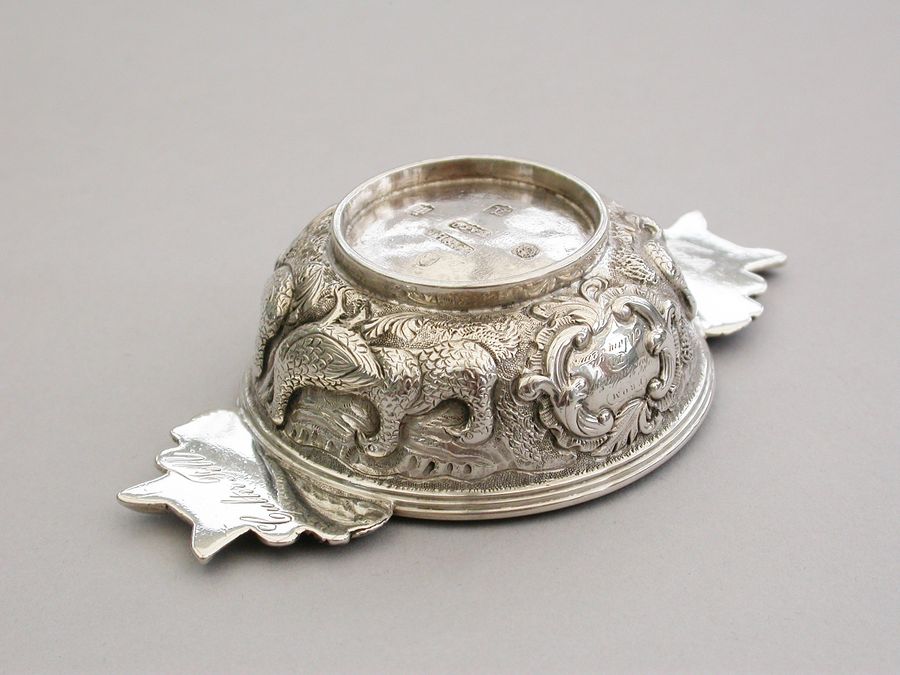
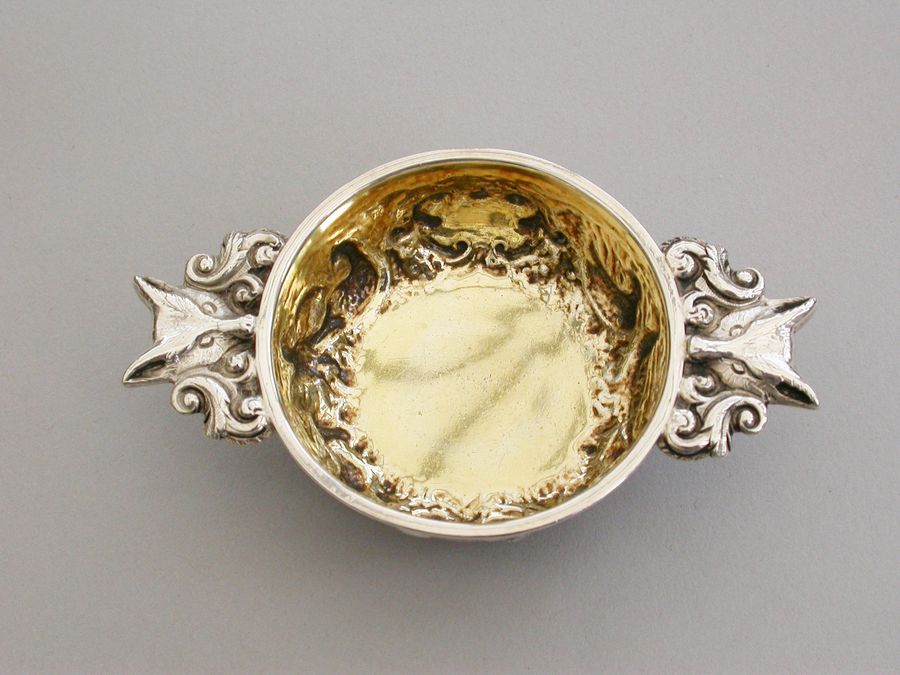
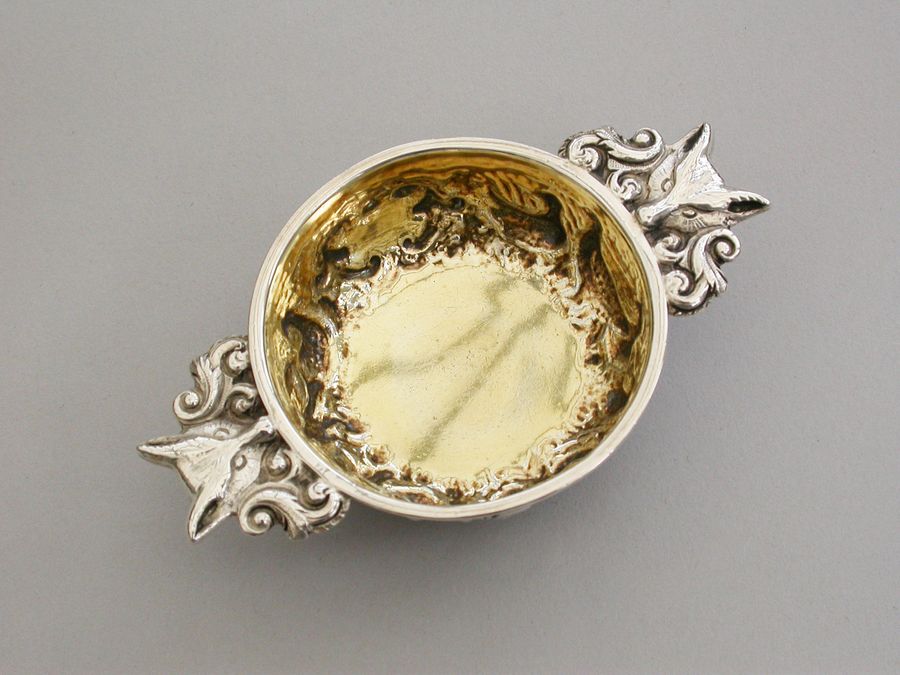
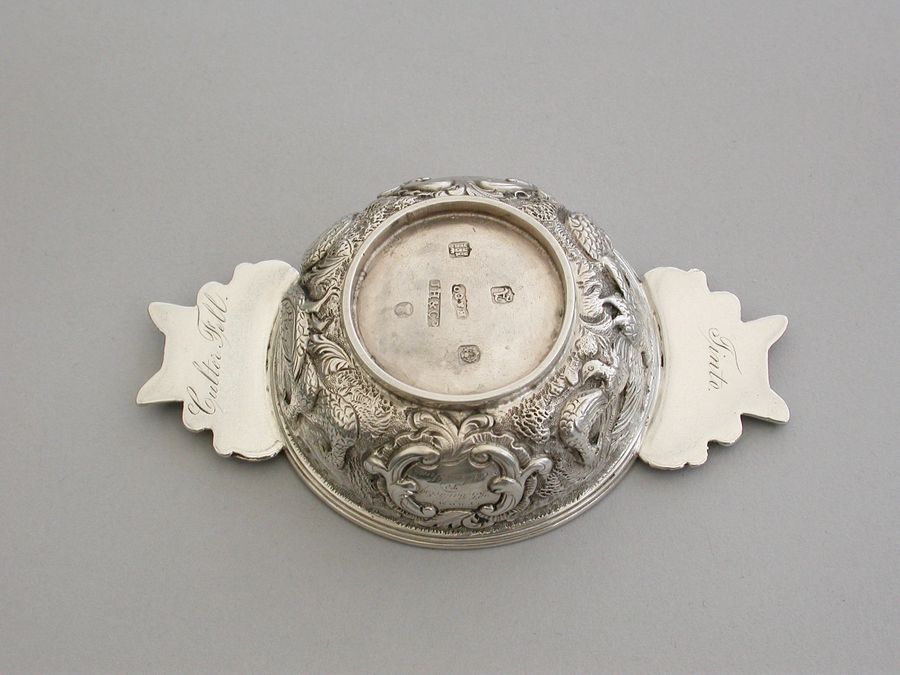
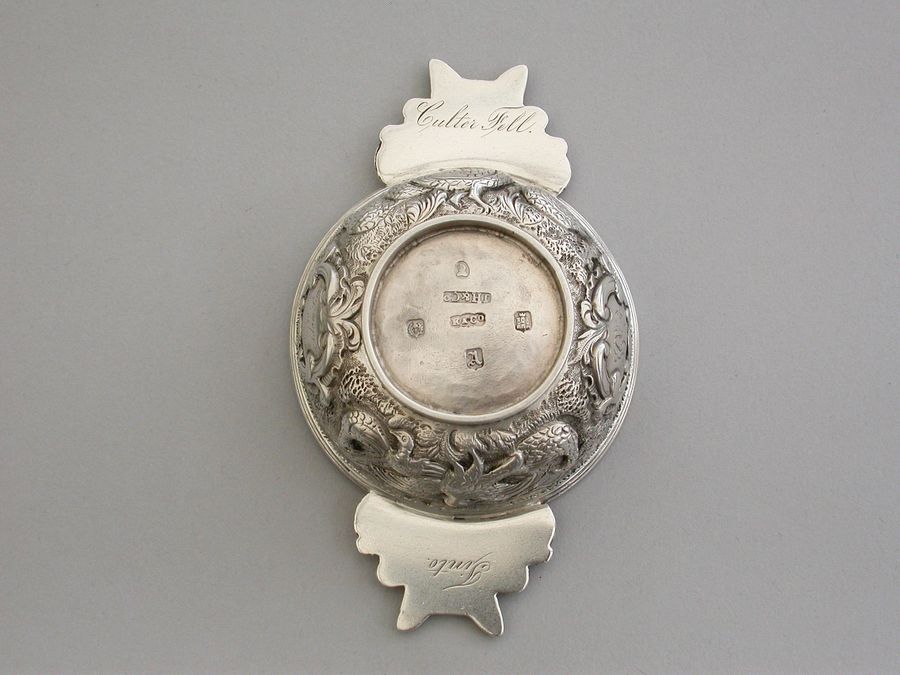
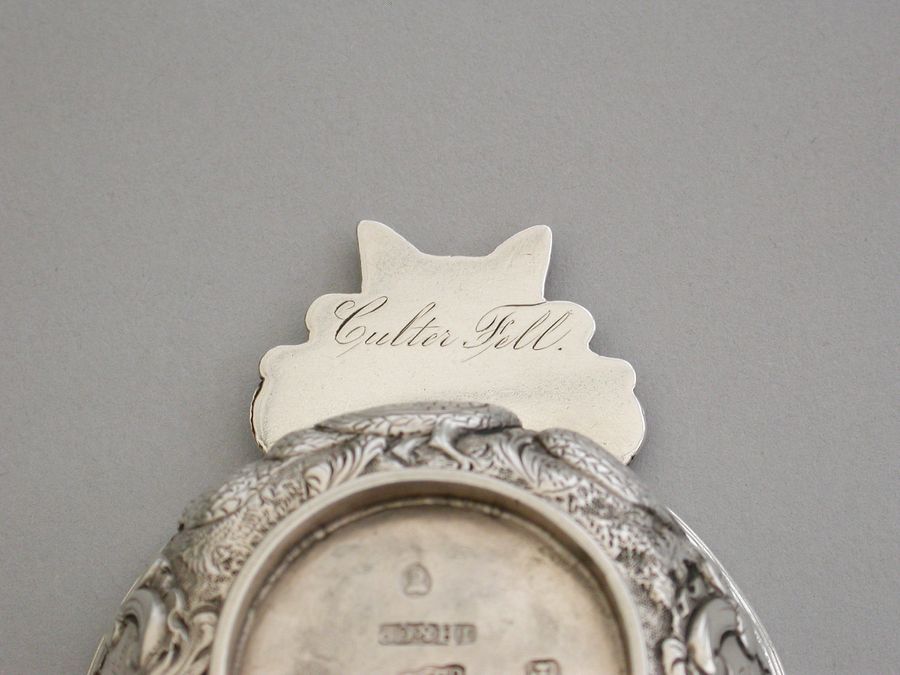
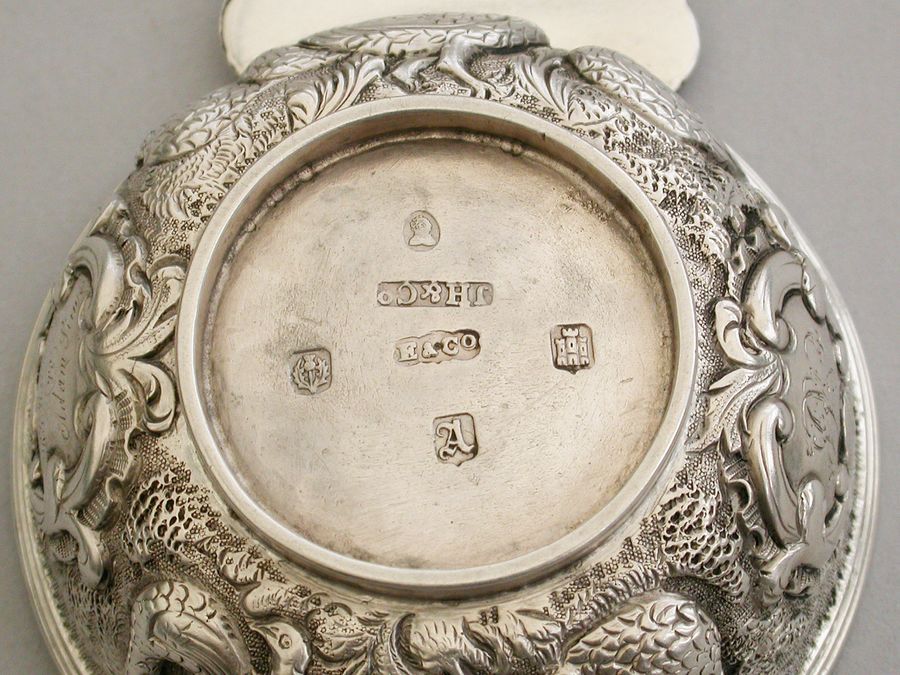
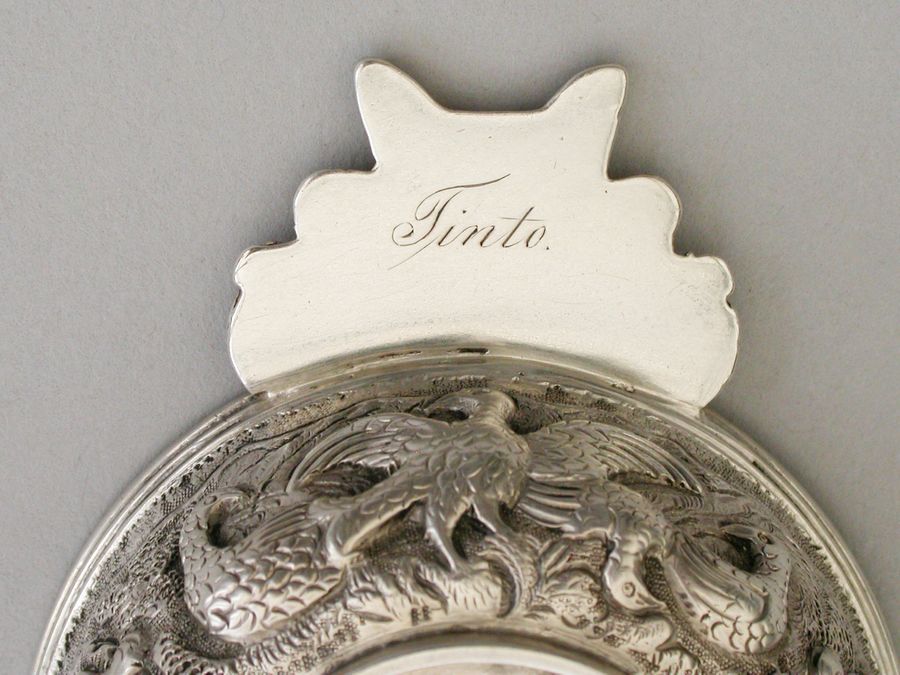
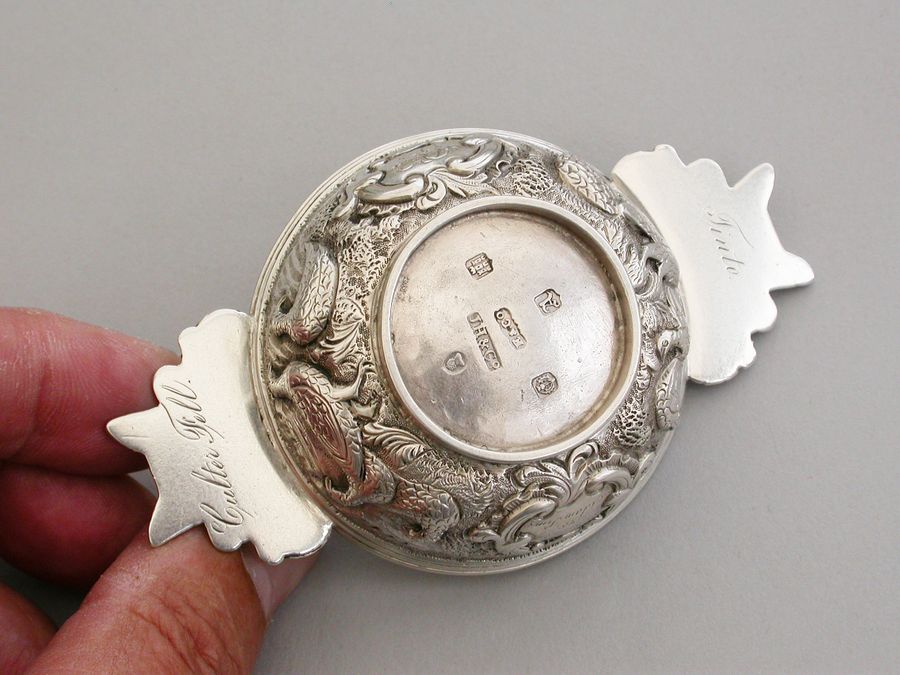
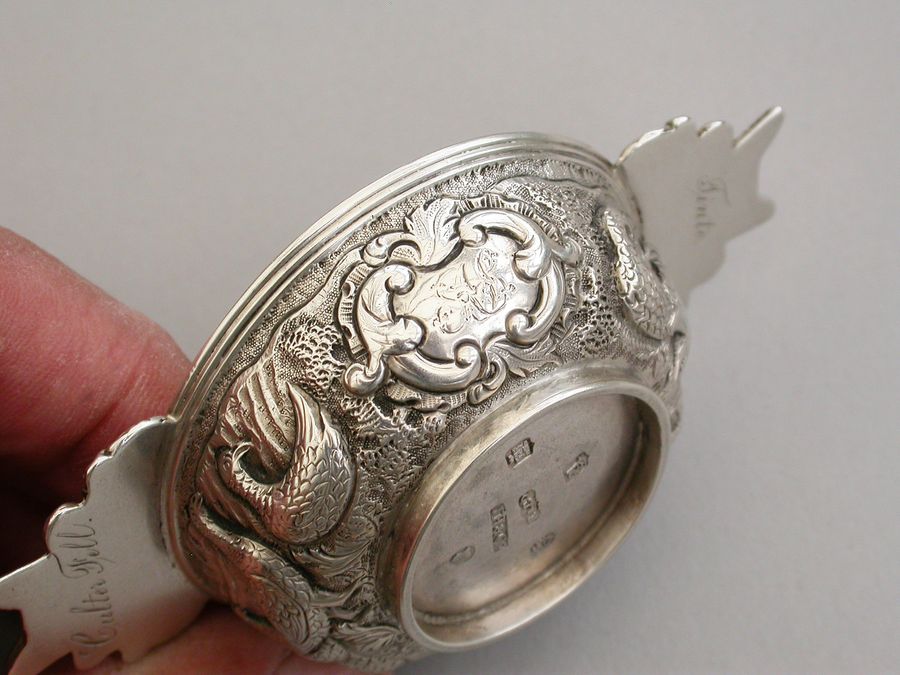
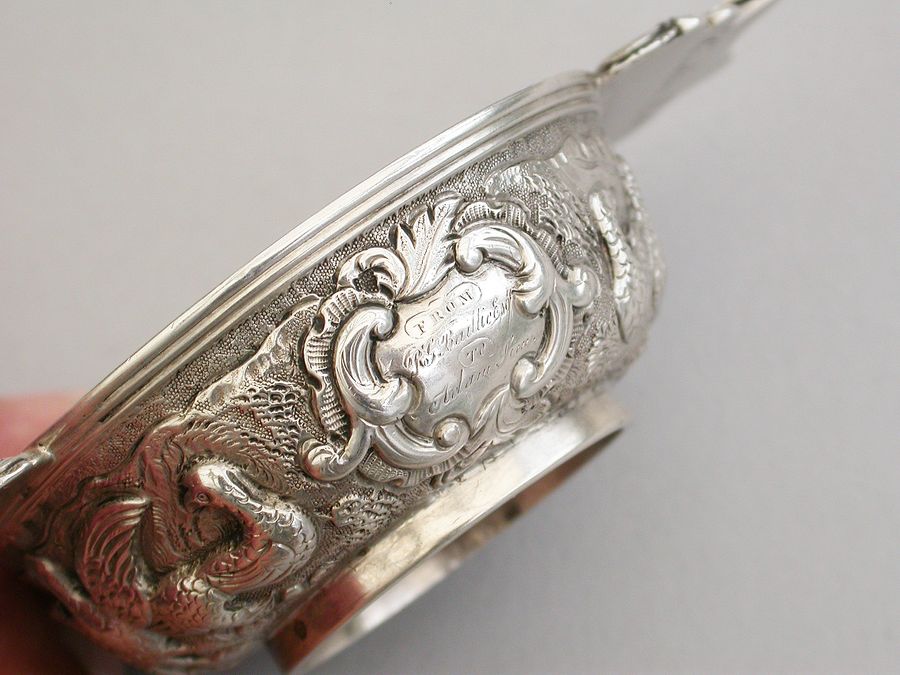
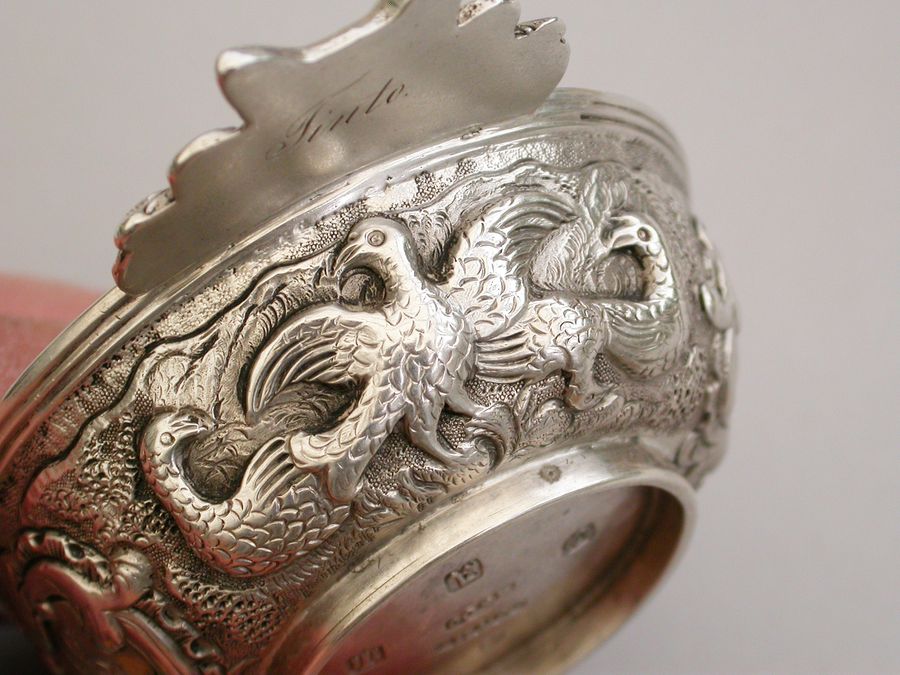
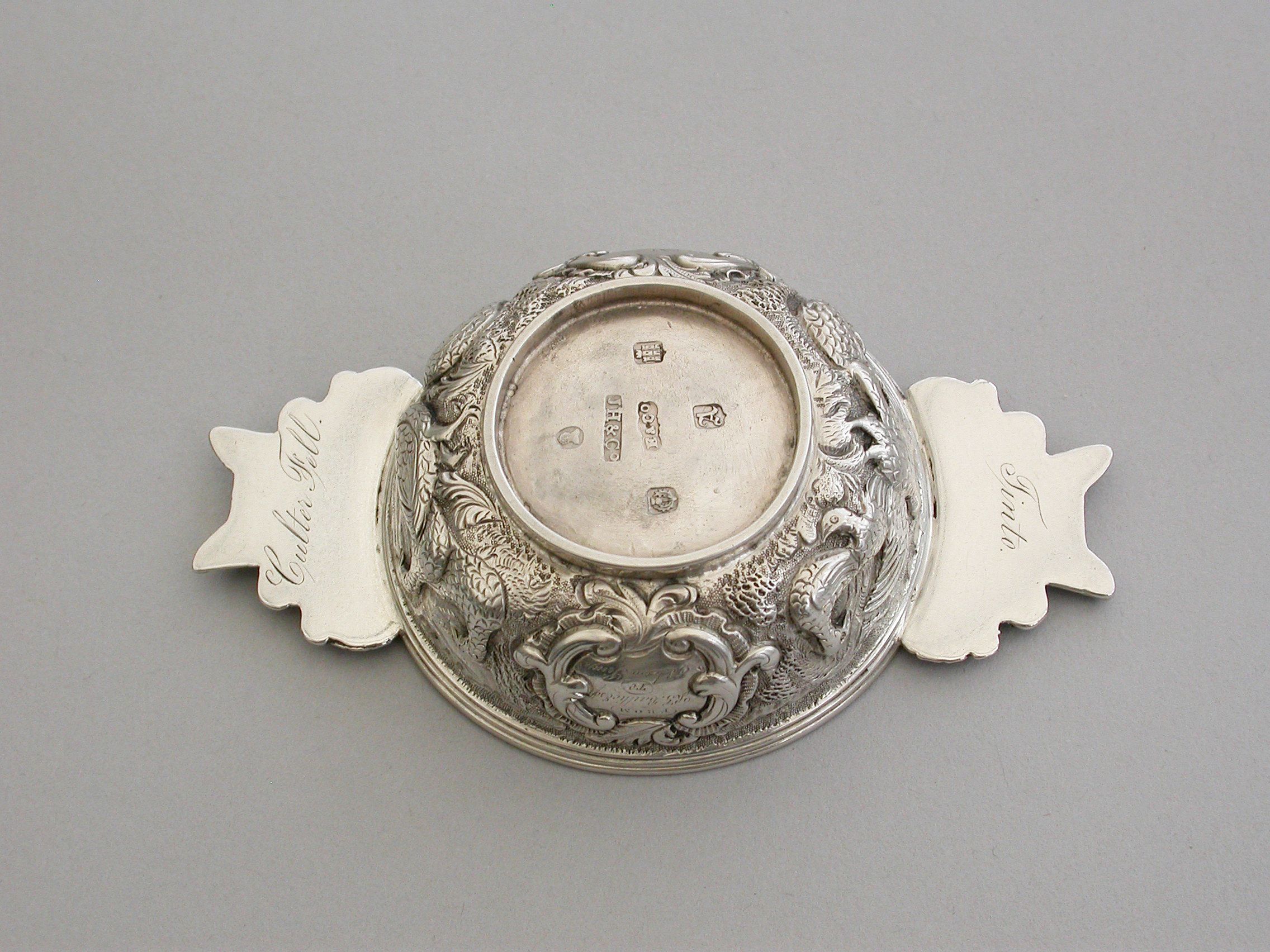
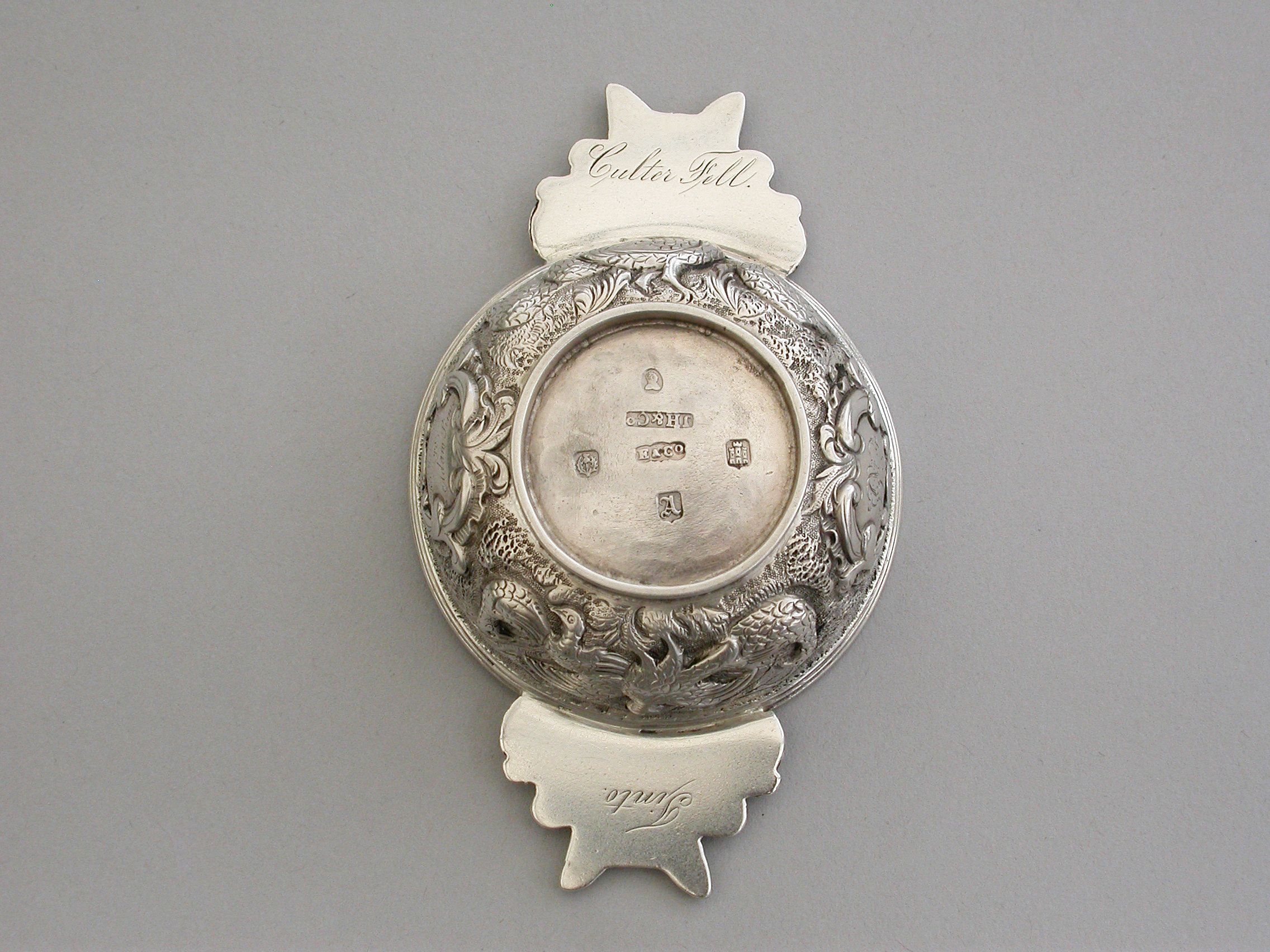
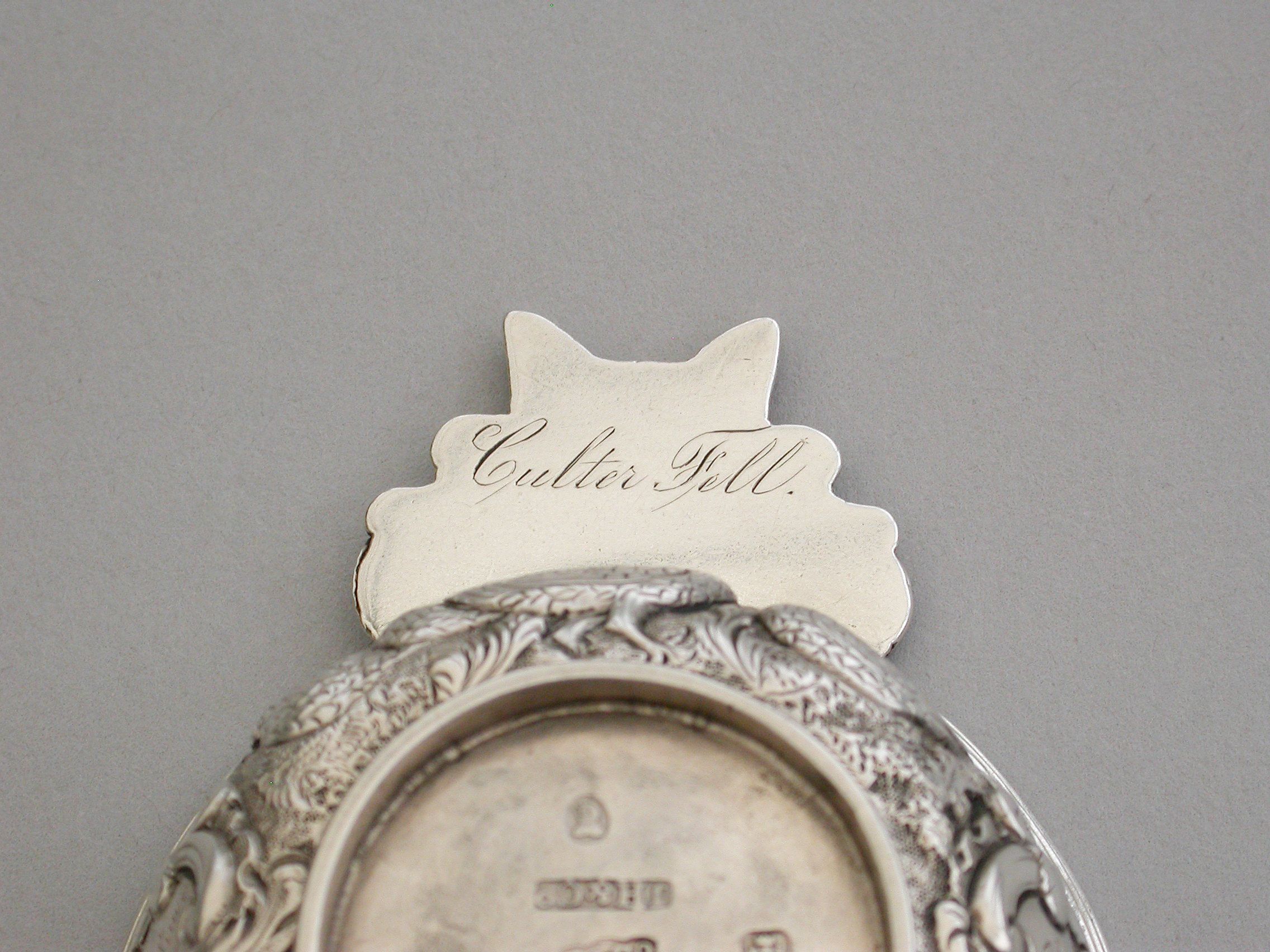
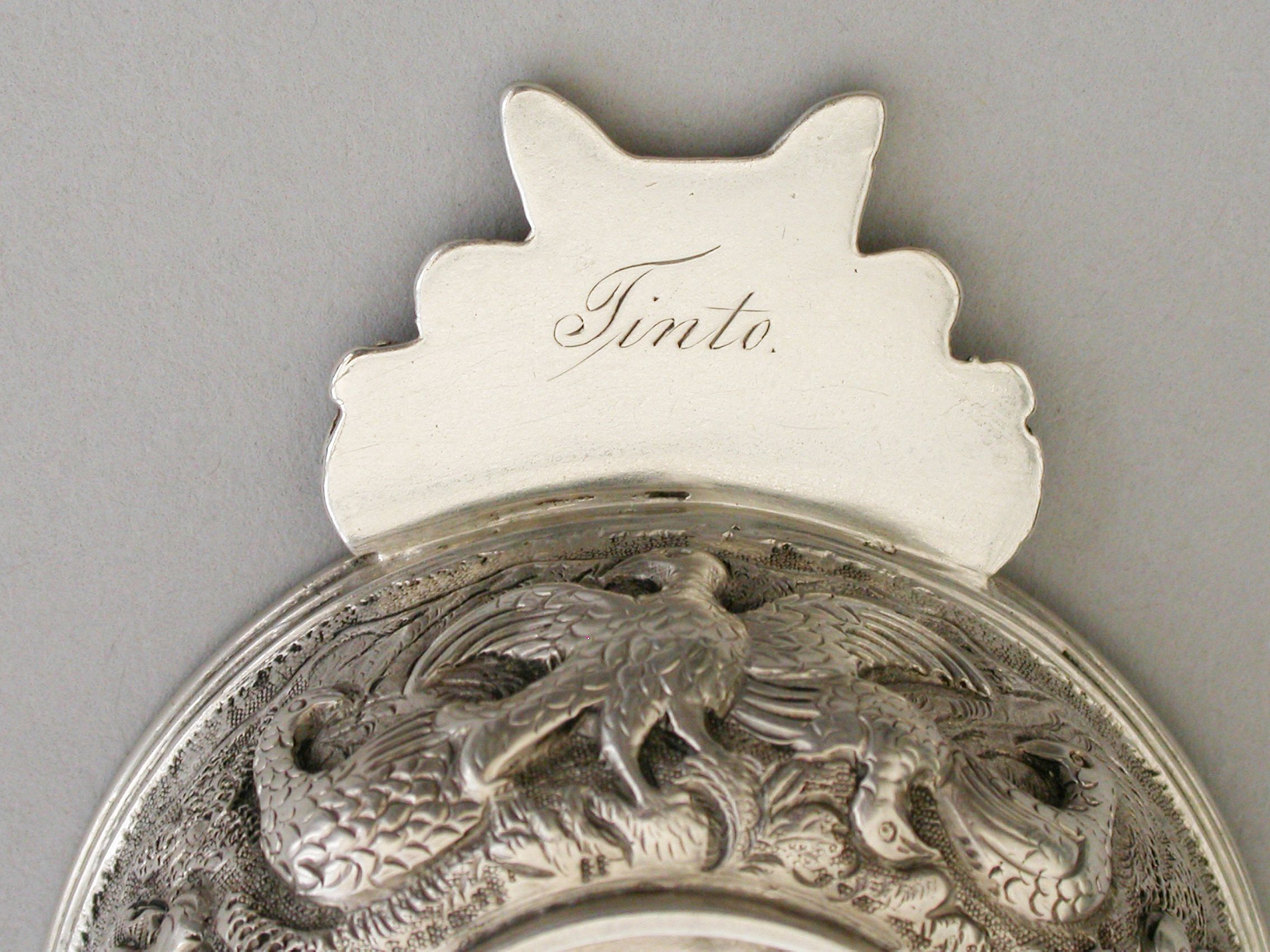
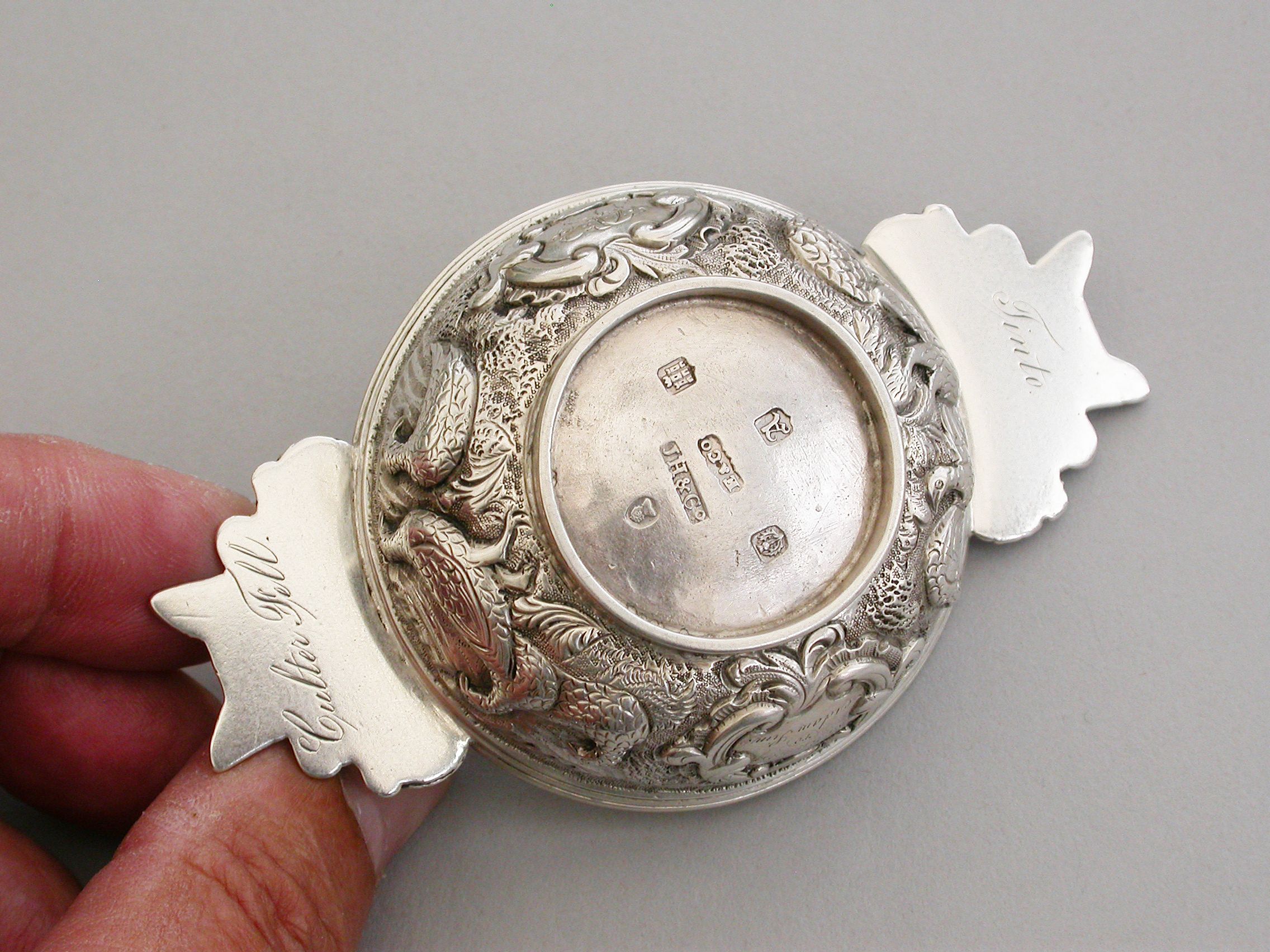
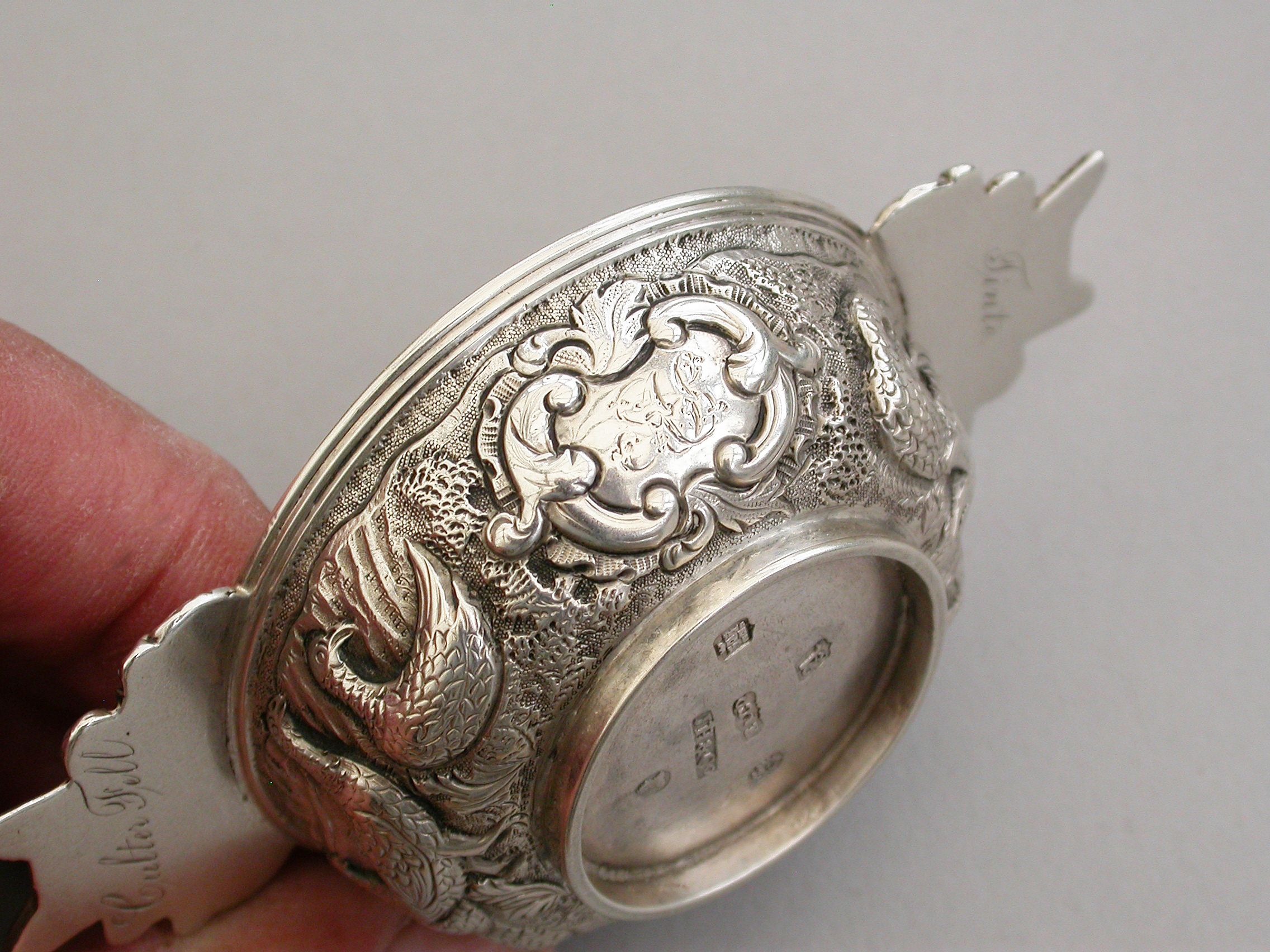
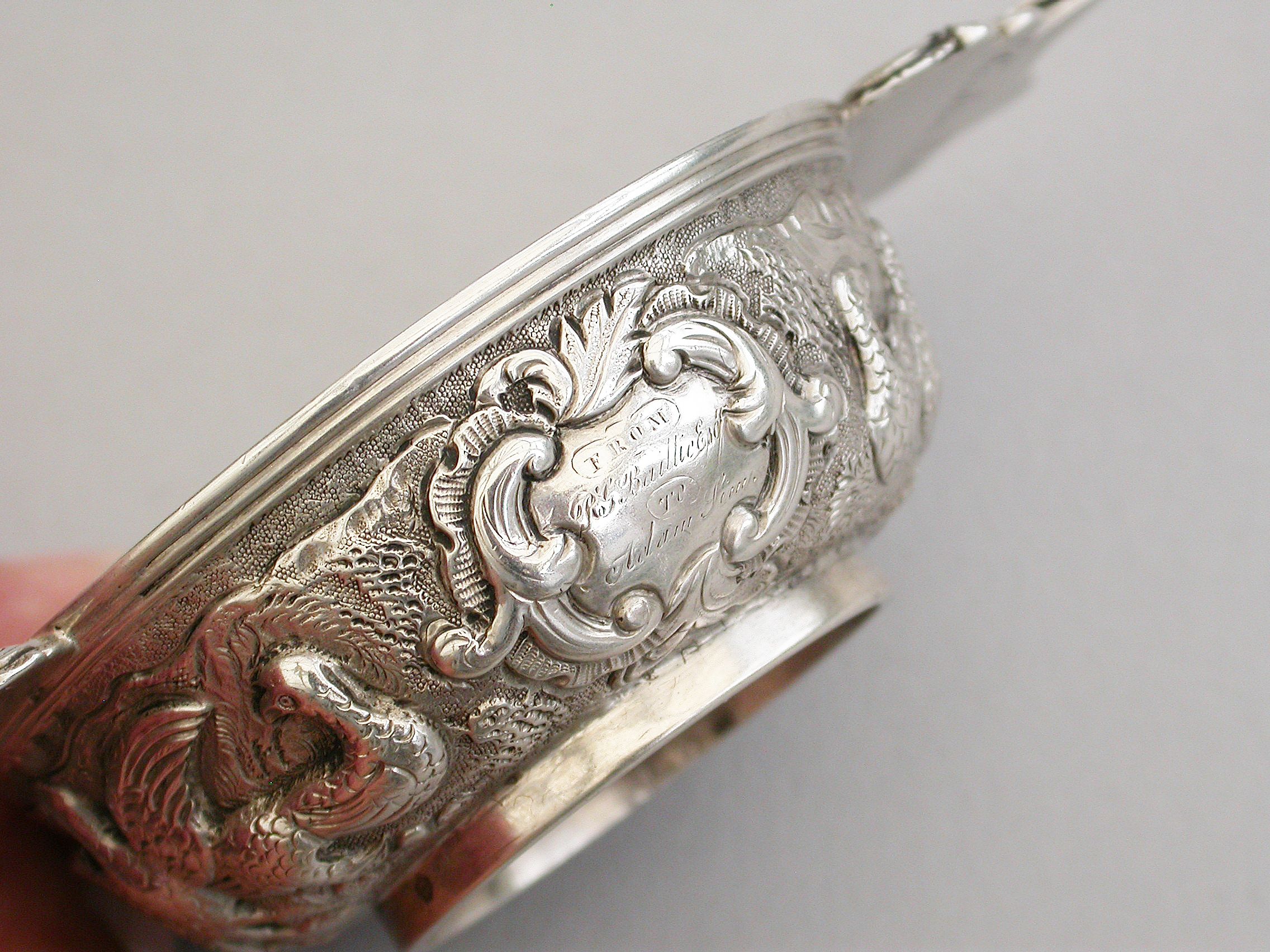
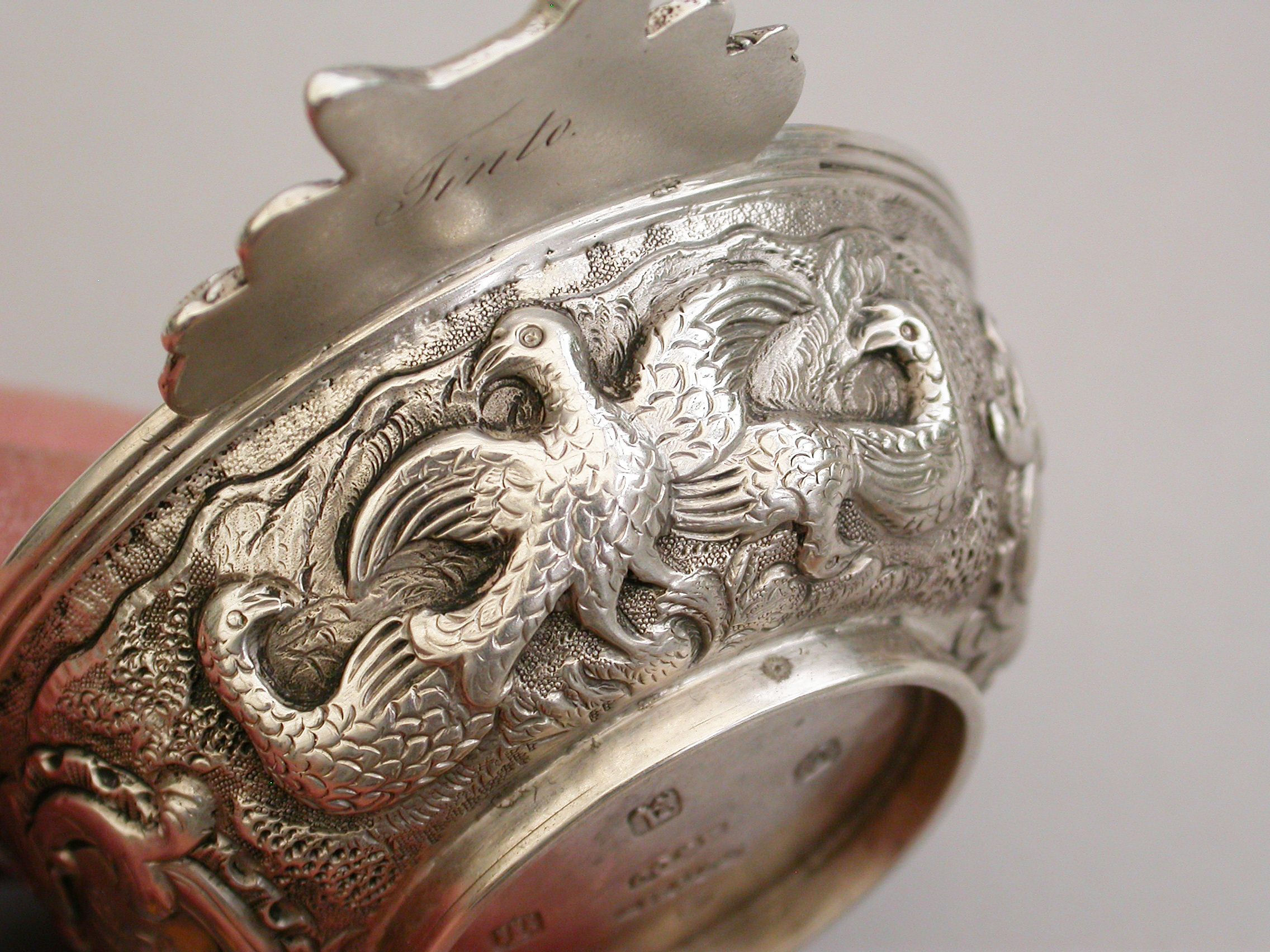
The quaich of circular form with a lug to either side decorated with fox’s masks and the body chased with a covey of grouse, one taking flight: a cartouche framed with rocaille scrollwork, to both front and reverse and the interior gilt. Both cartouches bear engraved inscriptions, one with the wording ‘From R.G. Baillie Esq. to Adam Sim’ the other with the monogram ‘A.S.’: the lugs are inscribed to the underside, one engraved ‘Culter Fell’ and the other, ‘Tinto’. Culter Fell and Tinto are both hills in the Southern Uplands of Scotland, in the historic county of Lanarkshire, close to the town of Biggar and the village of Culter or Coulter.
Robert Granbery Baillie Esq. (1788-1862) of Culter Allers House, Lanarkshire and 17 Walker Street, Edinburgh, was a well known and respected landowner in the vicinity of Coulter and Adam Sim (1805–1868), landowner and renowned antiquarian, living at Coulter Mains House, was his nearest neighbour.
This quaich was evidently a gift of Robert Baillie to his neighbour Adam Sim: it seems likely that the inscribed references to Culter Fell and Tinto refer to ascents of the two hills, presumably expeditions made by the two friends in each other’s company.
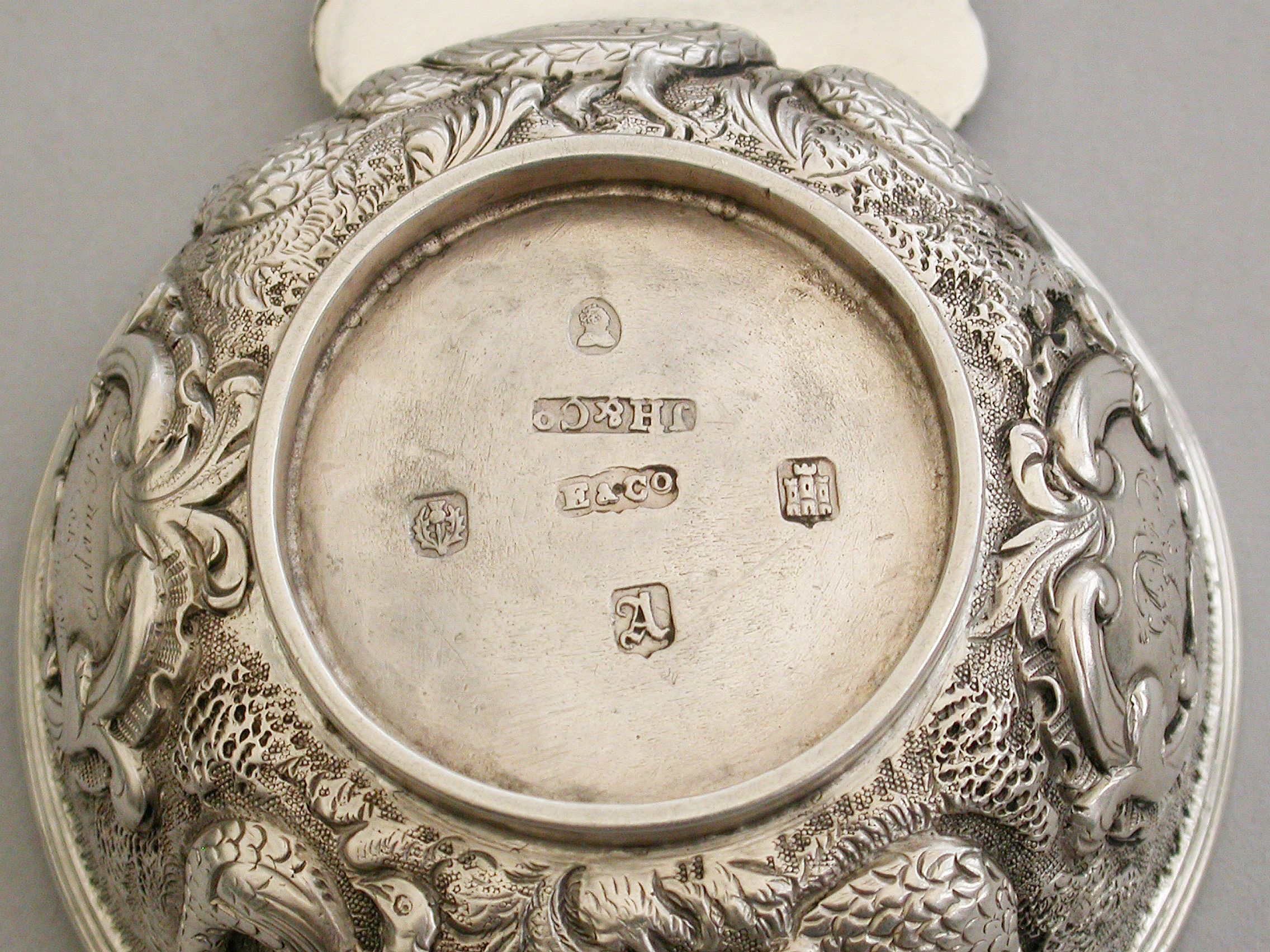
The quaich bears the maker’s mark of James Howden & Co. and is struck with hallmarks for Edinburgh, 1832. It is also struck with the maker's mark of Elder & Co.
Robert Granbery Baillie was born in 1778 at his great-uncle’s home, Culter Allers House, his parents having settled there after returning from a period in Georgia in the United States of America, where his father, Robert Baillie, had distinguished himself in the American War: it seems that Robert Baillie was able to avoid the confiscation of his property in Georgia and returned to Scotland a prosperous man. Robert Granbery Baillie inherited the estate of Culter Allers, together with other properties, from his great-uncle, the Edinburgh writer James Baillie, who was born in 1732 and died in 1818 at his house in the Canongate, in
the Old Town, Edinburgh. James Baillie had purchased the Culter Aller estate from the Menzies family in 1771. Robert Granbery Baillie was a Deputy Lieutenant of the County of Lanarkshire, a Justice of the Peace and also one of the chairmen of the Highland & Agricultural Society of Scotland, he lived at Culter Allers House, Lanarkshire and 17 Walker Street, Edinburgh. At Robert's death he was succeeded by his son, James William Baillie, Writer to the Signet, who died at Culter Allers House in 1880: as James William died childless, the estates were inherited by his younger brother, John Menzies Baillie, an eminent accountant, who himself died there one year later. Due to mismanagement, within fifteen years the estate of Culter Allers had passed out of the Baillie family.
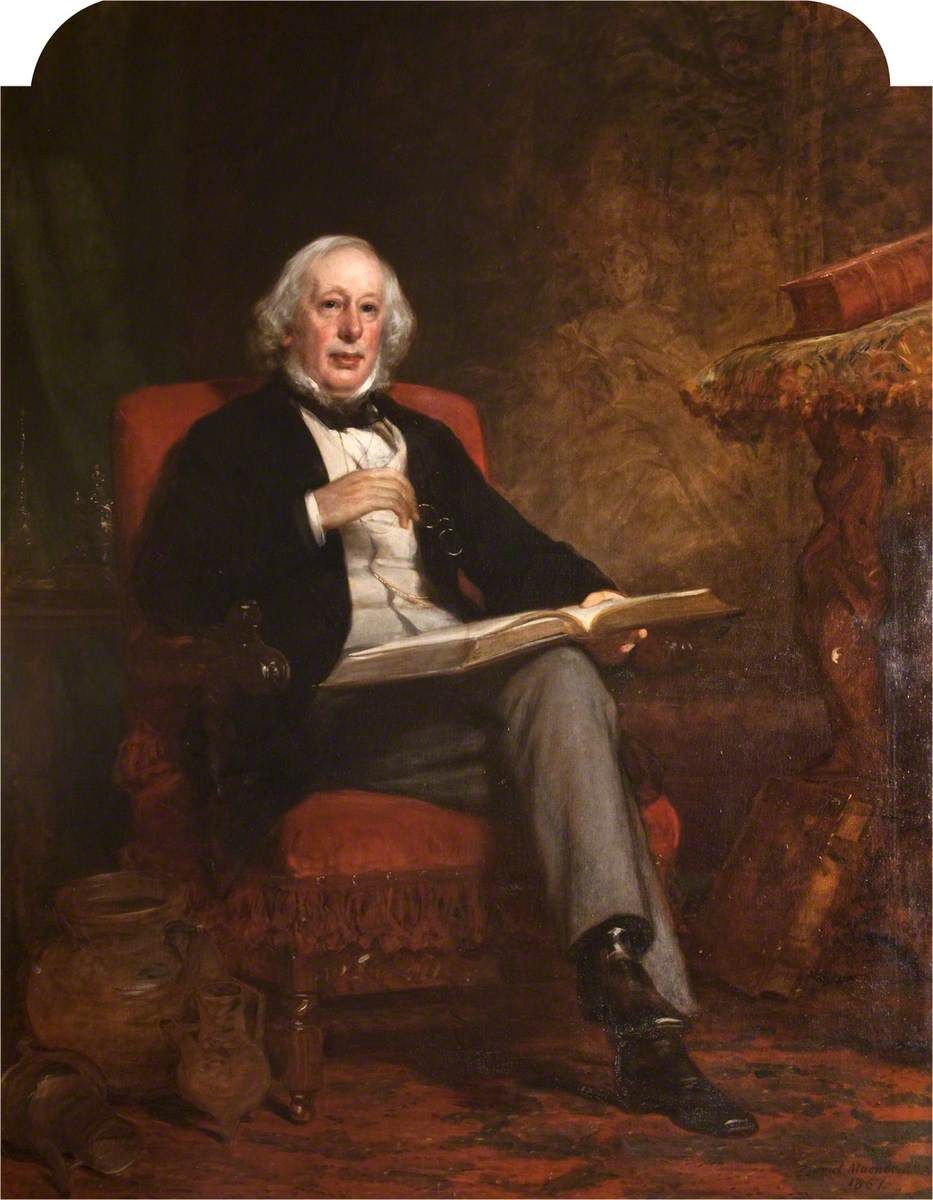
Adam Sim was born in 1805 and, in ????, inherited the estates of Coulter Mains from his father. In 1838 Adam demolished Coulter Mains House and rebuilt in the Jacobethan style, to the designs of the Glaswegian architect William Spence (1806-1883). An enthusiastic antiquarian, Adam Sim amassed a large and important collection of ancient artefacts large collection of objects, many of which now form part of the collection of the National Museum of Antiquities, Edinburgh: this collection was housed in the opulently furnished new Coulter Mains House, where it was made available to fellow antiquarians
and other interested persons.
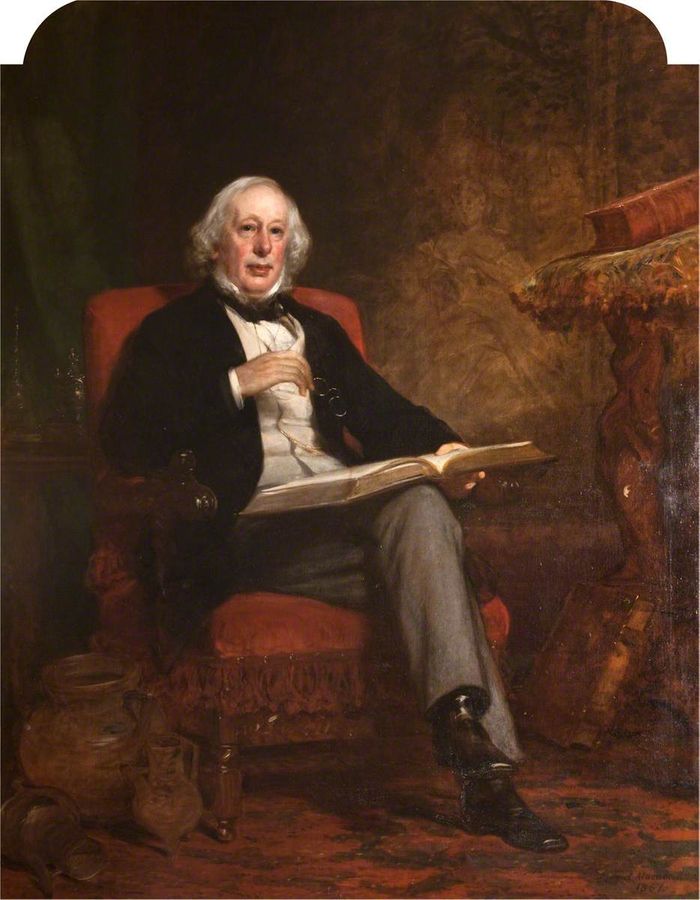
See image of Oil Painting of Adam Sim of Coulter Mains c1860, by Daniel Macnee (1806-1882).
Sold - £600.00